


Real Dog
Real Dog sausas maistas suaugusiems, didelių-milžiniškų veislių, šunims su vištiena ir ryžiais 20kg
2,11 €/kg
42,15 € / 20 kg

Also known as: Podhalaner, Polish Tatra Sheepdog, Tatra Mountain Sheepdog, Polski Owczarek Podhalański
The Tatra Shepherd Dog, or Owczarek Podhalański, guarded sheep flocks in the Tatra Mountains against wolves and bears for centuries, working loose in the field without constant human direction. The white, long, dense double coat helped distinguish the guardian dog from a darker wolf at night. A build up to 60 kilograms stays massive and sturdy, suited to long hours working in the cold. The breed is naturally independent and makes its own decisions in the field, so training calls for patience. Around strangers it tends to be alert and protective. Life expectancy runs 10 to 12 years.
Browse dog food sized right for this breed
Tatra Shepherd Dog: how old in human years?
Energy level
Trainability
Family friendly
Grooming need
Males 65–70 cm
Females 60–65 cm
Males 45–60 kg
Females 40–50 kg
Tatra Shepherd Dog's average temperament and family-life score for this breed is moderate.
Tatra Shepherd Dog's energy and exercise needs are low.
Tatra Shepherd Dog's guarding and alertness traits are high.
Tatra Shepherd Dog's grooming needs are moderate.
A big white dog lies across the doorstep, apparently asleep. The moment a stranger stops at the gate, though, he is on his feet, and his deep bark says everything that needs saying. For centuries the Tatra Shepherd Dog guarded flocks in the Polish mountains against wolves and bears, mostly without a human giving orders, so he thinks for himself and makes his own decisions. He is no athlete: his energy is modest, and a few calm walks a day plus a roomy yard to patrol and watch over suit him well.
With his family he is devoted, patient and gentle, but he doesn't trust strangers and makes no secret of it. Early socialisation is not optional here: a puppy needs to meet plenty of people, sounds and situations so that, as an adult, he can tell real danger from the courier. He can be trained, but don't expect blind obedience; he complies when he understands why, so he needs a calm, consistent and patient owner. He doesn't always get along with other dogs, particularly on his own ground.
A flat is the wrong home for him: he is too big, too watchful and too vocal, especially at night when something moves in the yard. He is best off in a house with a well-fenced plot, where he can lie outside in any weather and keep an eye on everything he considers his. He can be a fine guardian for small children, but because of his size and protective instinct, their games with visiting friends are always worth supervising.
The Tatra Shepherd Dog wears a long, thick double coat: dense outer hair over a soft undercoat that lets him sleep quite happily on snow. Once or twice a week it needs a thorough brush right down to the skin, especially behind the ears, on the neck, the trousers and the tail, where mats like to form. He sheds heavily, and when the undercoat changes there will be enough hair that brushing becomes a daily ritual and the vacuum cleaner your closest ally.
Baths are rarely needed: the harsher outer coat sheds dirt fairly well, and dried mud mostly falls out with the brush. When you do bath him, take the time to dry the undercoat properly, because once wet it holds moisture against the skin for a long while. Check the ears weekly and trim the nails regularly, since a calm giant who spends a lot of time lying down wears them less than you might expect.
We don't have reliable health information specific to this breed, so we don't list conditions here. Keep up regular vet check-ups, and if you are getting a puppy, ask the breeder about the parents' health testing.
This is general information, not veterinary advice. For your own dog's health, tests and treatment, see a vet.
This list is chosen by the breed's weight (60 kg) rather than the breed itself: shops label food by dog size, so every breed of the same size gets the same list. Prices are updated daily.
≈ 545 g of dry food a day, from €29,95 a month For a neutered, normally active 48,8 kg dog. Calculate for your dog
Real Dog
2,11 €/kg
42,15 € / 20 kg

Sam's Field
2,56 €/kg
33,26 € / 13 kg
Rasco
2,67 €/kg
39,99 € / 15 kg
Rasco
2,67 €/kg
39,99 € / 15 kg
Purina
2,71 €/kg
37,96 € / 14 kg
Sam's Field
2,77 €/kg
35,99 € / 13 kg
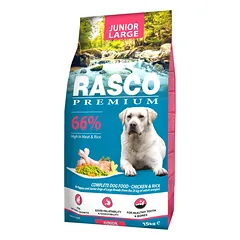
Rasco
2,80 €/kg
41,99 € / 15 kg
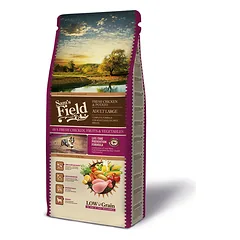
Sam's Field
2,85 €/kg
37,04 € / 13 kg