


VetExpert
Raw Paleo Dog Ultra Mini Puppy Beef 750 kg
0,02 €/kg
13,09 € / 750 kg

Also known as: Sealyham
In Wales, at the Sealyham estate, Captain John Edwardes crossed several terrier breeds in the mid 19th century aiming for a dog bold enough to face a badger but light enough not to be crushed underground. The result was a white, low-slung dog, up to 9 kilograms, with a wiry coat that guarded against both bites and cold. The breed is now considered one of the rarest in the world, listed as vulnerable by both the UK and US kennel clubs. The temperament runs calmer than most terriers, though still independent and occasionally stubborn. The coat needs periodic hand-stripping. Life expectancy runs 12 to 14 years.
Browse dog food sized right for this breed
Sealyham Terrier: how old in human years?
Energy level
Trainability
Family friendly
Grooming need
Males not specified
Females not specified
Males 8–9 kg
Females 8–9 kg
Sealyham Terrier's average temperament and family-life score for this breed is moderate.
Sealyham Terrier's energy and exercise needs are moderate.
Sealyham Terrier's guarding and alertness traits are moderate.
Sealyham Terrier's grooming needs are low.
In Wales it was bred to go to ground after badgers and foxes, so under the plush exterior lives a proper terrier. Indoors the Sealyham Terrier is calmer than many of its relatives: a couple of brisk walks and a bit of play will do, and the rest of the time it is glad to be near you, ideally on your feet. A flat suits it perfectly well, as long as it gets its daily ration of smells and news.
Train it in short, cheerful sessions with a treat in your pocket: it understands you well enough but has opinions, and it takes dull repetition as a personal insult. A fresh molehill in the corner of the garden can wake the old instincts, so be prepared for the flower bed to turn into an excavation site now and then. Let it off the lead only where it is safe; a cat or a hare may prove more interesting than your voice.
With its family it is devoted and good fun, it gets on with children who treat it with respect, and with other dogs it usually manages without much drama. It greets strangers with reserve and announces them with a few ringing barks, without making an evening of it. This is a dog that can both walk and loaf, and its only demand is that you do both together.
A Sealyham's coat is hard and wiry on top, with a dense, soft undercoat hiding beneath. It sheds little, but that's no excuse to lose the brush: two or three times a week, comb right down to the skin, paying special attention to the beard, eyebrows and legs, where tangles form first. Every few months the coat wants hand-stripping or clipping; a groomer can do it, and you get to choose between a crisp terrier outline and a softer, teddy-bear version. Look at the skin as you go: white hair shows every patch of redness without mercy, and after dinner the beard reads like a menu.
Those bushy eyebrows cover the eyes, so once a week part them and check that the eyes are clear, with no redness or discharge, and keep the hair around them trimmed short so it doesn't poke. The ears hang down and are well furnished, so look inside them weekly: clean and odour-free is what you want. Trim the nails every few weeks and brush the teeth several times a week.
Both conditions below concern how a Sealyham Terrier sees and hears the world, so this section is mostly about eyes and ears. This sturdy little dog lives twelve to fourteen years, and the list is here to help you spot changes in good time, not to worry you. When something raises a question, a vet decides.
This is general information, not veterinary advice. For your own dog's health, tests and treatment, see a vet.
The lens, the eye's clear focusing piece, is held in place by fine fibres; when they weaken and snap, the lens slips out of position. You might notice a suddenly red, watering eye, squinting or a cloudy, changed look, and with a Sealyham you may have to part those bushy eyebrows to see it at all. An eye like that is painful and at risk of serious damage, so see a vet straight away, and if you are getting a puppy, ask the breeder about the parents' health testing.
Deafness can be present from birth or come on later, in one ear or both. A puppy that sleeps through the rattle of its food bowl or doesn't turn to your voice may simply not hear. Terrier stubbornness is excellent camouflage for deafness, so if you're unsure whether your dog can hear you, have a vet check.
This list is chosen by the breed's weight (9 kg) rather than the breed itself: shops label food by dog size, so every breed of the same size gets the same list. Prices are updated daily.
≈ 145 g of dry food a day, from €8,06 a month For a neutered, normally active 8,5 kg dog. Calculate for your dog
VetExpert
0,02 €/kg
13,09 € / 750 kg

1,70 €/kg
17,02 € / 10 kg

Real Dog
1,78 €/kg
17,79 € / 10 kg
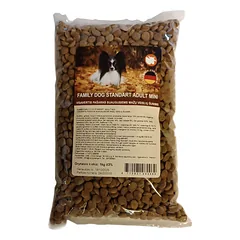
Family Dog
1,89 €/kg
1,89 € / 1 kg

Club 4 Paws
1,93 €/kg
26,99 € / 14 kg

Club 4 Paws
1,93 €/kg
26,99 € / 14 kg

Real Dog
1,94 €/kg
19,42 € / 10 kg

Real Dog
1,95 €/kg
19,49 € / 10 kg