


Real Dog
Real Dog sausas maistas suaugusiems, didelių-milžiniškų veislių, šunims su vištiena ir ryžiais 20kg
2,11 €/kg
42,15 € / 20 kg

Also known as: Alentejo Herder, Alentejo Mastiff, Portuguese Mastiff, Portuguese Watch Dog
The Rafeiro do Alentejo comes from Portugal's Alentejo region, where it guarded farms and flocks against wolves and other predators. It's a large, powerfully built dog, males can reach 50 kilograms, and that mass let it hold its post through long stretches of scarce food. The coat is short to medium and dense, well suited to the extremes of Alentejo's climate, hot summers and cold winters alike. Temperament runs independent and territorial, it was bred to make its own calls guarding a farm at night without waiting on a command. It tends to be wary of strangers while staying gentle with its own family. Training calls for an experienced, consistent owner. Life expectancy runs 10 to 12 years.
Browse dog food sized right for this breed
Rafeiro do Alentejo: how old in human years?
Energy level
Trainability
Family friendly
Grooming need
Males 64–74 cm
Females 61–70 cm
Males 35–50 kg
Females 30–45 kg
Rafeiro do Alentejo's average temperament and family-life score for this breed is low.
Rafeiro do Alentejo's energy and exercise needs are low.
Rafeiro do Alentejo's guarding and alertness traits are high.
Rafeiro do Alentejo's grooming needs are low.
By day a Rafeiro do Alentejo can pass for an enormous rug stretched out in the shade, and you may think you've got the calmest dog in the world. Then night falls. For centuries this Portuguese breed guarded flocks against predators and thieves, so it is most alert in the dark: it walks the boundary, listens, and reports every suspicious sound in a deep, carrying voice.
A flat is out of the question. It needs a roomy yard with a high, solid fence and calm daily walks; it has no ambition to run beside your bike, but it does need to move. Training it is less about commands than negotiation: it is clever, but independent, and decides for itself whether your request makes sense. Start early, stay calm and consistent, and introduce the puppy to as many people, animals and places as you can, because the adult will be far too big to re-educate by force.
With its own family a Rafeiro do Alentejo is devoted and patient, and it treats the household's children as its flock. It is wary of strangers, so introduce visitors calmly and in your presence. It finds it hard to accept unfamiliar dogs, especially on its own ground, so handle new introductions with care. This is a dog for people with space, time and patience, who want not a toy but a serious guardian.
The Rafeiro do Alentejo's short-to-medium, dense coat was made for the heat of the Portuguese plains and its winter rains, and it is undemanding. Go over it once a week with a firm brush to lift out dead hair and dust; shedding is light, and only during the coat change is it worth reaching for the brush more often. As you brush, check the skin: on a body this large, scratches, ticks and irritated patches are easy to miss.
Baths are rarely needed, and bathing a dog this size is a project anyway. Once a week, lift the drop ears and check that they are clean inside with no unpleasant smell. Look at the eyes too: a little watering after a windy walk is nothing to worry about, but redness or heavy discharge is a reason to talk to your vet.
The Rafeiro do Alentejo is a big, sturdy working dog built to live outdoors, and much of its health story comes down to its size. As with other large breeds, its joints are worth looking after, and there is one dangerous stomach condition you should know about. Regular vet visits help you catch trouble early.
This is general information, not veterinary advice. For your own dog's health, tests and treatment, see a vet.
This is a fault in how the hip joint develops: the parts don't fit together properly and the joint wears over time. A dog this heavy puts a lot of load on its joints with every step, so you might notice it struggling to stand up, being reluctant on stairs, or moving stiffly after a long rest. Before buying a puppy, ask the breeder about the parents' health testing.
Here the stomach fills with gas and can twist on itself, a real danger for large, deep-chested breeds like the Rafeiro do Alentejo. A swollen, tight belly, restlessness, retching that brings nothing up or heavy drooling mean your dog needs a vet immediately, not in the morning.
This list is chosen by the breed's weight (50 kg) rather than the breed itself: shops label food by dog size, so every breed of the same size gets the same list. Prices are updated daily.
≈ 470 g of dry food a day, from €25,71 a month For a neutered, normally active 40 kg dog. Calculate for your dog
Real Dog
2,11 €/kg
42,15 € / 20 kg

Sam's Field
2,56 €/kg
33,26 € / 13 kg
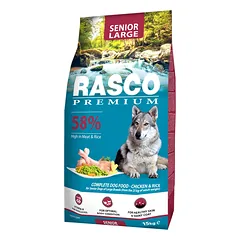
Rasco
2,67 €/kg
39,99 € / 15 kg
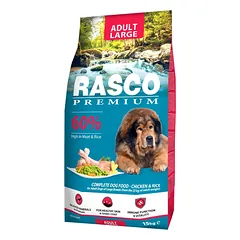
Rasco
2,67 €/kg
39,99 € / 15 kg
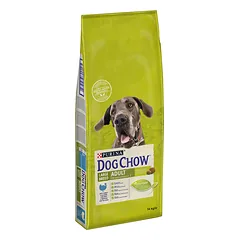
Purina
2,71 €/kg
37,96 € / 14 kg

Sam's Field
2,77 €/kg
35,99 € / 13 kg
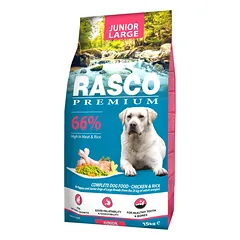
Rasco
2,80 €/kg
41,99 € / 15 kg

Sam's Field
2,85 €/kg
37,04 € / 13 kg