


Advance
Advance Puppy Medium sausas maistas vidutinių veislių šuniukams, 12 kg
1,48 €/kg
17,76 € / 12 kg

Also known as: Hungarian herding terrier
The Pumi emerged in Hungary during the 18th and 19th centuries when local herding dogs were crossed with German spitz breeds and terriers, producing a smaller, noisier, more restless cousin of the Puli. Semi-erect ears that fold forward at the tip are one of its clearest identifying features. The body stays small, under 13 kilograms, but the breed is bursting with energy and highly alert, often kept as a farmyard watchdog. The curly, wiry coat is maintained by clipping rather than brushing alone. It barks readily and often, at almost anything that moves. Playful and curious with family, it carries the strong work ethic of its herding ancestors. Life expectancy runs 12 to 13 years.
Browse dog food sized right for this breed
Energy level
Trainability
Family friendly
Grooming need
Males 41–45 cm
Females 38–42 cm
Males 10–13 kg
Females 8–11 kg
Pumi's average temperament and family-life score for this breed is moderate.
Pumi's energy and exercise needs are moderate.
Pumi's guarding and alertness traits are high.
Pumi's grooming needs are low.
The ears are what you notice first: upright, with tipped-over ends, forever swivelling like radar dishes. The second thing you'll hear: a Pumi has an opinion on everything from the neighbour's cat to the delivery driver, and it shares that opinion out loud. This Hungarian herding dog was bred to drive flocks, and it has enough energy, brains and voice for two dogs.
Every day it needs not just a walk but real work: long hikes, running, games, agility or learning tricks. It learns astonishingly fast, but it learns the things you didn't mean to teach just as fast, so consistency matters from day one. A flat is a tough fit, not because of its size but because of its voice and an energy that, without an outlet, turns into inventive mischief. A calm "quiet" cue is one of the first things worth teaching it.
With its family a Pumi is cheerful, devoted and always ready to join in, and it gets on with children who respect its space. With strangers it is wary and an excellent watchdog, so you will be the first to know about every visitor. It usually gets along with other dogs, especially when introductions start in puppyhood. This is a dog for an active person who wants a partner, not an ornament for the sofa.
A Pumi's curls aren't decoration but work clothes: the semi-harsh, wavy coat twists into small corkscrew tufts that stand up well to wind, rain and thorny scrub. Every few weeks comb the coat right down to the skin, then dampen it and let it air-dry, and the curls will spring back into place. Shedding is light, and every few months the coat is worth trimming so it keeps its shape and doesn't grow too long; if you'd rather not do it yourself, a groomer who knows the breed will gladly help.
As you comb, check the skin, since ticks and scratches hide easily in dense curls. The ears stand up with tipped-over ends and grow hair on the inside, so look inside once a week; they should be clean and odour-free. Check the eyes after a walk, especially if facial curls fall over them, and wipe away any sleep with a damp cloth; take a red or watering eye to the vet.
Eight to thirteen kilos of muscle, curls and curiosity: the Pumi was built to run after flocks all day across Hungarian pastures, and it keeps that toughness for a long time, living twelve to thirteen years. A few conditions linked to the breed are worth knowing in advance: some concern the joints, others the eyes and the spinal cord. If you notice anything unusual, take your dog to a vet, who will decide what comes next.
This is general information, not veterinary advice. For your own dog's health, tests and treatment, see a vet.
The ball and socket of the hip joint don't fit together as they should, so the joint wears and can become painful. You might see your Pumi limping after an active day, getting up stiffly, or bunny-hopping with both hind legs together when it runs. Sound joints matter a great deal to such a tireless mover, so if you are getting a puppy, ask the breeder about the parents' health testing.
The kneecap slides out of its groove, and the leg briefly seems to lock. Your Pumi may be running along, suddenly skip a few steps on three legs, then carry on as if nothing happened. If it keeps happening, take your dog to a vet to have the knee checked.
This is a slowly progressing disease of the spinal cord that appears in older dogs: nerve signals to the hind legs get through less and less well. The first things you notice are a swaying rear end, nails scuffing along the ground or the hind feet crossing as your Pumi walks, while it doesn't seem to be in pain. If you see signs like these, see your vet, and before buying a puppy, ask the breeder about the parents' health testing.
The lens of the eye is held in place by inherited weak fibres and can slip out of position. The eye suddenly turns red, painful, cloudy or watery, and the dog squints and paws at it. This is an emergency: if you see these signs, get your dog to a vet immediately, and if you are getting a puppy, ask the breeder about the parents' health testing.
This list is chosen by the breed's weight (13 kg) rather than the breed itself: shops label food by dog size, so every breed of the same size gets the same list. Prices are updated daily.
≈ 170 g of dry food a day, from €9,43 a month For a neutered, normally active 10,5 kg dog. Calculate for your dog
Advance
1,48 €/kg
17,76 € / 12 kg

Sam's Field
1,80 €/kg
26,99 € / 15 kg

Country Dog
1,89 €/kg
28,29 € / 15 kg
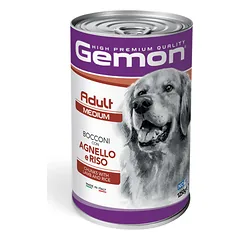
Gemon
1,94 €/kg
2,42 € / 1,3 kg
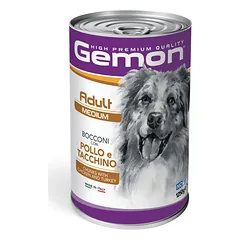
Gemon
1,94 €/kg
2,42 € / 1,3 kg

Sam's Field
2,11 €/kg
27,45 € / 13 kg

2,14 €/kg
30,00 € / 14 kg

Club 4 Paws
2,15 €/kg
42,99 € / 20 kg