


Real Dog
Real Dog sausas maistas suaugusiems, didelių-milžiniškų veislių, šunims su vištiena ir ryžiais 20kg
2,11 €/kg
42,15 € / 20 kg

Also known as: Shepherd's Dog, Bobtail dog, Bobtail Sheepdog
Despite the name, this breed was historically used not just to herd sheep but to drive cattle to market, and it was once called simply Bobtail after the docked tail that marked working dogs for tax purposes. The thick, shaggy double coat gives real protection against England's cold, damp climate, but it needs frequent, thorough brushing or it mats fast. A male can weigh up to 45 kilograms, and under all that coat sits a solid, square built frame. The distinctive low, rolling bark was once valued as an effective way to warn a flock of danger. Its temperament tends to be friendly and playful, often described as the clown of the herding breeds. Grooming demands are among the highest of any breed. Life expectancy runs 10 to 12 years.
Browse dog food sized right for this breed
Old English Sheepdog: how old in human years?
Energy level
Trainability
Family friendly
Grooming need
Males 56–61 cm
Females 51–56 cm
Males 30–45 kg
Females 27–38 kg
Old English Sheepdog's average temperament and family-life score for this breed is high.
Old English Sheepdog's energy and exercise needs are low.
Old English Sheepdog's guarding and alertness traits are moderate.
Old English Sheepdog's grooming needs are moderate.
There is something on the floor that looks like a large grey rug, until the rug gets up, shakes itself and brings you a ball. In England the Old English Sheepdog once drove cattle and sheep to market, and today it brings that job home: it may gently round the children up into one corner with a nudge of its side. It is affectionate and playful with its family, patient with children, and has opinions it likes to share in a loud, rich bark whenever someone comes near the door.
Its energy is middling: it needs a good walk and a game every day, but not a marathon. It learns well and is clever, with an independent streak, so keep training sessions interesting, short and cheerful, with treats and praise. On a hot summer day all that coat is heavy going, so move walks to the cooler parts of the day.
A flat is not the best fit; a dog this big and this hairy is more comfortable in a house with a garden, where muddy paws can be wiped at the door. It gets on with other dogs, meets strangers with reserve but no ill will, and dislikes being left alone: its place is beside you, on your feet or right on your lap.
An Old English Sheepdog's coat is less a hairstyle than a project: long, shaggy and double, with a dense undercoat that tangles the moment you look away. A few times a week, brush it in layers, parting the hair with your hand and working right down to the skin, or mats will build behind the ears, in the armpits, on the belly and between the legs. Check the skin as you go: under a layer that thick, redness or a small wound can hide for weeks. Many owners who don't show their dogs keep them in a short clip done regularly by a groomer, and it takes nothing away from the charm.
Trim the fringe or tie it up so the dog can see where it is going, and wipe the corners of the eyes with a damp cloth when needed. Hair grows inside the ears, so look into them once a week: they should be clean and free of smell, and head shaking or scratching at an ear is a reason for the vet to take a look. Keep the hair around the tail and between the paw pads short; it is cleaner for the dog and for your floors.
Under that cloud of coat lives a sturdy dog that, well looked after, keeps you company for around ten to twelve years. The list of conditions below is long, but read it as a guide to what to watch for, not a forecast of what will happen. Before choosing a puppy, ask the breeder about the parents' health testing, and if something seems wrong, let your vet decide what comes next.
This is general information, not veterinary advice. For your own dog's health, tests and treatment, see a vet.
In hip dysplasia the hip joint forms badly, so the ball wobbles in its socket and the joint wears over time. You might notice a dog who hesitates before jumping into the car, is slow to get up, or runs with both back legs pushing together. An Old English Sheepdog's gait is hard to see under all that coat, so watch how it moves and talk any doubts over with your vet.
PRA is an inherited disease in which the retina at the back of the eye slowly wastes away, and the dog gradually loses its sight. Night vision goes first: a dog that hesitates in a dark hallway, bumps into things in the evening, or whose eyes shine more brightly in the dark than before. With a fringe already covering its eyes, an Old English Sheepdog's failing sight is easy to miss, so ask the breeder about the parents' health testing.
Here the immune system attacks the thyroid gland, which gradually makes too little hormone, and the whole body slows down. You may notice weight going on without extra food, a dog that tires sooner and seeks out warm spots, and a coat that thins or turns coarse. Under that much coat, weight changes have to be felt with your hands, so when your Old English Sheepdog doesn't seem like itself, leave the diagnosis to your vet.
In exercise-induced collapse the muscles suddenly weaken after hard exercise, the back legs first, the dog's gait turns wobbly and it may go down. It shows up during intense play or a long run, in a dog that seemed perfectly well a moment before. If your Old English Sheepdog collapses or cannot get up, it needs a vet immediately.
In dilated cardiomyopathy the heart muscle thins and weakens, the heart enlarges and no longer pumps blood well. The changes start quietly: a dog that tires sooner, breathes faster at rest, coughs, or loses its appetite. The rise and fall of an Old English Sheepdog's chest is hard to see under the coat, so regular check-ups with your vet help catch heart changes in time.
Congenital deafness means a puppy is born unable to hear in one ear or both. It does not respond to its name or the doorbell, sleeps soundly through noise, and startles when touched unexpectedly. A deaf Old English Sheepdog can live a full life once it has learned hand signals, and it is worth asking the breeder about the parents' health testing.
The cerebellum, the part of the brain that coordinates movement, gradually stops working properly, and the dog loses precision in how it moves. You might see a wide-legged stance, high-stepping paws, a trembling head or a sway as it walks, as if it were on the deck of a ship. In a young Old English Sheepdog an odd gait is easy to take for puppy clumsiness, so if it does not pass, show the dog to your vet.
The airways are lined with microscopic hairs called cilia that constantly sweep mucus out; in this disease they do not move as they should. A puppy may therefore have a runny nose that won't clear, a cough, or chest infections that keep coming back from an early age. If your Old English Sheepdog puppy keeps snuffling and coughing, talk to your vet, and before choosing a puppy ask the breeder about the parents' health testing.
This is a gene change that means some medicines can affect these dogs much more strongly than other dogs. You will not notice it in everyday life, so your vet should know about the possibility before any medicine is used for your Old English Sheepdog. A genetic test exists that shows whether a dog carries the mutation.
This list is chosen by the breed's weight (45 kg) rather than the breed itself: shops label food by dog size, so every breed of the same size gets the same list. Prices are updated daily.
≈ 425 g of dry food a day, from €23,27 a month For a neutered, normally active 35 kg dog. Calculate for your dog
Real Dog
2,11 €/kg
42,15 € / 20 kg

Sam's Field
2,56 €/kg
33,26 € / 13 kg
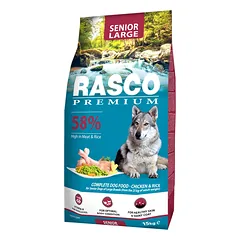
Rasco
2,67 €/kg
39,99 € / 15 kg
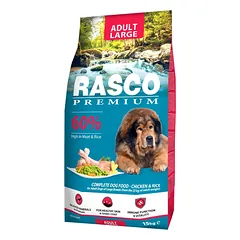
Rasco
2,67 €/kg
39,99 € / 15 kg
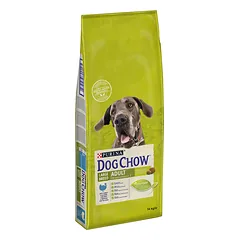
Purina
2,71 €/kg
37,96 € / 14 kg
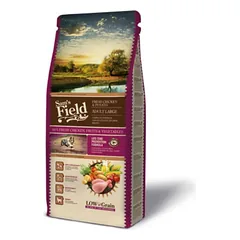
Sam's Field
2,77 €/kg
35,99 € / 13 kg
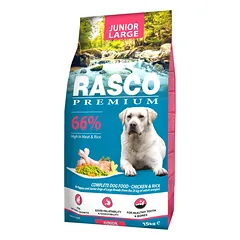
Rasco
2,80 €/kg
41,99 € / 15 kg
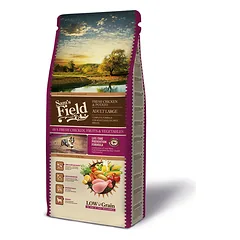
Sam's Field
2,85 €/kg
37,04 € / 13 kg