


VetExpert
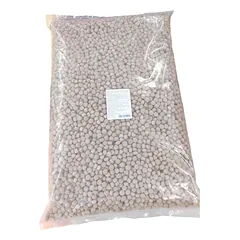
Raw Paleo Dog Ultra Mini Puppy Beef 750 kg
0,02 €/kg
13,09 € / 750 kg

Also known as: Minpin, Rehpinscher, Cvergpinčeris, Nykštukiniai pinčeriai
The Miniature Pinscher is often nicknamed the King of Toys, but it is actually an older breed, developed independently in Germany as a farm ratter rather than as a scaled-down Doberman. A male weighs barely 6 kilograms, and the smooth, short coat shows off a lean, muscular frame underneath. Its distinctive gait, known as the hackney step, echoes a trotting harness horse and appears in no other breed. Despite its small size, the breed is known for a fearless, high-energy temperament and a wary streak around strangers. It needs firm handling, since it often behaves as though it has no idea how small it is. Life expectancy runs 12 to 14 years.
Browse dog food sized right for this breed
Miniature Pinscher: how old in human years?
Energy level
Trainability
Family friendly
Grooming need
Males 25–30 cm
Females 25–30 cm
Males 4–6 kg
Females 4–6 kg
Miniature Pinscher's average temperament and family-life score for this breed is moderate.
Miniature Pinscher's energy and exercise needs are moderate.
Miniature Pinscher's guarding and alertness traits are moderate.
Miniature Pinscher's grooming needs are low.
Every courier, cat and leaf drifting past the window will be noticed and loudly reported. The Miniature Pinscher comes from Germany, and although it weighs only a few kilos it guards its home as if it were three times the size: alert, curious and full of energy, it moves with high-stepping front legs like a horse on parade.
It has plenty of energy, but a small space is enough to burn it off: two walks a day, a run in a fenced garden and games indoors will keep it perfectly happy, which makes it a fine flat dog. It learns fast when it feels like it, and just as fast learns to outwit you, so short, cheerful sessions with treats beat long, dull ones. The prey drive is strong: one glimpse of a cat or a bird and every command is forgotten, and it can slip through a gap in the fence with astonishing speed.
A Min Pin bonds closely with its people and loves being the centre of attention, but boisterous toddlers who want to carry and squeeze it are too much. It suits a family with older children who understand that this small dog is not a toy, and that a drop from someone's arms can cost those slim legs dearly. It gets on with other dogs, though it never treats its size as a reason not to show a bigger one who is in charge.
The Min Pin's coat is so short and sleek that it barely needs a comb: a weekly pass with a rubber brush or a damp cloth leaves it gleaming like polished leather. You will find the odd hair on the sofa, not much more. The flip side is that this coat does little against the cold, so a warm jumper or jacket earns its keep on winter walks, and a towel after rain. Short hair hides nothing, so you will spot redness, scabs or bald patches straight away; show them to your vet.
Check the ears weekly: the inside should be clean, pale and free of any smell. Wipe the corners of the eyes with a soft damp cloth when needed and watch for weepiness. Nails and teeth take the most attention: a dog this light barely wears its nails down, so trim them as soon as you hear clicking on the floor, and brush the teeth with a dog toothbrush a few times a week, starting while it's young.
Miniature Pinschers weigh just four to six kilos but live a long time, twelve to fourteen years, and spend a good part of it at a run. Their health questions centre on the small joints of the legs and on the nervous system. If yours starts limping or behaves strangely, have your vet take a look, and if you are getting a puppy, ask the breeder about the parents' health testing.
This is general information, not veterinary advice. For your own dog's health, tests and treatment, see a vet.
The kneecap is a small bone at the front of the knee that should glide in its groove; when it luxates, it pops out to the side. You may see your Min Pin suddenly skip along on three legs for a few strides, then carry on as if nothing happened. In such a bouncy dog it can look like part of the game, but a skip that keeps coming back is worth showing your vet.
In this condition the head of the thigh bone loses part of its blood supply and the bone there slowly starts to break down. It appears in young, still-growing dogs: the Min Pin begins limping on one hind leg, avoids putting weight on it, and over time the leg can lose muscle. Don't put the limp down to growing pains or a clumsy jump off the sofa; let your vet assess it.
Epilepsy is a condition in which bursts of uncontrolled electrical activity in the brain cause repeated seizures. A seizure can look like a fall onto the side with paddling legs, or a brief freeze in which the dog doesn't respond to your voice; in a dog as lively as a Min Pin it looks like a different animal altogether. Note when it happened and how long it lasted and tell your vet; a seizure lasting more than a few minutes, or seizures coming one after another, need a vet immediately.
This list is chosen by the breed's weight (6 kg) rather than the breed itself: shops label food by dog size, so every breed of the same size gets the same list. Prices are updated daily.
≈ 99 g of dry food a day, from €5,40 a month For a neutered, normally active 5 kg dog. Calculate for your dog
VetExpert
0,02 €/kg
13,09 € / 750 kg
1,70 €/kg
17,02 € / 10 kg
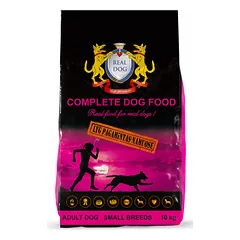
Real Dog
1,78 €/kg
17,79 € / 10 kg
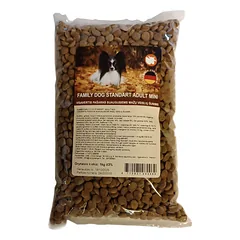
Family Dog
1,89 €/kg
1,89 € / 1 kg
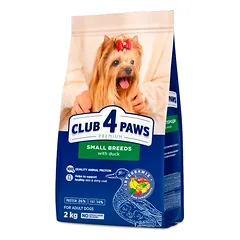
Club 4 Paws
1,93 €/kg
26,99 € / 14 kg

Club 4 Paws
1,93 €/kg
26,99 € / 14 kg
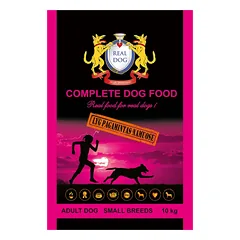
Real Dog
1,94 €/kg
19,42 € / 10 kg
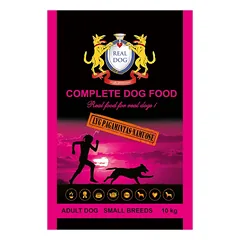
Real Dog
1,95 €/kg
19,49 € / 10 kg