

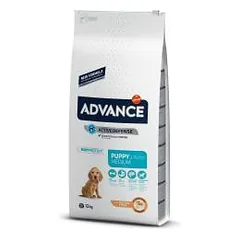
Advance
Advance Puppy Medium sausas maistas vidutinių veislių šuniukams, 12 kg
1,48 €/kg
17,76 € / 12 kg

Also known as: Spiculosis
Irish farmers used this terrier as an all-purpose worker: killing vermin, guarding the farmstead, and sometimes even helping herd livestock. Puppies are born black, and only over their first year or two does the coat gradually clear to the distinctive blue grey shade that gives the breed its name. The soft, wavy coat sheds very little, much like a poodle's, so it needs regular clipping rather than brushing out. A male typically weighs around 18 kilograms on a square, muscular frame. Like many of the larger terriers, the Kerry Blue can be intolerant of other dogs of the same sex if it isn't well socialized early. It remains something of a national symbol in Ireland, though its numbers outside the country have stayed modest. Life expectancy runs 12 to 15 years.
Browse dog food sized right for this breed
Kerry Blue Terrier: how old in human years?
Energy level
Trainability
Family friendly
Grooming need
Males 46–49 cm
Females 44–47 cm
Males 15–18 kg
Females 13–16 kg
Kerry Blue Terrier's average temperament and family-life score for this breed is moderate.
Kerry Blue Terrier's energy and exercise needs are moderate.
Kerry Blue Terrier's guarding and alertness traits are moderate.
Kerry Blue Terrier's grooming needs are low.
In County Kerry this dog caught rats, herded, guarded the yard and, so they say, still found time to mind the children, and plenty of that all-rounder is still in it. The Kerry Blue Terrier is an energetic, cheerful and thoroughly self-assured dog that needs a good walk, games and something to think about every day. It can live in a flat if that energy gets spent somewhere rather than saved up for the evening.
It is clever and learns fast but, like any true terrier, has its own opinions and likes to check now and then whether the rules really apply. Consistent, calm, upbeat training works best. With its family it is affectionate and playful and gets on with children who respect its space, but it doesn't always tolerate other dogs, especially of the same sex, so early socialisation is essential. It meets strangers with alert interest and will announce every arrival loud and clear.
A typical day with a Kerry: a morning walk with plenty of sniffing, a game or some training in the afternoon, and in the evening it settles next to you looking like a curly plush toy that still hears every sound in the stairwell.
Kerry Blue puppies are born black and only gradually take on the breed's blue-grey colour over their first year or so. The coat is soft, dense and wavy, with no undercoat, and it barely sheds, so you won't find hair on the furniture. But it doesn't fall out either: dead hair stays in the coat and, if you don't brush it out, it mats. Brush down to the skin several times a week, especially behind the ears, in the armpits, on the legs and through the beard, and roughly every six weeks the dog needs a groomer, or you need to learn to clip it yourself. This is not a breed for anyone lazy about coats.
Clipping and brushing are also the perfect chance to check the skin: feel for lumps, scabs or red patches, since you can't see them under the coat. Wipe the beard after meals so food doesn't linger in it. Hair grows inside a Kerry's ears, so look inside and sniff once a week; a bad smell or dark discharge means a trip to the vet. Lift the fall over the eyes and check that they are bright, with no sticky discharge. Brush the teeth regularly, because the beard hides very well what is going on in the mouth.
The Kerry Blue Terrier is a sturdy, long-lived Irish farm dog that keeps its spark well into maturity. The skin, hips, eyes, blood clotting and teeth are the things worth watching. You will spot much of this yourself during regular coat care, and your vet will help catch the rest in good time.
This is general information, not veterinary advice. For your own dog's health, tests and treatment, see a vet.
Skin problems cover a range of disorders, from irritation and itching to lumps or cysts in the skin. Under a Kerry Blue's dense, curly coat you won't see them at a glance, so they are found by fingers during brushing or by the groomer's clippers: a red patch, a scab, a lump, or constant scratching. Show any new lump or lasting itch to a vet.
Hip dysplasia is a fault in how the hip joint forms: the ball of the thigh bone sits poorly in its socket and the joint wears over time. You might notice your terrier getting up stiffly, avoiding stairs, or moving a little stiffly after a long walk. If you are getting a puppy, ask the breeder about the parents' health testing.
Dry eye is a condition in which the eye makes too few tears, so its surface dries out and becomes irritated. A Kerry Blue's eyes are hidden under its fall of hair, so take a look underneath: thick, sticky discharge, redness, squinting or a dull eye surface are signs worth showing a vet. The sooner it is identified, the better for the eye.
Von Willebrand disease is an inherited clotting disorder in which the blood lacks a protein that helps a wound seal. It can come to light when a small cut, a nail clipped too short or teething bleeds for longer than it should. If your terrier is diagnosed, every vet who treats it, and its groomer, need to know, and if you are getting a puppy, ask the breeder about the parents' health testing.
Dental and gum disease starts with plaque and tartar, which irritate the gums and over time damage the tissues that hold the teeth. A bearded Kerry Blue can keep its mouth a secret for a long while, so the first sign may be bad breath, red gums, or chewing on one side only. At the yearly check-up, ask your vet to take a look at the teeth too.
This list is chosen by the breed's weight (18 kg) rather than the breed itself: shops label food by dog size, so every breed of the same size gets the same list. Prices are updated daily.
≈ 230 g of dry food a day, from €12,63 a month For a neutered, normally active 15,5 kg dog. Calculate for your dog
Advance
1,48 €/kg
17,76 € / 12 kg
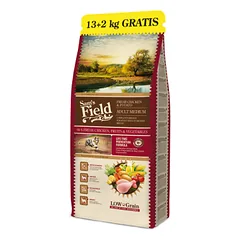
Sam's Field
1,80 €/kg
26,99 € / 15 kg

Country Dog
1,89 €/kg
28,29 € / 15 kg
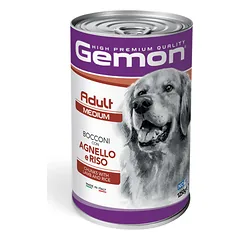
Gemon
1,94 €/kg
2,42 € / 1,3 kg
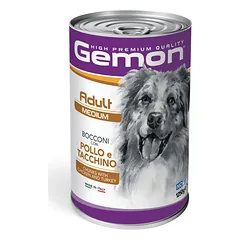
Gemon
1,94 €/kg
2,42 € / 1,3 kg

Sam's Field
2,11 €/kg
27,45 € / 13 kg

2,14 €/kg
30,00 € / 14 kg

Club 4 Paws
2,15 €/kg
42,99 € / 20 kg