

Josera
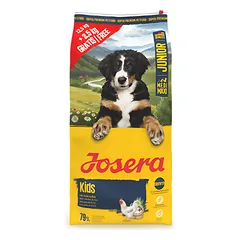
Josera Kids 12,5kg + 2,5kg = 15 kg
1,38 €/kg
37,89 € / 27,5 kg

The Hovawart takes its name from old German words meaning farm guardian, and it appears in medieval documents as a sturdy dog protecting farms and castles in the German countryside. The breed nearly vanished by the early 20th century until breeder Kurt König rebuilt it from surviving working-type dogs found on remote farms. The long, slightly wavy double coat needs regular brushing, and a male can carry up to 40 kilograms of muscular but not bulky frame. Unlike many guardian breeds, the Hovawart matures slowly, and its steady, thoughtful temperament often doesn't fully settle until two or three years of age. It stays watchful rather than aggressive, with a natural sense of territory. Life expectancy runs 10 to 14 years.
Browse dog food sized right for this breed
Hovawart: how old in human years?
Energy level
Trainability
Family friendly
Grooming need
Males 63–70 cm
Females 58–65 cm
Males 30–40 kg
Females 25–35 kg
Hovawart's average temperament and family-life score for this breed is moderate.
Hovawart's energy and exercise needs are moderate.
Hovawart's guarding and alertness traits are high.
Hovawart's grooming needs are moderate.
The name gives it away: in old German, Hovawart means guardian of the yard, and a Hovawart still believes your garden, your house and your family are its responsibility. It is alert and announces every arrival loud and clear, and it greets strangers with reserve rather than enthusiasm. Introduce visitors calmly and let it satisfy itself that all is well.
It needs proper exercise every day: long walks, running, tracking or other tasks where it can both work and think. It is clever and learns quickly, but it isn't blindly obedient: consistency, respect and a calm voice get much further than harshness. It matures slowly, so adolescence can drag on and you'll need more patience than you expected.
With its family the Hovawart is gentle, devoted and likes to be close to its people; with children it is patient and watchful. A flat is too small for it, and it is happiest in a house with a fenced garden to keep an eye on, but only if it is part of family life rather than left outside alone. It asks for your time and consistency, and in return you get a dog that always knows where every one of its people is.
The Hovawart's coat is long, slightly wavy and lined with an undercoat, and it needs regular care, though not endless care. Twice a week, brush right down to the skin, especially behind the ears, on the chest, the trousers and the feathered tail, where hair likes to tangle. It sheds moderately, and when the undercoat changes you'll brush more for a few weeks; after that the sofa and the rug get a break. Baths can be rare: a well-kept coat sheds dirt by itself, and once dry, mud simply brushes out.
As you brush, look at the skin too: ticks, scratches and red patches hide well in a dense coat. Lift the hanging ears once a week and check they're clean and free of smell, and trim the hair between the paw pads when needed so that snowballs don't build up there in winter.
We don't have reliable health information specific to this breed, so we don't list conditions here. Keep up regular vet check-ups, and if you are getting a puppy, ask the breeder about the parents' health testing.
This is general information, not veterinary advice. For your own dog's health, tests and treatment, see a vet.
This list is chosen by the breed's weight (40 kg) rather than the breed itself: shops label food by dog size, so every breed of the same size gets the same list. Prices are updated daily.
≈ 400 g of dry food a day, from €22,02 a month For a neutered, normally active 32,5 kg dog. Calculate for your dog
Josera
1,38 €/kg
37,89 € / 27,5 kg
Sam's Field
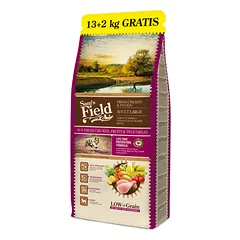
1,80 €/kg
26,99 € / 15 kg

Country Dog
1,89 €/kg
28,29 € / 15 kg
Club 4 Paws
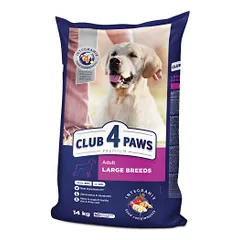
1,92 €/kg
26,94 € / 14 kg
Diamant
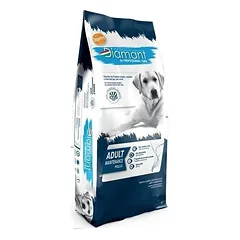
1,93 €/kg
28,99 € / 15 kg
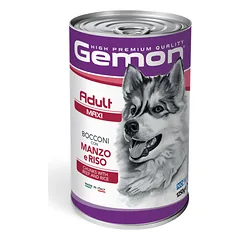
Gemon
1,94 €/kg
2,42 € / 1,3 kg

BIO FORM
2,00 €/kg
40,00 € / 20 kg
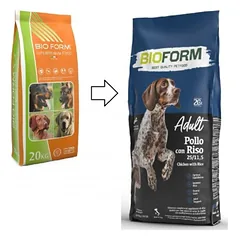
BIO FORM
2,00 €/kg
40,00 € / 20 kg