

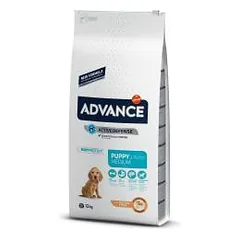
Advance
Advance Puppy Medium sausas maistas vidutinių veislių šuniukams, 12 kg
1,48 €/kg
17,76 € / 12 kg

Also known as: Jagdterrier
The German Hunting Terrier was developed in the early 20th century to produce a small dog fearless enough to work underground, hunting foxes and badgers directly in the den. Males weigh only around 10 kilograms, but pack a disproportionately strong bite and the stamina to work in tight tunnels with no way out. The coat comes smooth or rough, both able to withstand bad weather and bites from quarry. The breed was built purely for work, not the show ring, so looks were never a priority. Temperament runs bold and fearless, sometimes to the point of being a handful at home. Supervision is needed around children, since the breed can be dominant and has little patience for other small animals. Life expectancy runs 12 to 14 years.
Browse dog food sized right for this breed
German Hunting Terrier: how old in human years?
Energy level
Trainability
Family friendly
Grooming need
Males 33–40 cm
Females 33–40 cm
Males 7.5–10 kg
Females 7.5–8.5 kg
German Hunting Terrier's average temperament and family-life score for this breed is moderate.
German Hunting Terrier's energy and exercise needs are high.
German Hunting Terrier's guarding and alertness traits are moderate.
German Hunting Terrier's grooming needs are low.
The first time you see a German Hunting Terrier catch the scent of a marten, you will understand what it was made for. The whole small body becomes a coiled spring, the ears stop hearing you, and the world shrinks to a smell. This is not a sofa dog that occasionally goes for a walk; it is a working hunter in a pocket-sized package, with near-bottomless energy and a powerful prey drive. A flat is too small for it, and the garden needs a solid fence, because it digs under one faster than you can fetch a spade.
It is clever and learns fast, but it has opinions and will happily check whether your rules still apply today. It needs an experienced, calmly consistent owner and real work: tracking, hunting, long hikes or dog sports. It does not get on with every dog, is wary of strangers and will loudly report every footstep near the door, while cats, rabbits and hamsters count as quarry, not friends. Keep an eye on it around small children; older children who love the outdoors can become its best companions.
A good day for this dog means a morning in the woods, an afternoon with a job for its brain and an evening at your feet. Given what it needs, it is loyal, devoted and surprisingly affectionate with its own people; left without it, it will find its own work, and you probably won't like what it chooses.
A German Hunting Terrier's coat is dense and harsh, smooth on some dogs and wiry on others, made to shrug off brambles, rain and the soil of a fox earth. It sheds little and never needs a grooming salon: a weekly going-over with a stiff brush or a rubber grooming mitt clears out dead hair and sand. Bathe only when the dog is genuinely filthy, since every unnecessary wash strips the natural oils that protect skin and coat.
The real grooming happens after every outing. Run your hands over the dog from nose to tail, feeling for ticks, scratches, embedded thorns and red patches of skin, especially on the belly and between the toes. Look into the ears for soil, grass seeds or a bad smell, and wipe the outer ear with a dry cloth. The eyes should be clear and bright; if one turns red, goes cloudy or the dog keeps it half shut, don't wait and have a vet look at it.
The German Hunting Terrier was bred for work rather than the show ring, and it shows: this is a tough, hardy little dog with a long life span. A few things are still worth knowing in advance, mainly about the eyes, heart, joints, skin and thyroid. When you know your dog well and notice what has changed, your vet can step in much sooner.
This is general information, not veterinary advice. For your own dog's health, tests and treatment, see a vet.
The lens of the eye is held in place by fine fibres, and when these weaken, the lens can slip out of position. The eye suddenly turns red or cloudy, and the dog squints or paws at it; when that happens, a vet is needed right away. Because the condition is inherited, if you are getting a puppy, ask the breeder about the parents' health testing.
Heart disease covers a range of problems in which the heart works less well and the body runs short of stamina. In a dog that normally never stops, the signs stand out: it tires early, breathes hard at rest or starts coughing. A vet listens to the heart at every check-up, which makes regular visits especially worthwhile.
Hip dysplasia is a fault in how the hip joint forms: the ball of the thigh bone sits poorly in its socket, and the joint wears over time. Your terrier may get up stiffly after a nap, avoid jumping or limp a little after a long tramp through the woods. Sound hips matter a lot to such an athletic dog, so ask the breeder about the parents' health testing.
An allergy is the immune system overreacting to something in the environment or food that is harmless in itself. You will see the dog scratching, licking its paws, rubbing its face, or reddened skin on the belly and in the armpits. A hunting terrier spends hours in grass, undergrowth and earths, so look over its skin after outings and show any lasting itch to a vet.
When the thyroid gland makes too little hormone, the body seems to slow down. In a dog this restless it is hard to miss: it becomes sluggish, gains weight, seeks out warmth, and its coat loses its shine or thins. Whether the thyroid is really the cause is for a vet to establish with blood tests.
This list is chosen by the breed's weight (10 kg) rather than the breed itself: shops label food by dog size, so every breed of the same size gets the same list. Prices are updated daily.
≈ 145 g of dry food a day, from €7,98 a month For a neutered, normally active 8,4 kg dog. Calculate for your dog
Advance
1,48 €/kg
17,76 € / 12 kg
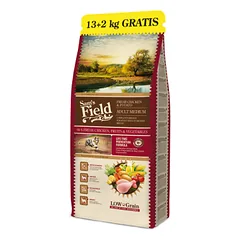
Sam's Field
1,80 €/kg
26,99 € / 15 kg

Country Dog
1,89 €/kg
28,29 € / 15 kg
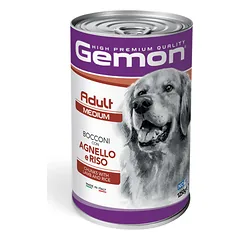
Gemon
1,94 €/kg
2,42 € / 1,3 kg
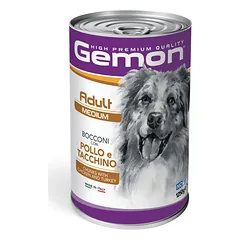
Gemon
1,94 €/kg
2,42 € / 1,3 kg
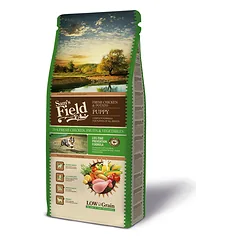
Sam's Field
2,11 €/kg
27,45 € / 13 kg
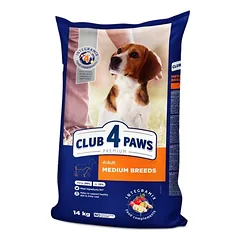
2,14 €/kg
30,00 € / 14 kg
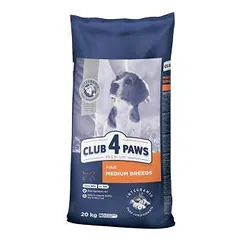
Club 4 Paws
2,15 €/kg
42,99 € / 20 kg