

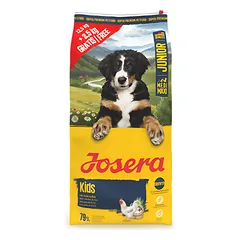
Josera
Josera Kids 12,5kg + 2,5kg = 15 kg
1,38 €/kg
37,89 € / 27,5 kg

Also known as: Entlebucher Cattle Dogs, Entlebucher
The smallest of Switzerland's four Sennenhund breeds, this dog comes from the Entlebuch valley, where it drove cattle and watched the farmstead. Despite topping out around 30 kilograms, it carries a sturdy frame and the herding instinct to nip at heels, a habit that can surface as gentle heel nipping during play with children. The short tricolor coat needs little upkeep. The breed stayed largely unknown outside Switzerland and wasn't formally registered until well into the 20th century. It carries more energy than its build suggests, so long daily exercise matters. Fiercely loyal to its own family, it stays reserved with strangers. Life expectancy runs 11 to 13 years.
Browse dog food sized right for this breed
Entlebucher Mountain Dog: how old in human years?
Energy level
Trainability
Family friendly
Grooming need
Males 44–50 cm
Females 42–48 cm
Males 20–30 kg
Females 20–30 kg
Entlebucher Mountain Dog's average temperament and family-life score for this breed is moderate.
Entlebucher Mountain Dog's energy and exercise needs are moderate.
Entlebucher Mountain Dog's guarding and alertness traits are high.
Entlebucher Mountain Dog's grooming needs are low.
In the Entlebuch valley in Switzerland this tricolour dog drove cattle, and that working spirit still runs hot in it. It is the smallest of the four Swiss mountain dogs, but it has energy enough for two: every day it needs long walks, running, games and jobs for its head, such as obedience work, scent games or an agility course. Without that work it will find its own, herding the children, the cat or your guests.
It is clever, learns fast and likes having a clear job, but it needs a calm, consistent owner. It is wary of strangers and reports everything happening beyond the fence loudly and with conviction. So introduce it as a puppy to people, sounds and places, so that alertness doesn't turn into suspicion.
The Entlebucher is devoted to its family and wants to be part of everything. A flat feels cramped to it; it does best in a home with a garden and an owner who loves being on the move. It can get on with children, but may try to herd them by nipping at their heels, so keep an eye on the first meetings. And after a well-used day it lies down at your feet, still keeping one eye on whether the herd is all present.
An Entlebucher's coat is short, dense and hard over an undercoat, so rain and mud fall off it almost by themselves. It asks little: a weekly going-over with a rubber mitt or brush, and more often in spring and autumn when the undercoat comes out, because that is when you will find more hair on the floor. It rarely needs a bath, only when it has truly rolled in something it shouldn't have.
As you brush, run a hand down to the skin and check for ticks, scratches from brambles or red patches. Look at the triangular drop ears once a week and wipe them if they look dirty. Check the eyes after a walk through fields, and take an eye that is red, watering or suddenly looks different to the vet.
A dog that still wants a game after a day on the mountain pastures is a sturdy dog, and the Entlebucher Mountain Dog lives around eleven to thirteen years. The conditions linked to the breed involve the hips, knees and eyes, and the signs of all of them show first in movement: how your dog gets up, runs, or finds its way at dusk. When in doubt, talk to a vet, and if you are getting a puppy, ask the breeder about the parents' health testing.
This is general information, not veterinary advice. For your own dog's health, tests and treatment, see a vet.
The hip joint forms loosely, so the ball doesn't sit snugly in its socket and the joint wears over time. You might notice your dog getting up more slowly after a rest, avoiding stairs, or pushing off with both hind legs together at a run. For an Entlebucher, whose work is running and turning, sound hips are everything, so ask the breeder about the parents' health testing.
The kneecap slides out of its groove and the leg briefly locks. Your dog hops on three legs for a few strides, then runs on as if nothing happened. A dog this busy won't stop for a bit of discomfort, so mention the hop to your vet.
The light-sensitive layer at the back of the eye, the retina, slowly wastes away, and sight fades over the years; it isn't painful. Seeing in dim light goes first: a dog that hesitates on the stairs in the evening or won't jump off the sofa in a dark room. An Entlebucher reads the world with its eyes, so show changes like these to a vet, and if you are getting a puppy, ask the breeder about the parents' health testing.
This list is chosen by the breed's weight (30 kg) rather than the breed itself: shops label food by dog size, so every breed of the same size gets the same list. Prices are updated daily.
≈ 330 g of dry food a day, from €18,08 a month For a neutered, normally active 25 kg dog. Calculate for your dog
Josera
1,38 €/kg
37,89 € / 27,5 kg
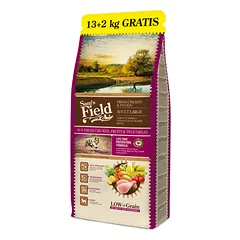
Sam's Field
1,80 €/kg
26,99 € / 15 kg

Country Dog
1,89 €/kg
28,29 € / 15 kg
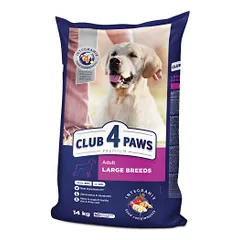
Club 4 Paws
1,92 €/kg
26,94 € / 14 kg
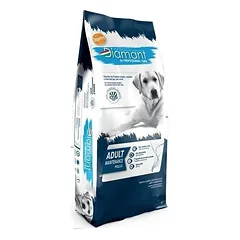
Diamant
1,93 €/kg
28,99 € / 15 kg
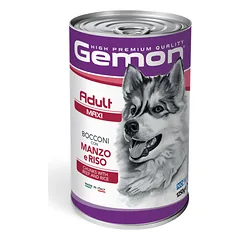
Gemon
1,94 €/kg
2,42 € / 1,3 kg

BIO FORM
2,00 €/kg
40,00 € / 20 kg
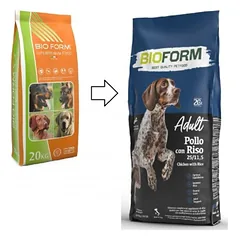
BIO FORM
2,00 €/kg
40,00 € / 20 kg