

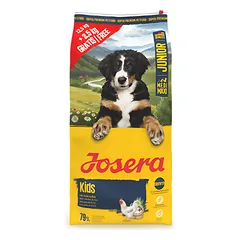
Josera
Josera Kids 12,5kg + 2,5kg = 15 kg
1,38 €/kg
37,89 € / 27,5 kg

Also known as: Minibullterrier, Zwergbullterrier, Hinks Bull Terrier, Varkhond
Developed in 19th century England by crossing bulldogs with terriers, this breed started out in fighting rings and rat pits before being refined into a purely companion breed. The distinctive egg shaped head, with no clear stop between forehead and muzzle, is the breed's trademark and recognizable even to people who know nothing else about dogs. A male can weigh up to 28 kilograms of muscular, compact build. The short, dense coat needs little upkeep, but underneath it sits an unusually strong bone and joint structure. The Bull Terrier is known for a stubborn, playful streak and a strong drive to chew and play that can turn destructive if the dog is bored. With consistent socialization it's typically friendly toward people but can be intolerant of other dogs of the same sex. Life expectancy runs 10 to 14 years.
Browse dog food sized right for this breed
Bull Terrier: how old in human years?
Energy level
Trainability
Family friendly
Grooming need
Males 45–55 cm
Females 45–55 cm
Males 24–28 kg
Females 20–24 kg
Bull Terrier's average temperament and family-life score for this breed is moderate.
Bull Terrier's energy and exercise needs are moderate.
Bull Terrier's guarding and alertness traits are moderate.
Bull Terrier's grooming needs are low.
A Bull Terrier enters a room as though its arrival has just been announced: it spins in circles, shoves toys around with its egg-shaped nose and waits for applause. This English dog has both muscle and a sense of humour, and that energy needs a daily outlet: long walks, games of tug and a chance to run flat out somewhere safe.
You can train it, and you should, but come ready to negotiate. A Bull Terrier understands perfectly well what you want; it just doesn't always agree it's a good idea, so short, cheerful sessions with treats work better than drilling it into boredom. Its reputation can be louder than the dog itself: with its own family it is devoted and affectionate, and it greets strangers with reserve rather than hostility.
It doesn't always get on with other dogs, and it may take a cat or a rabbit in the garden for prey, so introductions call for patience and a lead. For small children its strength and enthusiasm can be too much; it does better in a family with older children who know how to play calmly. And save it a spot on the sofa: after a busy day, this gladiator will happily doze off pressed against your side.
The Bull Terrier's short, flat, close coat is one of the few things you will never have to negotiate with this dog about. Run a rubber mitt over it once a week and it will shine; shedding is light. The skin is easy to see under such a short coat, so as you go, look for redness, lumps or scratches. If your dog is white with pink skin, make sure it has shade in summer: pale skin burns easily in the sun.
Check the upright ears once a week; they are open, so dirt or seeds show at once, and clean and odour-free means all is well. Wipe the small triangular eyes with a damp cloth if discharge collects in the corners, and take an eye that is red or watering to the vet.
An egg-shaped head, small triangular eyes and boundless self-confidence: a Bull Terrier lives ten to fourteen years and has no intention of wasting a single day of them being dull. Its health list takes in the knees, the heart, the kidneys and the hearing; some signs show at once, others stay quiet for a long time, so regular vet visits pay off here. If you are getting a puppy, ask the breeder about the parents' health testing.
This is general information, not veterinary advice. For your own dog's health, tests and treatment, see a vet.
The kneecap, a small bone at the front of the knee, can slip out of its groove so that a hind leg briefly stops cooperating. You might see your Bull Terrier suddenly limp or carry a hind leg bent for a few steps, then walk on as though nothing happened. A sturdy, muscular dog that spins and bounces with everything it has can easily mask that limp, so when you spot it, show it to a vet.
This is a heart valve that formed incorrectly before birth: the valve between the left atrium and ventricle doesn't close tightly, and the heart has to work harder. A young dog may tire sooner, take more breaks during play, or cough. A Bull Terrier is never short of energy, so a clear drop in its urge to move is a sign worth showing to a vet, who will listen to the heart and decide what comes next.
This is an inherited kidney disease: the tiny filters in the kidneys are damaged, and the kidneys gradually clean the blood less well. The first signs are subtle: the dog drinks more, keeps asking to go out, and may lose appetite or weight. The condition is linked to Bull Terriers, so if you notice extra drinking, don't wait; show your dog to a vet, and if you are getting a puppy, ask the breeder about the parents' health testing.
Deafness can be partial or complete, in one ear or both, and in dogs it is linked to white coat colour. A white Bull Terrier may not react to your footsteps behind it, or may startle when you touch it while it sleeps. If your puppy is mostly white, ask a vet to check its hearing.
This list is chosen by the breed's weight (28 kg) rather than the breed itself: shops label food by dog size, so every breed of the same size gets the same list. Prices are updated daily.
≈ 320 g of dry food a day, from €17,53 a month For a neutered, normally active 24 kg dog. Calculate for your dog
Josera
1,38 €/kg
37,89 € / 27,5 kg
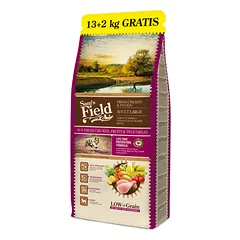
Sam's Field
1,80 €/kg
26,99 € / 15 kg

Country Dog
1,89 €/kg
28,29 € / 15 kg

Club 4 Paws
1,92 €/kg
26,94 € / 14 kg

Diamant
1,93 €/kg
28,99 € / 15 kg
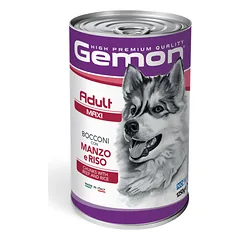
Gemon
1,94 €/kg
2,42 € / 1,3 kg

BIO FORM
2,00 €/kg
40,00 € / 20 kg

BIO FORM
2,00 €/kg
40,00 € / 20 kg