


Real Dog
Real Dog sausas maistas suaugusiems, didelių-milžiniškų veislių, šunims su vištiena ir ryžiais 20kg
2,11 €/kg
42,15 € / 20 kg

Also known as: St. Hubert Hound, Švento Huberto skalikas
One of the oldest and most scent-sensitive breeds in existence, its ancestry traces to medieval monasteries in Belgium, which is where the breed's other name, Saint-Hubert, comes from. The long, drooping ears and loose facial skin help trap scent particles in the air, a design that's kept the breed in active use for law enforcement trailing work for decades. The body is large, up to 50 kilograms, and the gait is slow but relentless, capable of following a trail for hours. Drooling comes with the territory given the loose lips. The temperament is calm and friendly despite the imposing look. Once it locks onto a scent, pulling it off that trail is genuinely difficult. Life expectancy runs 10 to 12 years.
Browse dog food sized right for this breed
Bloodhound: how old in human years?
Energy level
Trainability
Family friendly
Grooming need
Males 63–69 cm
Females 58–63 cm
Males 41–50 kg
Females 36–45 kg
Bloodhound's average temperament and family-life score for this breed is moderate.
Bloodhound's energy and exercise needs are moderate.
Bloodhound's guarding and alertness traits are moderate.
Bloodhound's grooming needs are moderate.
You set out for a morning walk and three steps later realise you are not the one leading. Your Bloodhound's nose has already found something, and it is following that trail with the devotion of a dog that believes the fate of the world depends on it. This breed was made to follow a scent for miles, and that instinct is stronger than any shout of yours. A lead and a secure fence are not an option here; they are the rule.
With its family it is gentle and patient, and friendly with children, though its size and enthusiasm can bowl a toddler over by accident. It gets along easily with other dogs, greets strangers calmly and is no guard dog. It can learn, and not badly, but only when the lesson seems more interesting than the smell on the grass, so bring patience, treats and a sense of humour. Its voice, a deep and musical bay, carries a long way.
A flat feels cramped to it: it needs room and long daily walks, ideally with a job for its nose, such as scent games. After a good outing it stretches across the entire sofa and snores loud enough for the whole house to hear. Be ready, too, for drool marks on your trousers, your walls and even your ceiling; it is a Bloodhound's signature.
A Bloodhound's coat is short and dense, so a once-a-week going-over with a rubber mitt is enough: the dead hair comes out and the coat takes on a shine. Shedding is moderate. The skin needs more of your attention, especially the folds on the head and neck, where moisture, drool and dirt collect. A few times a week, open the folds, wipe them with a damp cloth and dry them well, and show the vet any skin that looks red, stays damp or smells bad.
The ears are a ritual of their own. Once a week lift each long ear and look inside: clean, odour-free and not red means all is well. After every walk and every meal the ear tips will have picked up something from the ground or the bowl, so wipe them. As for drool, that isn't a grooming task but a way of life: a towel by the door and another by the bowl will earn their keep every day.
A Bloodhound's nose leads it through the world, and everything else follows behind: the long ears, the wrinkled skin, the deep chest. The very features that make it so special are tied to a few conditions worth knowing about, in the joints, the ears and the stomach. A Bloodhound can live ten to twelve years, and if you notice anything unusual, show it to a vet.
This is general information, not veterinary advice. For your own dog's health, tests and treatment, see a vet.
The hip or elbow joints develop abnormally, so they wear over time and begin to hurt. You might notice your Bloodhound getting up stiff the morning after a long trail, limping, or not wanting to jump into the car. For a big, heavy dog that can walk for hours with its nose to the ground, sound joints matter a great deal, so if you are getting a puppy, ask the breeder about the parents' health testing.
The ear canal becomes inflamed and the ear turns sore. You might notice your dog shaking its head, scratching at an ear, or a bad smell or dark discharge coming from it. A Bloodhound's long, heavy ears cover the canal, get little air and happily drag through puddles and the food bowl, so check them every week, and see a vet if you notice these signs.
The stomach fills with gas and can twist on itself, cutting off its own blood supply. The dog becomes restless, tries to vomit without bringing anything up, drools even more than it normally does, and its belly swells and hardens. A Bloodhound is a big, deep-chested dog, and this is an emergency: if you see these signs, get it to a vet immediately.
This list is chosen by the breed's weight (50 kg) rather than the breed itself: shops label food by dog size, so every breed of the same size gets the same list. Prices are updated daily.
≈ 495 g of dry food a day, from €27,16 a month For a neutered, normally active 43 kg dog. Calculate for your dog
Real Dog
2,11 €/kg
42,15 € / 20 kg

Sam's Field
2,56 €/kg
33,26 € / 13 kg
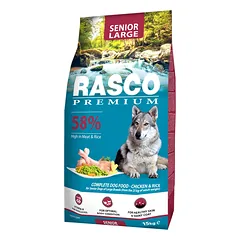
Rasco
2,67 €/kg
39,99 € / 15 kg
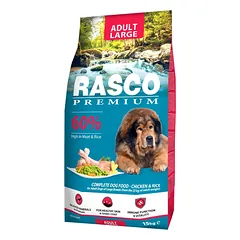
Rasco
2,67 €/kg
39,99 € / 15 kg
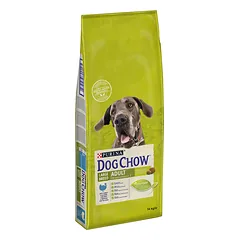
Purina
2,71 €/kg
37,96 € / 14 kg

Sam's Field
2,77 €/kg
35,99 € / 13 kg
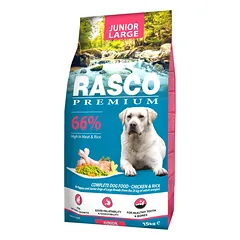
Rasco
2,80 €/kg
41,99 € / 15 kg

Sam's Field
2,85 €/kg
37,04 € / 13 kg