


Bloodhound vs Dalmatian
Compare two breeds
Pick two breeds to see them compared side by side.
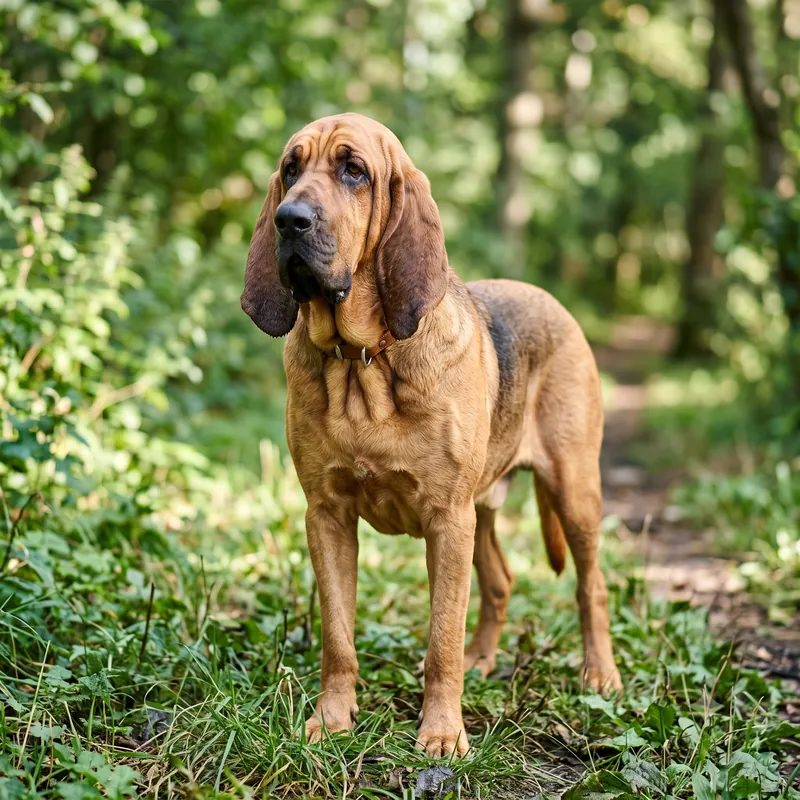
Bloodhound
One of the oldest and most scent-sensitive breeds in existence, its ancestry traces to medieval monasteries in Belgium, which is where the breed's other name, Saint-Hubert, comes from. The long, drooping ears and loose facial skin help trap scent particles in the air, a design that's kept the breed in active use for law enforcement trailing work for decades. The body is large, up to 50 kilograms, and the gait is slow but relentless, capable of following a trail for hours. Drooling comes with the territory given the loose lips. The temperament is calm and friendly despite the imposing look. Once it locks onto a scent, pulling it off that trail is genuinely difficult. Life expectancy runs 10 to 12 years.
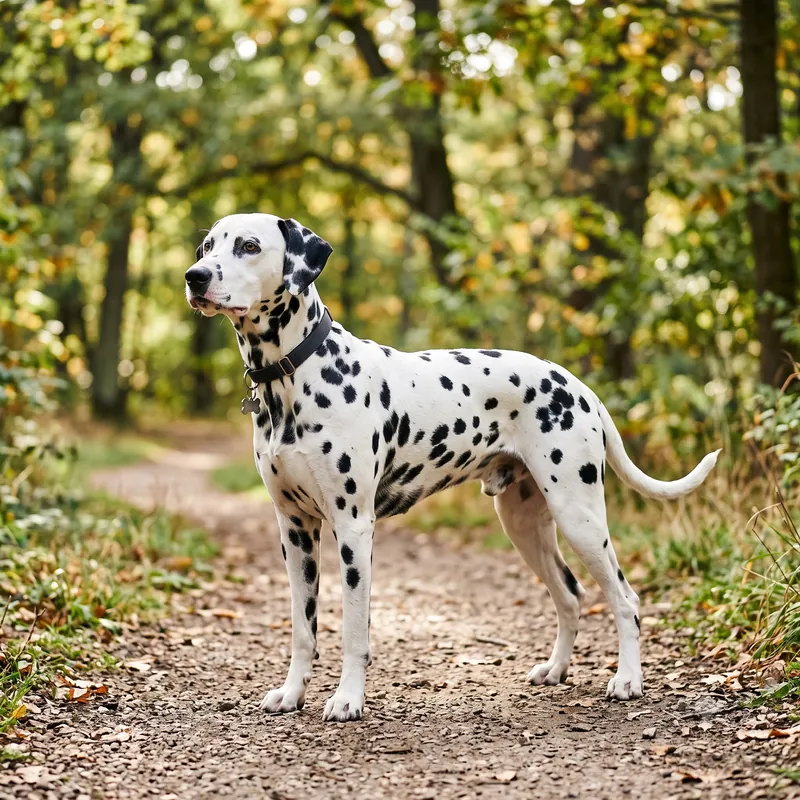
Dalmatian
The Dalmatian's origins are tied to the Dalmatia region in modern Croatia, though for centuries the breed served as a coaching dog, running alongside horse-drawn carriages and guarding them along the road. That bond with horses explains why the breed later became a mascot for American fire brigades, back when fire engines were still horse-drawn. The short, dense coat with its black or liver spots on white develops after birth: puppies are born completely white. An adult male can weigh up to 32 kilograms of lean, muscular, running-built frame. Dalmatians carry one of the highest risks of urate stone formation among all breeds, so diet and water intake need attention. Exercise needs run very high, built to trot for dozens of kilometres alongside a carriage in a day. Deafness, more common in dogs with a mostly white coat, is a known concern in the breed. Life expectancy runs 11 to 13 years.
At a glance
| Bloodhound | Dalmatian | |
|---|---|---|
| Height (male) | 63.0–69.0 cm | 56.0–61.0 cm |
| Weight (male) | 41.0–50.0 kg | 24.0–32.0 kg |
| Life expectancy | 10–12 yrs | 11–13 yrs |
| Coat | short, dense | short, dense, fine, spotted |
Temperament & Family Life
| Bloodhound | Dalmatian | |
|---|---|---|
| Family friendly | ||
| Good with children | ||
| Good with other dogs | ||
| Friendly with strangers | ||
| Intelligence | ||
| Trainability |
Exercise, Energy & Space
| Bloodhound | Dalmatian | |
|---|---|---|
| Energy level | ||
| Exercise need | ||
| Apartment friendly | ||
| Prey drive | ||
| Hunting instinct |
Guarding & Alertness
| Bloodhound | Dalmatian | |
|---|---|---|
| Guarding instinct | ||
| Watchfulness | ||
| Barking level |
Grooming & Care
| Bloodhound | Dalmatian | |
|---|---|---|
| Shedding | ||
| Drooling | ||
| Grooming need |
Temperament and care scores (1-5) are a general guide based on the breed standard — every individual dog is different.