

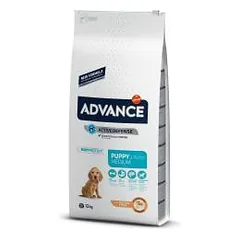
Advance
Advance Puppy Medium sausas maistas vidutinių veislių šuniukams, 12 kg
1,48 €/kg
17,76 € / 12 kg

Also known as: PBGV, PGBV
In France's Vendée region this breed was bred to hunt hare through dense scrub, where short legs let it push through undergrowth a taller dog would have to go around. The name spells this out directly: basset simply means low-set. The wiry, tousled coat shields the skin from thorns. The body is small, up to 18 kilograms, but packed with energy and nose drive. It's curious to a fault, curious enough that secure fencing is non negotiable, since a scent trail can override any amount of recall training. Playful and friendly with family, it doesn't take naturally to a quiet apartment life. Life expectancy runs 13 to 15 years.
Browse dog food sized right for this breed
Petit Basset Griffon Vendeen: how old in human years?
Energy level
Trainability
Family friendly
Grooming need
Males 34–38 cm
Females 34–38 cm
Males 15–18 kg
Females 13–16 kg
Petit Basset Griffon Vendeen's average temperament and family-life score for this breed is high.
Petit Basset Griffon Vendeen's energy and exercise needs are high.
Petit Basset Griffon Vendeen's guarding and alertness traits are low.
Petit Basset Griffon Vendeen's grooming needs are low.
A walk with a Petit Basset Griffon Vendeen doesn't follow your route; it follows its nose. These hounds from the Vendée in western France were bred to trail hares through dense scrub, and a scent still matters more to them than anything you might call out. On a lead you will go far; off it, you go where it decides.
There is enough energy in this small body for a dog twice its size. It needs long daily walks with plenty of sniffing, plus games, and training calls for patience and a sense of humour: it understands perfectly well, it just doesn't always see the point of obeying. Treats and short lessons work wonders. It has a voice and isn't shy about using it, so your neighbours will hear all about its moods.
With people, though, it is one of the friendliest dogs around: it adores its family, plays patiently with children, gets on with other dogs and greets strangers with its tail rather than a bark. It will never make a guard dog. A good day is a long ramble full of smells, a family dinner and a nap wherever it is warmest, usually on your feet.
The Petit Basset Griffon Vendeen's coat is rough and tousled, as if the dog had just pushed its way out of a hedge, which it usually has. That unkempt look is the breed's charm, so no clipping is needed: brush once a week to lift out dead hair and burrs, and now and then pluck loose dead hair by hand. Shedding is light. As you brush, check the skin under the beard and along the belly, where the coat brushes the ground and damp, mud and ticks collect.
Drop ears don't air well, so once a week lift them and take a sniff: clean, odour-free and not red means all is well. Wipe the beard with a damp cloth after meals, and keep the hair around the eyes tidy so it doesn't poke them. Take a red or watering eye to the vet.
Short legs, a long body and bottomless optimism: the Petit Basset Griffon Vendeen lives thirteen to fifteen years and spends a good share of them with its nose to the ground. A few conditions are linked to the breed, and knowing them in advance helps you notice changes in good time. If anything seems off, show your dog to a vet, who will decide what comes next.
This is general information, not veterinary advice. For your own dog's health, tests and treatment, see a vet.
This is a fault in how the hip joint develops: the ball of the thigh bone doesn't sit snugly in its socket, so the joint wears over time. You might notice your dog getting up slowly, hesitating to jump into the car, or moving stiffly after a long walk. A long-bodied dog that would follow a trail all day needs sound joints, so if you are getting a puppy, ask the breeder about the parents' health testing.
This covers a wide range of eye conditions, from eyelid and tear problems to changes in the lens or retina. Behind that bearded face the eyes aren't always easy to see, so part the hair regularly and look: is an eye red, cloudy or watering? Show any change to your vet, who will work out what is going on.
The kneecap sometimes slips out of its groove and the leg briefly locks. You may see your dog carry a hind leg in the air for a few strides while sniffing along, then put it down again. Describe it to your vet, who will assess what is happening.
Epilepsy means repeated seizures caused by a disturbance in the brain's activity. During one, a dog may fall onto its side, paddle its legs, drool and not respond to your voice. A seizure is an emergency: your dog needs a vet immediately.
The thyroid gland makes too little hormone, and the body slows down. A normally tireless PBGV starts trailing behind on walks, gains weight, and the harsh coat thins or turns dry. The changes creep in slowly, so if your dog seems not quite itself, tell your vet.
This list is chosen by the breed's weight (18 kg) rather than the breed itself: shops label food by dog size, so every breed of the same size gets the same list. Prices are updated daily.
≈ 230 g of dry food a day, from €12,63 a month For a neutered, normally active 15,5 kg dog. Calculate for your dog
Advance
1,48 €/kg
17,76 € / 12 kg
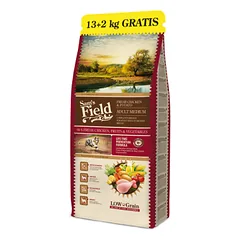
Sam's Field
1,80 €/kg
26,99 € / 15 kg

Country Dog
1,89 €/kg
28,29 € / 15 kg
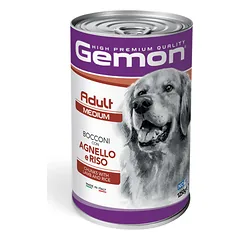
Gemon
1,94 €/kg
2,42 € / 1,3 kg
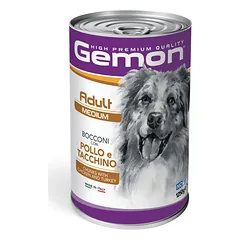
Gemon
1,94 €/kg
2,42 € / 1,3 kg

Sam's Field
2,11 €/kg
27,45 € / 13 kg

2,14 €/kg
30,00 € / 14 kg

Club 4 Paws
2,15 €/kg
42,99 € / 20 kg