

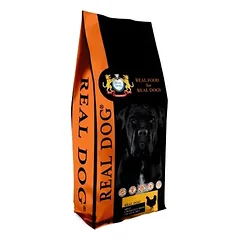
Real Dog
Real Dog sausas maistas suaugusiems, didelių-milžiniškų veislių, šunims su vištiena ir ryžiais 20kg
2,11 €/kg
42,15 € / 20 kg

Also known as: Dürrbächler, Bouvier Bernois, Bernese Cattle Dog
Originating in the canton of Bern in the Swiss Alps, this large dog once pulled carts of cheese and milk to market and guarded mountain farmsteads. It's the only one of the four Swiss mountain dog breeds with a long, silky coat, the other three being short coated. The distinctive black, rust and white coloring has stayed largely unchanged for centuries. A male can weigh up to 50 kilograms, and that size unfortunately comes with one of the shortest lifespans among large breeds, often only 7 to 10 years, partly due to a hereditary predisposition to cancer. The long coat sheds heavily year round and needs brushing several times a week. Despite its working origins and imposing size, its temperament tends to be calm, gentle and deeply attached to family. Life expectancy runs 7 to 10 years.
Browse dog food sized right for this breed
Bernese Mountain Dog: how old in human years?
Energy level
Trainability
Family friendly
Grooming need
Males 64–70 cm
Females 58–66 cm
Males 38–50 kg
Females 36–48 kg
Bernese Mountain Dog's average temperament and family-life score for this breed is high.
Bernese Mountain Dog's energy and exercise needs are low.
Bernese Mountain Dog's guarding and alertness traits are moderate.
Bernese Mountain Dog's grooming needs are moderate.
This dog comes from Swiss farms, where the job was to be around: in the pasture, in the yard, beside the cart. The urge to be around stayed. A Bernese follows you from room to room and lies down exactly where you are most likely to trip over it. It is calm but not lazy, and it needs a good long walk every day, forest trails and open fields, while snow delights it more than anyone else in the family. Heat is harder on it, so in summer, walk in the morning and evening.
It wants to learn and catches on quickly, just at its own pace rather than yours. A calm voice and praise get further than sternness, and the basics, like walking on a loose lead, are best taught while the puppy weighs ten kilos rather than forty.
With children it is gentle and patient, though it may bowl over a toddler with a sweep of the tail. It greets strangers with reserve and will let you know someone has arrived, without barking for the sake of it. A walk-up flat suits it neither in size nor in temperament, and long hours alone are the saddest thing you can offer it: it is happiest in a home with a garden and people who are around for most of the day.
That long, silky double coat was made for Swiss mountain winters; in your living room it becomes tumbleweeds under the sofa. It sheds generously, especially when the seasons turn, so brush at least a couple of times a week and daily during a heavy shed, using a wide-toothed comb and a long-pinned brush that actually reach the undercoat. Pay extra attention behind the ears, on the trousers and in the armpits, where tangles form first. While you're in there, look at the skin too: redness or a scratch can stay hidden in a coat this thick for a long time.
The ears hang down in soft triangles, so not much air gets inside. Once a week, lift each one, have a sniff and wipe the visible part with a cotton pad, leaving the ear canal itself alone. Clean the corners of the eyes with a damp cloth if gunk builds up; a red or weepy eye is a reason to see the vet. And keep a towel by the door: a Bernese is no stranger to drool, especially after a visit to the water bowl.
A big tricolour dog that flops onto your shoes and sighs will win you over in seconds, but its health deserves a frank conversation. Bernese Mountain Dogs live shorter lives than many breeds, around seven to ten years, and a large body brings its own concerns with joints and digestion. None of that is a reason to pass on the breed; it is a reason to choose a careful breeder, watch your dog closely and see a vet in good time.
This is general information, not veterinary advice. For your own dog's health, tests and treatment, see a vet.
Here the stomach fills with gas and can twist on itself, cutting off its own blood supply. The dog turns restless, retches without bringing anything up, drools, and the belly looks swollen and tight. A large, deep-chested dog like the Bernese is in the risk group, so if you suspect it, get to a vet immediately, at any hour: this is an emergency and minutes count.
The hip joint develops loosely, so the ball of the thigh bone moves around more than it should and the joint wears over time. You might see a dog that is slow to get up after a nap, hesitates at the stairs, or runs with both back legs pushing off together like a rabbit. Forty-odd kilos is a lot for joints to carry, so ask the breeder about the parents' hip screening before you pick a puppy.
This is a developmental problem in the front elbow joint: the bones don't fit together as they should, and the joint becomes painful. A young, growing dog limping on a front leg, especially after a lively play session, is not something to write off as growing pains. A vet will work out what is going on, and for a heavy dog like the Bernese, early attention to the joints is well worth it.
Cancer is the umbrella term for diseases in which cells start multiplying out of control and form tumours. A lump that wasn't there before, unexplained weight loss, or a dog that has lost its appetite or spark is a reason to see the vet without waiting it out. With the Bernese, cancer is part of any honest talk about their shorter lives, so regular check-ups and your own hands running over the dog from nose to tail are good allies.
This list is chosen by the breed's weight (50 kg) rather than the breed itself: shops label food by dog size, so every breed of the same size gets the same list. Prices are updated daily.
≈ 495 g of dry food a day, from €27,16 a month For a neutered, normally active 43 kg dog. Calculate for your dog
Real Dog
2,11 €/kg
42,15 € / 20 kg

Sam's Field
2,56 €/kg
33,26 € / 13 kg
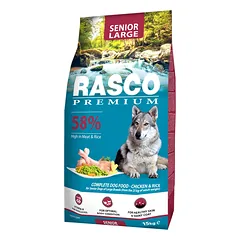
Rasco
2,67 €/kg
39,99 € / 15 kg
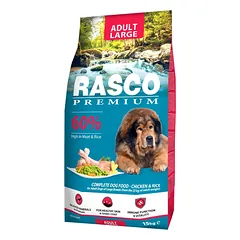
Rasco
2,67 €/kg
39,99 € / 15 kg
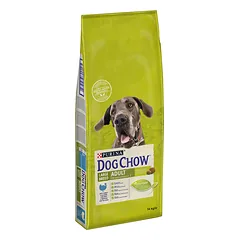
Purina
2,71 €/kg
37,96 € / 14 kg

Sam's Field
2,77 €/kg
35,99 € / 13 kg
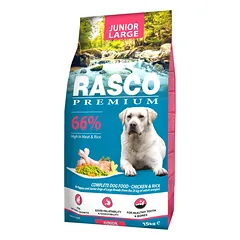
Rasco
2,80 €/kg
41,99 € / 15 kg

Sam's Field
2,85 €/kg
37,04 € / 13 kg