

VetExpert
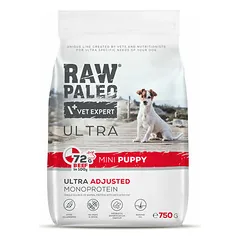
Raw Paleo Dog Ultra Mini Puppy Beef 750 kg
0,02 €/kg
13,09 € / 750 kg

This is one of the few terriers developed outside the British Isles, shaped in Australia where early settlers used it to hunt snakes, rodents and other vermin around the farmstead. A small frame of around 6.4 kilograms with a harsh, straight coat let it move easily through scrub and rock in a hot, dry climate. Despite its modest size the Australian Terrier kept a strong hunting drive and a loud, alert bark that once made it useful as a farm watchdog too. It is considered one of the oldest Australian native breeds, officially recognized before the Second World War. Temperament is often described as bold and independent, sometimes wary of strangers or unfamiliar dogs. Grooming is relatively straightforward, since the coat doesn't need the frequent professional stripping many other terriers require. Life expectancy runs 12 to 15 years.
Browse dog food sized right for this breed
Australian Terrier: how old in human years?
Energy level
Trainability
Family friendly
Grooming need
Males 25–25 cm
Females 25–25 cm
Males 6.4–6.4 kg
Females 6–6 kg
Australian Terrier's average temperament and family-life score for this breed is moderate.
Australian Terrier's energy and exercise needs are moderate.
Australian Terrier's guarding and alertness traits are moderate.
Australian Terrier's grooming needs are low.
In Australia this small dog was trusted with serious jobs: keeping the farm and hunting rodents. It still behaves as if guard duty were written into its contract: first to hear the gate, first to announce it, and only then deciding whether it's worth the fuss. It has plenty of energy but doesn't need a marathon; daily walks, games in the garden and something to sniff will keep it content.
It is clever but has opinions, so training works best when it is short, cheerful and paid in treats. The hunting nose sometimes drowns out the ears: a mouse in the bushes can matter more than you calling, so keep it on a lead where there's no fence. It gets on with other dogs, though it is in no hurry to give up its spot.
At home the Australian Terrier is a devoted, merry member of the family and good with children. Its size makes it well suited to flat life, as long as it gets out to move every day. In the evening it will happily settle in your lap, but one ear stays turned towards the hallway: work is work.
The Australian Terrier wears a harsh, straight coat that forms a ruff around the neck and a softer, lighter topknot on the head. It was made to stand up to sun, dust and scrub, so it asks for little: a weekly brush and comb, and a few times a year the dead hair hand-stripped, by you or a groomer. Shedding is light; just don't let the hair grow long between the paw pads.
When you check the coat, part it down to the skin: a harsh coat easily hides a tick, a grass seed or an irritated patch. Look at the pricked ears once a week, and trim, or have the groomer trim, any hair that starts poking into the eyes. Take a red or watering eye to the vet.
A dog you can tuck under one arm that considers itself a full-time worker: the Australian Terrier is a sturdy breed that can live twelve to fifteen years. Both conditions linked to the breed involve the hind legs, so the best thing you can do is know how your dog normally moves and notice when that changes. When in doubt, talk to a vet, and if you are getting a puppy, ask the breeder about the parents' health testing.
This is general information, not veterinary advice. For your own dog's health, tests and treatment, see a vet.
The kneecap slides out of its groove and, for a moment, the leg won't bend. It looks like an odd step: your terrier is trotting along, suddenly hops on three legs for a few strides, then shoots off again. The dog won't complain about it, so mention that hop to your vet at the next visit.
This is a hip disease of small dogs: the top of the thighbone loses its blood supply and slowly breaks down, and the joint becomes painful. The signs appear young, when a puppy or adolescent starts to limp on a hind leg and spare it, and the leg may look thinner. An Australian Terrier is stoic and good at hiding pain, so take a limp that doesn't go away to a vet.
This list is chosen by the breed's weight (6 kg) rather than the breed itself: shops label food by dog size, so every breed of the same size gets the same list. Prices are updated daily.
≈ 115 g of dry food a day, from €6,35 a month For a neutered, normally active 6,2 kg dog. Calculate for your dog
VetExpert
0,02 €/kg
13,09 € / 750 kg
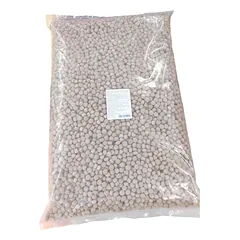
1,70 €/kg
17,02 € / 10 kg
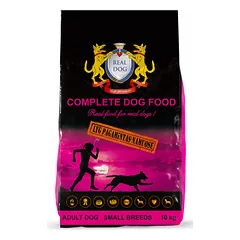
Real Dog
1,78 €/kg
17,79 € / 10 kg
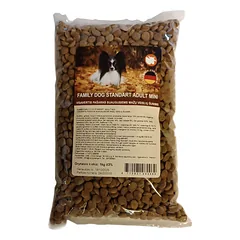
Family Dog
1,89 €/kg
1,89 € / 1 kg
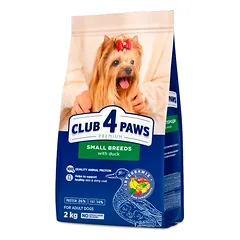
Club 4 Paws
1,93 €/kg
26,99 € / 14 kg
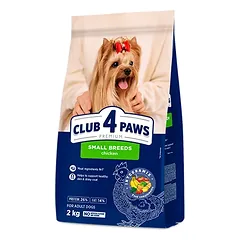
Club 4 Paws
1,93 €/kg
26,99 € / 14 kg
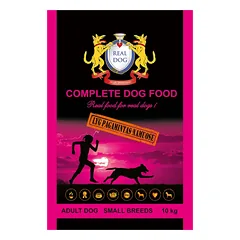
Real Dog
1,94 €/kg
19,42 € / 10 kg
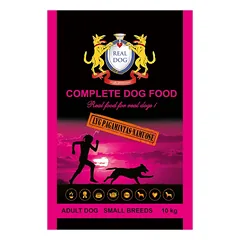
Real Dog
1,95 €/kg
19,49 € / 10 kg