

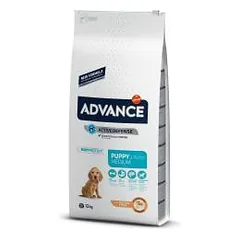
Advance
Advance Puppy Medium sausas maistas vidutinių veislių šuniukams, 12 kg
1,48 €/kg
17,76 € / 12 kg

In 19th century Manchester, England, this breed was developed for ratting in industrial districts and for rat-pit competitions popular among the working class of the time. The black and tan coloring and sleek, glossy coat give it the look of a miniature Doberman, though the two breeds aren't related. The frame is lean, up to 10 kilograms, fast and agile. The coat needs little upkeep and barely sheds. It stays lively and alert, quick to bark at anything out of the ordinary. Close with family, reserved with strangers. Life expectancy runs 15 to 17 years, longer than most breeds its size.
Browse dog food sized right for this breed
Manchester Terrier: how old in human years?
Energy level
Trainability
Family friendly
Grooming need
Males 38–41 cm
Females 38–41 cm
Males 5.4–10 kg
Females 5.4–10 kg
Manchester Terrier's average temperament and family-life score for this breed is moderate.
Manchester Terrier's energy and exercise needs are high.
Manchester Terrier's guarding and alertness traits are moderate.
Manchester Terrier's grooming needs are low.
In industrial-revolution Manchester these terriers caught rats: fast, tidy and without a shred of sentiment. Today your Manchester Terrier will turn the same talent on the neighbour's cat, the squirrels in the park or a toy mouse it "kills" ten times an evening. It is quick, curious and always ready for action.
It needs a proper walk and some play every day, but its compact size means it copes well in a flat, as long as the energy has somewhere to go. It learns quickly and gladly, especially when a task feels like a game; just don't expect blind obedience, because a terrier always has an opinion. Every ring of the doorbell will be announced loudly, but without hysterics.
With its own people the Manchester is devoted and likes to be close, and it does best with children who understand that a dog isn't a toy. It gets on reasonably with other dogs, but its instinct sees small animals differently, so a lead earns its keep in the park. In the evening it will happily burrow under a blanket beside you, sometimes until only its nose shows.
The Manchester Terrier's black-and-tan coat is short, dense and as glossy as a polished shoe, and it asks almost nothing of you. Once a week, run a rubber mitt or soft brush over it, then a damp cloth, and your dog will look fresh out of the show ring. Shedding is light. As you go, feel the skin for flakes, redness or thin patches. On a coat this short everything shows at once, so the weekly ritual doubles as a health check.
That coat gives little protection from the cold, so on a sharp winter morning your dog won't object to a warm jumper. Look inside the ears once a week: clean, odour-free and not red means all is well. Wipe the corners of the eyes with a damp cloth, and take a red, cloudy or watering eye to the vet straight away.
The Manchester Terrier is a sturdy, compact dog that can reach fifteen or even seventeen years. A long life means it is worth knowing the few conditions linked to the breed: some only show up over time, and some you will only notice if you watch closely. When in doubt, show your dog to a vet, who will decide what comes next.
This is general information, not veterinary advice. For your own dog's health, tests and treatment, see a vet.
This is an inherited clotting disorder: the blood lacks a protein that helps a small wound seal, so bleeding goes on for longer. You might notice a nail clipped too short or a scratch bleeding longer than usual, or gums bleeding when the puppy teeth change. Tell your vet about anything like this before any procedure, and if you are getting a puppy, ask the breeder about the parents' health testing.
The thyroid gland makes too little hormone, and the whole body slows down. A normally lively Manchester Terrier starts dawdling on walks, puts on weight without eating more, and the glossy coat goes dull or thin. These changes creep in slowly, so if your dog seems not quite itself, mention it to your vet.
The fine fibres holding the lens of the eye in place weaken, and the lens shifts out of position. The eye may suddenly turn red and watery, your dog may squint or paw at it, and the surface can look cloudy. This is an emergency that can damage sight quickly: if you see these signs, get your dog to a vet immediately.
Alopecia simply means hair loss, with the coat thinning or bald patches appearing. On a Manchester Terrier's short, dense coat you will spot thinning straight away, whether on the ear edges, the flanks or the neck. It can have many causes, so working out what is behind it is a job for your vet.
This list is chosen by the breed's weight (10 kg) rather than the breed itself: shops label food by dog size, so every breed of the same size gets the same list. Prices are updated daily.
≈ 135 g of dry food a day, from €7,48 a month For a neutered, normally active 7,7 kg dog. Calculate for your dog
Advance
1,48 €/kg
17,76 € / 12 kg
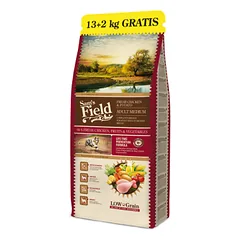
Sam's Field
1,80 €/kg
26,99 € / 15 kg

Country Dog
1,89 €/kg
28,29 € / 15 kg
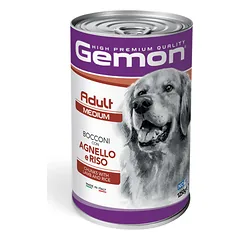
Gemon
1,94 €/kg
2,42 € / 1,3 kg
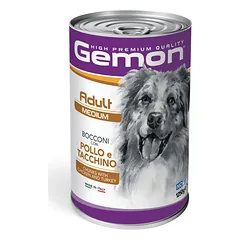
Gemon
1,94 €/kg
2,42 € / 1,3 kg

Sam's Field
2,11 €/kg
27,45 € / 13 kg

2,14 €/kg
30,00 € / 14 kg

Club 4 Paws
2,15 €/kg
42,99 € / 20 kg