


Specific
Specific FPD Kitten sausas maistas augantiems kačiukams, 400 kg
0,01 €/kg
5,59 € / 400 kg

Also known as: Cyrmic cat, Longhair Manx, Manx Longhair
The Cymric is the longhaired variety of the Manx cat, developed in Canada, and its name comes from the Welsh word for Wales, although the breed has no direct link to Wales. Like the Manx, many of these cats are born without a tail or with a very short one, and the hind legs are longer than the front ones, giving the body a rounded outline. The coat is long, double and dense, so it needs regular brushing. Adults typically weigh around 3 to 5.5 kilograms. The temperament is friendly, playful and attached to the family. Life expectancy is typically around 10 to 14 years.
Cymric: how old in human years?
Energy level
Playfulness
Family friendly
Grooming need
Males 3.5–5.5 kg
Females 3–4.5 kg
Cymric: average score for sociability and trainability is high.
Cymric: average score for activity and living space is high.
Cymric: average score for personality and communication is moderate.
Cymric: grooming and shedding demands are moderate.
The 1–5 trait scores are editorial estimates, not measurements. Every cat is an individual, so treat them as a general guide.
A Cymric walks into the room without a tail to signal its mood, so you read it from its eyes and voice instead, and the voice is a quiet one: this cat purrs far more than it meows. It is calm but not lazy, and likes being part of the family, sitting nearby while you eat, coming to watch while you tidy up and claiming its corner of the sofa in the evening.
The hunter in it is very much alive, so toy mice, balls and a wand toy never get old. Strong legs give it a big jump, and a tall cat tree and a stable scratching post will be used every day. It is comfortable in a flat, and copes with longer spells alone if it has something to do.
It gets on well with family, children and dogs; small children just need to be told that the stub of the tail and the back end are for gentle stroking. Strangers are watched from the side first, and approached when the cat decides it is time.
The Cymric's coat is long and double: under the soft top hairs sits a dense undercoat that makes a round cat look rounder still. It sheds generously, so comb it two or three times a week, and every day in spring and autumn when the undercoat changes. Less hair ends up on your clothes that way, and less of it in the cat's stomach after a wash.
With no tail, or only a short one, the hindquarters and "trousers" are left exposed, and that is exactly where the hair tangles and gets soiled most easily. Comb those areas carefully and tease out any knots gently. As you comb, check the ears, the corners of the eyes and the nails.
How to do it:
By age:
We don't have reliable health information specific to this breed, so we don't list conditions here. Keep up regular vet check-ups, and if you are getting a kitten, ask the breeder about the parents' health testing.
This is general information, not veterinary advice. For your own cat's health, tests and treatment, see a vet.
This list is the same on every cat breed page. Shops do not label cat food by breed, so it simply shows the cheapest cat food we track per kilogram. Check the label for your cat's age and health needs. Prices are updated daily.
≈ 63 g of dry food a day, from €3,61 a month For a neutered, normally active 4,1 kg cat. Calculate for your cat
Specific
0,01 €/kg
5,59 € / 400 kg

Brit Premium
0,33 €/kg
0,80 € / 2,4 kg

0,55 €/kg
1,05 € / 1,9 kg

0,55 €/kg
1,05 € / 1,9 kg

Tigerino
0,87 €/kg
20,89 € / 24 kg

Gourmet
0,94 €/kg
0,96 € / 1,0 kg

Fitmin for Life
1,00 €/kg
0,80 € / 0,8 kg
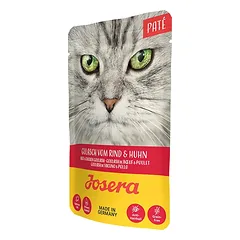
Josera
1,10 €/kg
1,49 € / 1,4 kg