

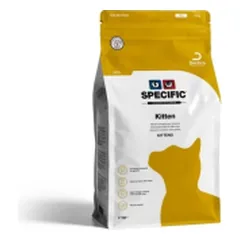
Specific
Specific FPD Kitten sausas maistas augantiems kačiukams, 400 kg
0,01 €/kg
5,59 € / 400 kg

Also known as: Thai Lilac, Thai Lilac Point
The Korat is one of the oldest naturally developed breeds, from Thailand, and is named after the province of Korat. The coat is short, smooth and silver-blue, with each hair tipped in silver, the head resembles a heart, and the eyes are large and green. Adults typically weigh around 2.5 to 4.5 kilograms, small but muscular. In Thailand Korats are traditionally regarded as bringers of good luck. The breed is usually attached to its family, sensitive to noise and happiest in a calm environment. The coat is simple to care for. Silver-blue is the only colour the breed standard allows. Korats are long-lived, typically reaching around 15 to 18 years.
Korat: how old in human years?
Energy level
Playfulness
Family friendly
Grooming need
Males 3.5–4.5 kg
Females 2.5–4 kg
Korat: average score for sociability and trainability is moderate.
Korat: average score for activity and living space is moderate.
Korat: average score for personality and communication is moderate.
Korat: grooming and shedding demands are low.
The 1–5 trait scores are editorial estimates, not measurements. Every cat is an individual, so treat them as a general guide.
In Thailand the Korat has long been thought of as a cat that brings good luck, and at home it takes the job seriously: it picks its person and keeps them in sight. It is generous with affection, pressing against your side, trailing you into the kitchen, checking what you are up to. Its voice is moderate: a short, clear meow when something matters, silence when all is well.
It has plenty of energy for play, especially when the toy moves like prey: a feather wand, or a paper ball that has to be chased out from under the sofa. Clever and curious, it soon works out how a cupboard door opens, so give it a scratching post, a high shelf to watch from and a few toys you swap around to keep things fresh. It suits a flat well and copes with short spells alone, as long as you make time for it when you get home.
It gets on well with its family, gentle children included, and a calm dog can become a friend if the introduction is slow. Strangers are another matter: when visitors arrive it prefers to watch from a safe corner and comes over only once it has made up its mind. Don't hurry it; time does the work.
A Korat's coat is short, single and lies flat against the body, and the silver tips of the hairs make it look frosted in good light. With almost no undercoat it sheds little and does not tangle: a weekly pass with a soft brush or a rubber grooming mitt is enough, followed by a stroke of the hand to bring up the shine.
Those big green eyes sometimes collect a little dried matter at the corners; wipe it away gently with a damp cotton pad. Look into the ears once a week: they should be clean and free of smell. The teeth deserve more of your attention than the coat, so ask the vet to check the teeth and gums at the yearly visit.
Fifteen to eighteen years is how long a Korat may share your home, so its health is worth thinking about before the kitten even arrives. One inherited disease of the nervous system, GM1 gangliosidosis, is known in the breed, so ask the breeder about the parents' health testing. The other thing that needs your attention for life is the teeth.
This is general information, not veterinary advice. For your own cat's health, tests and treatment, see a vet.
An inherited disease in which a substance the body cannot break down builds up in the nerve cells, until they stop working properly. A trembling head or an unsteady walk can show up while the kitten is still growing. If a young Korat starts to wobble, or misses jumps it used to land cleanly, show it to a vet.
Plaque, tartar and inflamed gums can make the mouth sore, and a cat gives very little of that away. A Korat is long-lived, so its teeth have many years of work ahead: watch for bad breath, reddened gums or food chewed on one side only. Have the teeth and gums looked at every year by a vet.
This list is the same on every cat breed page. Shops do not label cat food by breed, so it simply shows the cheapest cat food we track per kilogram. Check the label for your cat's age and health needs. Prices are updated daily.
≈ 57 g of dry food a day, from €3,28 a month For a neutered, normally active 3,6 kg cat. Calculate for your cat
Specific
0,01 €/kg
5,59 € / 400 kg
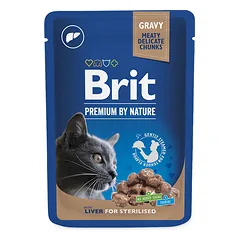
Brit Premium
0,33 €/kg
0,80 € / 2,4 kg
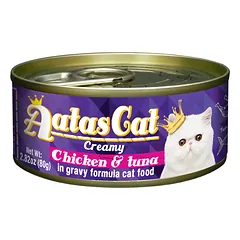
0,55 €/kg
1,05 € / 1,9 kg
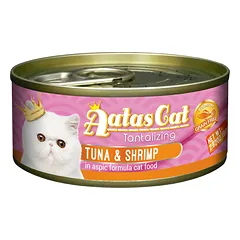
0,55 €/kg
1,05 € / 1,9 kg
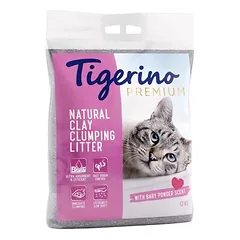
Tigerino
0,87 €/kg
20,89 € / 24 kg
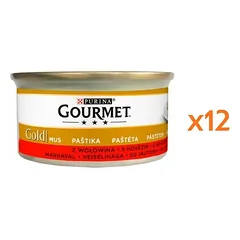
Gourmet
0,94 €/kg
0,96 € / 1,0 kg
Fitmin for Life
1,00 €/kg
0,80 € / 0,8 kg
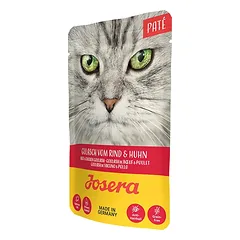
Josera
1,10 €/kg
1,49 € / 1,4 kg