

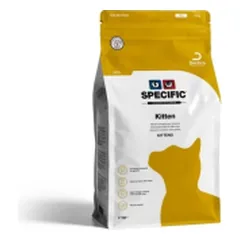
Specific
Specific FPD Kitten sausas maistas augantiems kačiukams, 400 kg
0,01 €/kg
5,59 € / 400 kg

Also known as: Abys
The Abyssinian is named after Abyssinia, present-day Ethiopia, although the breed's origin is disputed and not known for certain. The short, close-lying coat has a distinctive ticked pattern, with each hair banded in different shades, which makes the colour look as if it glows warmly. The body is supple, muscular and long-legged, and adults typically weigh around 3 to 5 kilograms. Little grooming is needed. Abyssinians are known for being very active, curious and intelligent, and they enjoy climbing, play and exploring, so they need things to do. It bonds quickly with its family and dislikes being left alone for long. Life expectancy is typically around 12 to 15 years.
Abyssinian: how old in human years?
Energy level
Playfulness
Family friendly
Grooming need
Males 3.5–5 kg
Females 3–4 kg
Abyssinian: average score for sociability and trainability is high.
Abyssinian: average score for activity and living space is high.
Abyssinian: average score for personality and communication is moderate.
Abyssinian: grooming and shedding demands are low.
The 1–5 trait scores are editorial estimates, not measurements. Every cat is an individual, so treat them as a general guide.
If the top of your kitchen cupboards has so far been out of bounds, an Abyssinian will settle that within the first week. This cat spends the day checking what is happening higher up, behind doors and in your hands, and plays at such a pace that the feather wand wears out before your slippers do. It is very bright and enjoys learning: fetching, running an obstacle course, working out how the drawer opens.
It will not be a lap cat, but it is not aloof either: it shows affection by being near, following you around and settling on whatever you are reading. Long hours alone bore it, and boredom turns into mischief, so if you work far from home another active cat is a good idea. It gets on with children and friendly dogs, and watches strangers from a safe distance at first.
A flat can work if it has height: a sturdy floor-to-ceiling climbing post, wall shelves, a netted balcony. The hunting instinct is strong, so daily play with chasing and leaping is not a luxury but a need. Its voice is soft and unobtrusive, more a short conversation than a concert.
The Abyssinian's coat is short, smooth and close-lying, and every hair is banded in several shades, so the coat seems to shimmer as the cat moves. Looking after it is easy: once a week, run a rubber brush or a damp hand over it to lift the loose hairs, and the shine comes straight back. It sheds little, so there is less hair on the sofa than you might expect from such a lively animal.
Use that weekly session to look at the skin too: on a coat this short you will spot a scratch, a scab or a parasite quickly. The large, wide-open ears gather dust, so glance into them and wipe the visible part with a soft cloth. Wipe the corners of the eyes with a damp cotton pad, and show any redness or watering to a vet.
The Abyssinian is a lean, muscular, busy cat that lives twelve to fifteen years. A few inherited conditions are known in the breed: one affects the internal organs, one the red blood cells and one the retina of the eye. Ask the breeder about the parents' health testing before you take a kitten, and rely on regular vet check-ups after that.
This is general information, not veterinary advice. For your own cat's health, tests and treatment, see a vet.
An insoluble protein builds up in organs such as the kidneys and over time gets in the way of their work. A cat can look perfectly well at first, so watch for more thirst, a smaller appetite or weight slipping away. Show any of those changes to a vet.
An inherited disorder in which red blood cells break down sooner than they should, leaving the cat short of blood. An Abyssinian lives in constant motion, so long naps, listlessness or pale gums stand out. Ask the breeder about the parents' health testing before you take a kitten.
The retina at the back of the eye slowly wastes away, and sight fades, first in dim light. An Abyssinian lives through its eyes, tracking every bird past the window and landing precisely on the highest shelf. If it starts hesitating before jumps in the evening or bumping into things, show it to a vet.
This list is the same on every cat breed page. Shops do not label cat food by breed, so it simply shows the cheapest cat food we track per kilogram. Check the label for your cat's age and health needs. Prices are updated daily.
≈ 61 g of dry food a day, from €3,47 a month For a neutered, normally active 3,9 kg cat. Calculate for your cat
Specific
0,01 €/kg
5,59 € / 400 kg
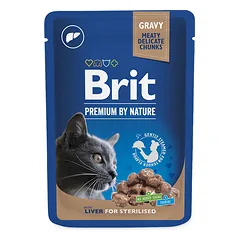
Brit Premium
0,33 €/kg
0,80 € / 2,4 kg
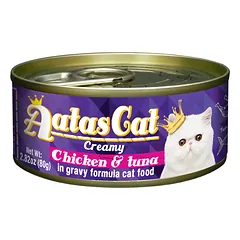
0,55 €/kg
1,05 € / 1,9 kg
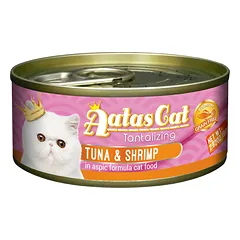
0,55 €/kg
1,05 € / 1,9 kg

Tigerino
0,87 €/kg
20,89 € / 24 kg
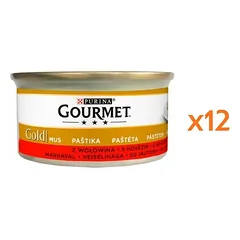
Gourmet
0,94 €/kg
0,96 € / 1,0 kg
Fitmin for Life
1,00 €/kg
0,80 € / 0,8 kg
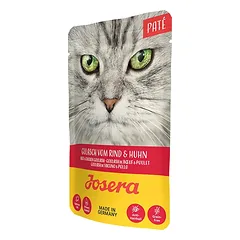
Josera
1,10 €/kg
1,49 € / 1,4 kg