


Specific
Specific FPD Kitten sausas maistas augantiems kačiukams, 400 kg
0,01 €/kg
5,59 € / 400 kg

Also known as: Siamkatzen, Meezer, Korn Ja, Modern Siamese, Western Siamese
The Siamese comes from Thailand, formerly called Siam, and spread through Europe in the late nineteenth century. It has a pale body with darker markings on the face, ears, legs and tail and vivid blue, almond-shaped eyes. The body is lean and long-legged, and the head is wedge-shaped. Adults typically weigh around 2.5 to 5.5 kilograms. The short, smooth coat needs little grooming. Siamese cats are known for being talkative, intelligent and strongly attached to people, and they need attention and interaction. Kittens are born almost white, and the darker markings develop over the first weeks. Life expectancy is typically around 12 to 16 years.
Siamese: how old in human years?
Energy level
Playfulness
Family friendly
Grooming need
Males 3.5–5.5 kg
Females 2.5–4.5 kg
Siamese: average score for sociability and trainability is moderate.
Siamese: average score for activity and living space is high.
Siamese: average score for personality and communication is high.
Siamese: grooming and shedding demands are low.
The 1–5 trait scores are editorial estimates, not measurements. Every cat is an individual, so treat them as a general guide.
With a Siamese, the quiet mornings are over. It will tell you that the bowl is empty, that a door is shut and that you have been on the phone too long, all in a loud, ringing, almost human voice. To the cat this is not noise but conversation, and it expects an answer.
It has energy for the whole day: it races about, leaps onto wardrobes, brings back a toy for you to throw again and picks up new games and tricks fast. A bored clever cat finds its own entertainment, not always the kind you would choose, so give it a tall climbing tree, a sturdy scratching post and play with you every day, with food puzzles for the hours when you are busy.
It does not like being alone, and it can attach itself to one person more than the rest, following them everywhere. If the whole household is out at work all day, a second cat for company is worth considering. It can get on with children and dogs that respect its limits, and weighs up new people with some caution. A flat works if there is room to run and climb, and outdoors is best kept to a safely enclosed space.
A Siamese's coat is short, fine and lies against the body like a second skin, with almost no undercoat, so it needs very little brushing. Once a week run a rubber brush or just a damp hand over it: a few dead hairs come away and the coat shines. It also gives you a quick look at the skin, for scabs, bald patches or redness.
The dark points, ears, paws, tail and mask, stand out against the pale body, so any change there catches your eye at once. Check the large, wide-set ears weekly to see they are clean and without smell, and wipe the corners of the almond-shaped eyes with a damp cotton pad if discharge gathers.
A Siamese lives out loud, so when it suddenly goes quiet, hides or loses interest in play, that is news in itself. This slender, lively cat can live twelve to sixteen years. A handful of problems are known in the breed, from the airways, eyes, teeth and internal organs to an odd habit of chewing things that are not food, so ask the breeder about the parents' health testing before you take a kitten.
This is general information, not veterinary advice. For your own cat's health, tests and treatment, see a vet.
Pica is an urge to suck, chew or swallow things that are not food: woollen jumpers, cables, plastic or rubber. A Siamese may take a particular liking to wool, so if you find holes in your clothes or a chewed corner of a bag, do not shrug it off; talk to a vet. If your cat vomits, cannot pass stools or stops eating, it may have swallowed something that blocks the gut, and it needs a vet immediately.
The airways become inflamed and narrow, so breathing in and out gets hard. A Siamese spends a lot of its day racing about, so wheezing or heavy breathing after play, or a cough that is easy to mistake for bringing up a hairball, are signs to film and show to a vet. If your cat breathes with its mouth open, struggles for air or its tongue turns bluish, it needs a vet immediately.
Amyloidosis is a condition in which an abnormal protein, amyloid, builds up in organs such as the liver or kidneys and over time stops them working well. The signs are vague: less appetite, weight loss, listlessness, more thirst or pale gums. If your ever-busy Siamese lies about and refuses food for more than a day, show it to a vet; if it suddenly weakens or collapses, it needs a vet immediately.
An inherited disease in which the cells of the retina slowly die and sight fades, first in dim light. A cat knows its own home well, so at first your Siamese may move about confidently, then start to stumble in the evening, misjudge jumps or avoid dark rooms. Show such changes to a vet, and ask the breeder about the parents' health testing before you take a kitten.
Tartar, gum inflammation and damaged teeth make the mouth sore, though a cat barely lets it show. A Siamese likes to comment on its dinner, so take note if it falls silent at the bowl, chews carefully, drops mouthfuls or has bad breath. A vet should look at the gums and teeth at every routine check-up.
This list is the same on every cat breed page. Shops do not label cat food by breed, so it simply shows the cheapest cat food we track per kilogram. Check the label for your cat's age and health needs. Prices are updated daily.
≈ 62 g of dry food a day, from €3,55 a month For a neutered, normally active 4 kg cat. Calculate for your cat
Specific
0,01 €/kg
5,59 € / 400 kg

Brit Premium
0,33 €/kg
0,80 € / 2,4 kg

0,55 €/kg
1,05 € / 1,9 kg

0,55 €/kg
1,05 € / 1,9 kg

Tigerino
0,87 €/kg
20,89 € / 24 kg

Gourmet
0,94 €/kg
0,96 € / 1,0 kg

Fitmin for Life
1,00 €/kg
0,80 € / 0,8 kg
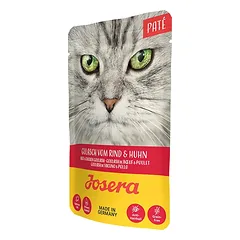
Josera
1,10 €/kg
1,49 € / 1,4 kg