

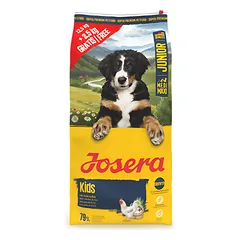
Josera
Josera Kids 12,5kg + 2,5kg = 15 kg
1,38 €/kg
37,89 € / 27,5 kg

The Weimaraner traces back to the Grand Duchy of Weimar in the early 19th century, where it was hunted exclusively by the aristocracy and breeding control stayed tightly guarded by club members for decades. The long-haired variety is rarer than the short-haired one, with a soft, metallic grey coat and feathering on the legs and tail giving it a more elegant look. Males can weigh up to 40 kilograms, with a muscular build suited to a long day's hunt over varied terrain. The distinctive grey eyes, often described as amber or blue-tinged, stand out sharply against the coat. The breed needs plenty of exercise and mental stimulation, or destructive habits tend to follow. It bonds intensely with its family, sometimes to the point of struggling with time alone. Life expectancy runs 10 to 13 years.
Browse dog food sized right for this breed
Weimaraner (Long-haired): how old in human years?
Energy level
Trainability
Family friendly
Grooming need
Males 59–70 cm
Females 57–65 cm
Males 30–40 kg
Females 25–35 kg
Weimaraner (Long-haired)'s average temperament and family-life score for this breed is moderate.
Weimaraner (Long-haired)'s energy and exercise needs are high.
Weimaraner (Long-haired)'s guarding and alertness traits are moderate.
Weimaraner (Long-haired)'s grooming needs are low.
The long-haired Weimaraner is one of those dogs for whom an hour's walk is only the warm-up. He was bred to hunt, so he needs real running, sniffing, retrieving, swimming or canicross every single day; without it he will find his own projects, sometimes recorded in chewed table legs. A flat is too tight for him, and his strong prey drive means a cat, a hare or a deer in the fields can wipe every command from his head in an instant.
He is clever and keen to learn when training is varied, short and the praise is sincere. Work on recall long and carefully, and until it is reliable stick to fenced areas or a long line. As an adolescent he can be boisterous and impatient, so you will need more patience than muscle.
This dog is inseparable from his people and wants to be wherever you are, so long hours alone are hard on him. He is gentle and loving with his family and friendly with children, though his energy and size can simply knock a toddler over. He is reserved with strangers and the first to announce every arrival, but he is no real guard. If you love an active life outdoors, you'll have a partner who is always ready to go.
The long-haired Weimaraner wears a soft, long coat in that metallic grey, with handsome feathering on the ears, the backs of the legs and the tail. It is less demanding than it looks: brush the whole body twice a week, and run a comb through the feathering and the hair behind the ears, where tangles form first. He sheds moderately, and after a walk in the woods his feathering collects burrs and pine needles, which are best picked out straight away before they mat. He rarely needs a bath, only when he has truly got himself dirty.
His long, drop, feathered ears get little air and stay damp after a swim or rain, so look inside once a week and dry them after he has been in the water. Clean and not smelly is what you want. His eyes should be clear, without watering or redness. As you brush, check the skin under the coat, especially after an active day outdoors: scratches, ticks and red patches hide easily under that hair.
A grey shadow follows you to the kitchen, to the bathroom and back again, and the moment you sit down a silver head with amber eyes lands on your knee. The long-haired Weimaraner is a strong, athletic hunting dog, but his owner should know about his eyelids, hips, thyroid and one urgent stomach condition. Know the signs and you'll catch changes in time, and regular vet check-ups help make sense of them.
This is general information, not veterinary advice. For your own dog's health, tests and treatment, see a vet.
The edge of the eyelid rolls inward, so the lashes rub against the surface of the eye. You may notice him squinting, an eye that waters or turns red, or him rubbing it with a paw or against the grass or carpet. Constant rubbing can damage the cornea, so show signs like these to your vet promptly.
A developmental problem of the hip: as the puppy grows, the ball and socket don't form quite right, so the joint moves unevenly and wears over time. You may notice him getting up more slowly, hesitating to jump into the car or walking a little stiffly after a long run in the fields. Sound hips matter enormously to an active hunter like this, so if you are getting a puppy, ask the breeder about the parents' health testing.
An emergency in which the stomach fills with gas and can twist on itself, cutting off its blood supply. With a deep-chested dog like the Weimaraner it pays to know the signs: restlessness, a swollen, tight belly, retching that brings nothing up, and heavy drooling. If you suspect it, don't wait: he needs a vet immediately.
When the thyroid makes too little hormone, the body slows down. In a dog this energetic the change is easier to spot than in many: a once tireless Weimaraner turns sluggish, gains weight without eating more, and his glossy coat goes dull and thin. Whether the thyroid is behind it is for your vet to determine.
This list is chosen by the breed's weight (40 kg) rather than the breed itself: shops label food by dog size, so every breed of the same size gets the same list. Prices are updated daily.
≈ 400 g of dry food a day, from €22,02 a month For a neutered, normally active 32,5 kg dog. Calculate for your dog
Josera
1,38 €/kg
37,89 € / 27,5 kg

Sam's Field
1,80 €/kg
26,99 € / 15 kg

Country Dog
1,89 €/kg
28,29 € / 15 kg

Club 4 Paws
1,92 €/kg
26,94 € / 14 kg

Diamant
1,93 €/kg
28,99 € / 15 kg
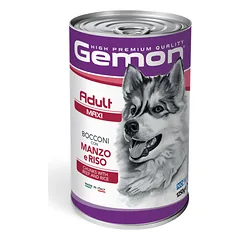
Gemon
1,94 €/kg
2,42 € / 1,3 kg

BIO FORM
2,00 €/kg
40,00 € / 20 kg

BIO FORM
2,00 €/kg
40,00 € / 20 kg