

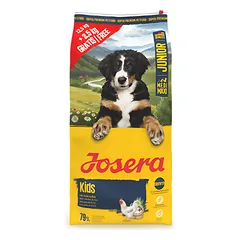
Josera
Josera Kids 12,5kg + 2,5kg = 15 kg
1,38 €/kg
37,89 € / 27,5 kg

Also known as: Drathaar
The German Wirehaired Pointer was developed in the late 19th century by crossing several continental pointing breeds to create an all-around gundog suited to water, forest, and open field work. The harsh, weatherproof coat with its dense undercoat protects against cold, thorns, and cold water, and the bushy eyebrows and beard give the breed its distinctive expression. Males can reach 32 kilograms, with a muscular, hardy build. It was bred for a full day's work, so it tends to grow restless indoors without enough exercise. It's closely bonded with its family but stays cautious around strangers. Training tends to go smoothly given the high drive and eagerness to please. Life expectancy runs 12 to 14 years.
Browse dog food sized right for this breed
German Wirehaired Pointer: how old in human years?
Energy level
Trainability
Family friendly
Grooming need
Males 61–68 cm
Females 57–64 cm
Males 27–32 kg
Females 25–29 kg
German Wirehaired Pointer's average temperament and family-life score for this breed is moderate.
German Wirehaired Pointer's energy and exercise needs are high.
German Wirehaired Pointer's guarding and alertness traits are moderate.
German Wirehaired Pointer's grooming needs are low.
A November morning, sleet coming sideways, and you are wondering whether you really have to go out. Your German Wirehaired Pointer made up its mind long ago. The breed was developed in Germany as a versatile hunting dog that searches, points, tracks and retrieves from water, unbothered by cold or reed beds. It needs real exercise every day: long off-lead runs somewhere safe, swimming, tracking or hunting. A flat and short walks are too small a life for it.
It learns willingly and fast, especially when the task feels like work, but it has opinions and occasionally shares them. Its prey drive and hunting instinct are very strong, so a cat in the garden or a hare by the roadside can push every command aside in an instant, and the recall takes long, patient practice. A dog that hasn't burned off its energy will find its own hobby, and it is unlikely to be one you enjoy.
At home it is devoted to its people, good with children and likes to be close, and properly introduced it gets along with other dogs. It is reserved with strangers and will announce an arrival, but it is no guard. It's happiest with an active family or a hunter for whom the weather is never a reason to stay indoors.
The German Wirehaired Pointer's coat is designed as workwear: a hard, wiry topcoat over a dense undercoat that keeps out both rain and thorny undergrowth. Brush it once a week and hand-strip the dead hair a couple of times a year; clippers soften a coat like this and take away its weather resistance. It sheds moderately, more in spring and autumn. The beard and eyebrows are the breed's face, but the beard will be dripping after every meal and drink, so keep a towel by the bowl.
After every outing in woods or fields, run your hand over the whole body: ticks, burrs and scratches hide in a dense coat, and seeds and thorns collect between the toes. Lift the hanging ears and look inside every week, especially after a swim; a bad smell or a dog that keeps shaking its head are reasons to see a vet. Check the eyes after a run through tall grass, where seeds and dust collect easily.
The German Wirehaired Pointer was built to work in any weather, across fields, woods and water, and its health generally matches that stubborn stamina; it lives twelve to fourteen years. A few inherited problems with blood clotting, joints and the thyroid are known in the breed and are worth recognising. Ask the breeder about the parents' health testing before you take a puppy home, and leave everything else for a vet to judge.
This is general information, not veterinary advice. For your own dog's health, tests and treatment, see a vet.
This is an inherited clotting disorder: the dog lacks enough of a protein that helps blood stop after an injury. You may notice that a cut paw or a nail trimmed too short bleeds for longer than it should, or that the gums or nose sometimes bleed for no clear reason. A German Wirehaired Pointer crashing through brambles and reeds collects plenty of small wounds, so a vet should know of any suspicion before any procedure, and it's worth asking the breeder about the parents' health testing.
The thyroid gland makes too little hormone, and the whole body seems to slow down. The dog may become sluggish, put on weight without eating more, seek out warm spots, and its harsh coat may thin or fail to grow back after stripping. When an otherwise tireless German Wirehaired Pointer stops asking to go out, it isn't laziness but a reason to talk to a vet.
The hip or elbow joint develops imperfectly, the bones in it don't move as smoothly as they should, and the joint wears over time. You may notice your dog stiff after a day in the field or a long run, limping, or no longer clearing a ditch so easily. A German Wirehaired Pointer's appetite for work can mask pain until the last minute, so show a change in gait to a vet sooner rather than later.
This list is chosen by the breed's weight (32 kg) rather than the breed itself: shops label food by dog size, so every breed of the same size gets the same list. Prices are updated daily.
≈ 360 g of dry food a day, from €19,84 a month For a neutered, normally active 28,3 kg dog. Calculate for your dog
Josera
1,38 €/kg
37,89 € / 27,5 kg

Sam's Field
1,80 €/kg
26,99 € / 15 kg

Country Dog
1,89 €/kg
28,29 € / 15 kg

Club 4 Paws
1,92 €/kg
26,94 € / 14 kg

Diamant
1,93 €/kg
28,99 € / 15 kg
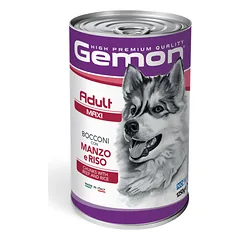
Gemon
1,94 €/kg
2,42 € / 1,3 kg

BIO FORM
2,00 €/kg
40,00 € / 20 kg

BIO FORM
2,00 €/kg
40,00 € / 20 kg