

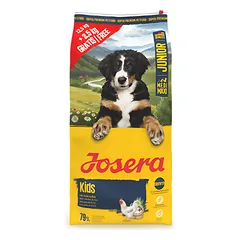
Josera
Josera Kids 12,5kg + 2,5kg = 15 kg
1,38 €/kg
37,89 € / 27,5 kg

Also known as: Spinone, Italian Spinone
The Spinone Italiano is one of the oldest continental pointing breeds, with roots reaching back to ancient Rome, though the type as we know it took shape in Italy's Piedmont region. The wiry, rough coat, with its dense eyebrows and beard, protects the face from thorny brush and cold water while hunting birds in marshland. An adult male can reach 37 kilograms, sturdy without being heavy, built to work a full day at a slow, methodical pace rather than a sprint. The breed is known for an unusually gentle, patient temperament, often ranked among the friendliest hunting breeds for family life. Coat maintenance calls for periodic hand-stripping rather than simple clipping. Its keen nose and deliberate working style set it apart from faster, more impulsive pointer types. Despite its working origins, it increasingly lives as a family companion today. Life expectancy runs 12 to 14 years.
Browse dog food sized right for this breed
Spinone Italiano: how old in human years?
Energy level
Trainability
Family friendly
Grooming need
Males 60–70 cm
Females 58–65 cm
Males 32–37 kg
Females 28–30 kg
Spinone Italiano's average temperament and family-life score for this breed is high.
Spinone Italiano's energy and exercise needs are moderate.
Spinone Italiano's guarding and alertness traits are low.
Spinone Italiano's grooming needs are moderate.
Other pointing dogs cross a field like arrows; a Spinone Italiano investigates it, at a wide, easy trot with its nose low, as if it had all day and a bit more. This old Italian gundog searches, points and retrieves, but on its own schedule. It needs long walks every day, ideally through fields or woods where it can sniff, wade and occasionally gallop, but it won't pine for sprint sessions.
It wants to learn, but meets a harsh tone with a wounded look and sudden slowness. Gentleness, patience and a treat get much further than strictness, and you can turn its nose and hunting instinct into games: a hidden toy or a scent trail satisfies it more than ten laps of the house. Work on the recall early, because an interesting smell can carry it further than you'd expect.
At home it is big, warm and soft-hearted, excellent with children and other dogs, and polite but unexcited with strangers. It is no guard and barks rarely. A flat is too small for its size and its love of space, but in a house with a garden and a family that spends weekends outdoors it is a happy dog, especially if it can stretch out on the floor right at your feet in the evening.
A Spinone Italiano wears a rough, dense, slightly wiry coat made for pushing through brambles and cold water. It needs no clipping and no daily brushing: once a week, go over it with a brush and comb, paying attention behind the ears and down the legs, where burrs catch and hair tangles. It sheds little, and baths can be rare, since frequent shampoo softens a harsh coat and takes away its knack of shrugging off dirt.
The face is where the real work is. The beard and eyebrows that make a Spinone look like a wise old professor drip water after every drink and carry dinner around afterwards, so keep a towel by the bowl and make peace with damp kisses. Ticks and grass seeds hide well in a dense coat, so after a walk in the woods feel the whole body with your fingers, not just your eyes. Lift the hanging ears and look inside every week, and check the eyes beneath those brows several times a week; redness, a bad smell or weeping are reasons to see the vet.
Up to thirty-seven kilos, a deep chest and an unhurried mind: the Spinone Italiano lives twelve to fourteen years, and its sturdy frame and calm temperament are its best health assets. Joint, eye and thyroid conditions are known in the breed, and its size and chest shape mean the signs of bloat are worth knowing. Ask the breeder about the parents' health testing before you take a puppy home; what any change means is for a vet to decide.
This is general information, not veterinary advice. For your own dog's health, tests and treatment, see a vet.
The hip joint develops imperfectly: the ball of the thigh bone doesn't sit snugly in its socket, so the joint wears over time. You might notice your dog struggling to stand after a walk, swaying through the hindquarters or reluctant to take the stairs. A Spinone is a big, patient dog that doesn't make a fuss, so take a change in its gait to a vet without delay.
This is a developmental problem of the front leg's elbow joint, where the bones don't fit together as they should. You may notice a young dog limping on a front leg, especially after rest or a long hike, or standing with its front feet turned out. A heavy Spinone carries a good deal of weight on its front legs, so show any such limp to a vet.
This is an umbrella term for a range of eye and eyelid troubles, from how the lids sit to how clear the eye is. You may notice redness, weeping, squinting or a cloudy eye. Under a Spinone's bushy eyebrows such signs are easy to miss, so part the hair and look into its eyes regularly, and let a vet judge any change.
The thyroid gland makes too little hormone, and the whole body shifts into a slower gear. You might notice your dog gaining weight on the same food, moving less, seeking out warm spots, or its coat thinning or losing its life. A Spinone is unhurried by nature, so a slowdown is easy to put down to character; if yours has become duller than it used to be, talk to a vet.
The stomach fills with gas, swells and can twist on itself, cutting off its blood supply. The dog becomes restless, retches without bringing anything up, drools heavily, and its belly looks swollen and tight. The large, deep-chested Spinone is one of the dogs at risk, and this is an emergency: if you see these signs, get to a vet immediately.
This list is chosen by the breed's weight (37 kg) rather than the breed itself: shops label food by dog size, so every breed of the same size gets the same list. Prices are updated daily.
≈ 395 g of dry food a day, from €21,66 a month For a neutered, normally active 31,8 kg dog. Calculate for your dog
Josera
1,38 €/kg
37,89 € / 27,5 kg
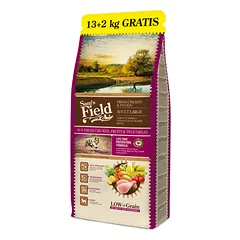
Sam's Field
1,80 €/kg
26,99 € / 15 kg

Country Dog
1,89 €/kg
28,29 € / 15 kg
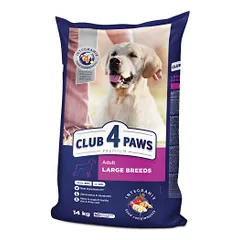
Club 4 Paws
1,92 €/kg
26,94 € / 14 kg
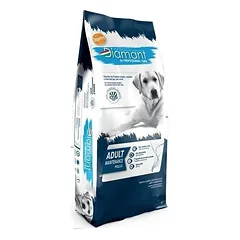
Diamant
1,93 €/kg
28,99 € / 15 kg
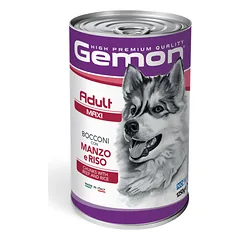
Gemon
1,94 €/kg
2,42 € / 1,3 kg
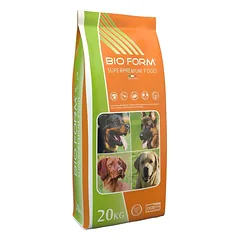
BIO FORM
2,00 €/kg
40,00 € / 20 kg
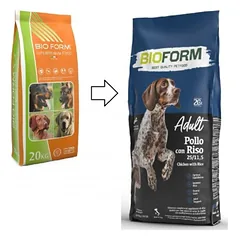
BIO FORM
2,00 €/kg
40,00 € / 20 kg