

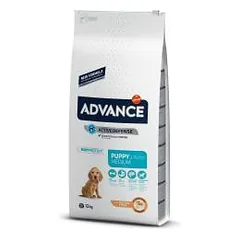
Advance
Advance Puppy Medium sausas maistas vidutinių veislių šuniukams, 12 kg
1,48 €/kg
17,76 € / 12 kg

Also known as: Sheltie, Shetland collie
In Scotland's Shetland Islands this breed shrank down to a compact size due to the harsh island conditions and limited food, leaving an adult dog weighing up to 12 kilograms despite its resemblance to a scaled-down Collie. It herded sheep and ponies across narrow island pastures, terrain that favored agility over bulk. The long double coat with its heavy neck ruff guards against the cold, damp island climate, but sheds heavily twice a year. The breed is known for high intelligence and quick learning, and does well in obedience and agility competition. The voice is loud and often used to announce strangers. Deeply loyal to family. Life expectancy runs 12 to 14 years.
Browse dog food sized right for this breed
Shetland Sheepdog: how old in human years?
Energy level
Trainability
Family friendly
Grooming need
Males 34–39 cm
Females 33–37 cm
Males 6–12 kg
Females 6–12 kg
Shetland Sheepdog's average temperament and family-life score for this breed is high.
Shetland Sheepdog's energy and exercise needs are moderate.
Shetland Sheepdog's guarding and alertness traits are moderate.
Shetland Sheepdog's grooming needs are moderate.
The doorbell rings, and your Shetland Sheepdog has already shared its full opinion of the courier, the neighbour's cat and the breeze that moved the curtain. This small herder from the Shetland Islands is a superb watchdog and likes to talk, so teach a "that's enough" from day one. The flip side is that the same alertness makes it a remarkably attentive, tuned-in companion.
It is clever and eager to please: it picks up commands in a moment, shines at obedience, agility or trick training, and responds to a gentle voice far better than to a stern one. Harshness only frightens it. It needs daily exercise and something for its mind: a couple of walks, a ball game or a short training session, and by evening it curls up calmly at your feet.
In the family it is devoted and loving and gets on well with children, although the herding instinct sometimes tells it to steer a running child back to the group. With strangers it is reserved at first but not hostile. Its size means it copes well in a flat, as long as it gets enough exercise and isn't left alone for long hours.
A Sheltie's mane and long, straight outer coat over a dense undercoat look like a lot of work, and they are, but the work is regular rather than heroic. Twice a week, brush right down to the skin, layer by layer, starting from underneath; pay extra attention behind the ears, in the armpits and on the trousers, where the soft hair tangles fastest. In spring and autumn the undercoat comes out in quantity, and for those weeks a daily brush is worth it; there's no need to clip the double coat short, since it protects the dog from both cold and heat.
Brushing is the best time to check the skin: scabs or bald patches on the face, the ear tips or the end of the tail are worth showing to a vet. Lift the semi-erect ears weekly and check they are clean inside and don't smell. Wipe the eyes with a damp cloth if discharge collects in the corners, and take cloudiness, redness or an unsure gaze as a reason to visit the vet.
Six to twelve kilos of pure liveliness: well looked after, a Shetland Sheepdog lives twelve to fourteen years. Its list below is longer than some breeds', but that doesn't mean your dog will fall ill: several of these conditions are inherited, which is exactly why it's worth asking the breeder about the parents' health testing before you take a puppy home. The rest is regular vet check-ups and an eye for small changes.
This is general information, not veterinary advice. For your own dog's health, tests and treatment, see a vet.
The hip joint forms imperfectly, the ball of the thigh bone sits loosely in its socket, and the joint wears over time. You may notice your dog stiff after play, reluctant to jump onto the sofa, or swaying slightly as it walks. A light Sheltie doesn't load its joints the way a big dog does, but a change in gait is still worth showing to a vet.
This is an inherited fault in how the back of the eye develops, and its severity varies enormously: some dogs' sight is barely affected, while others' can be badly reduced. Mild changes are visible only to a vet examining the back of the eye, but more serious ones you may notice yourself, in a dog that moves more cautiously or bumps into things. The Shetland Sheepdog belongs to the collie family the condition is named after and a DNA test exists for it, so ask the breeder about the parents' results.
This is an inherited inflammatory disease of the skin and sometimes the muscles. In young dogs it shows as scabs and bald patches on the face, around the eyes, on the ear tips, the tip of the tail or the legs, and in more severe cases chewing can become harder. Because it is linked to Shelties and collies, show any odd sores on a young dog's face to a vet.
The thyroid gland makes too little hormone and the body slows down. A dog may become sluggish, gain weight without eating more, feel the cold, and its coat may thin or lose its quality. A Sheltie's coat is so abundant that changes are easy to spot while brushing, and working out what caused them is a job for a vet.
This is an inherited clotting disorder: a protein that helps blood stop is missing or low, so even a small wound can bleed for longer than it should. You may notice nosebleeds, bleeding gums, bruising, or bleeding that won't stop after a nail is trimmed too short. If your Shetland Sheepdog has the disorder, a vet should know before any procedure, and when buying a puppy it's worth asking the breeder about the parents' health testing.
Epilepsy means repeated seizures, as if the brain's wiring briefly short-circuits. A dog may suddenly fall onto its side, jerk or paddle its legs, drool and not respond to you, and be confused for a while afterwards. If your Sheltie has a seizure, see a vet; if a seizure goes on for long or one follows another, it needs a vet immediately.
This list is chosen by the breed's weight (12 kg) rather than the breed itself: shops label food by dog size, so every breed of the same size gets the same list. Prices are updated daily.
≈ 155 g of dry food a day, from €8,40 a month For a neutered, normally active 9 kg dog. Calculate for your dog
Advance
1,48 €/kg
17,76 € / 12 kg
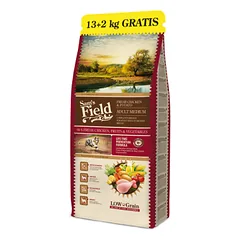
Sam's Field
1,80 €/kg
26,99 € / 15 kg

Country Dog
1,89 €/kg
28,29 € / 15 kg
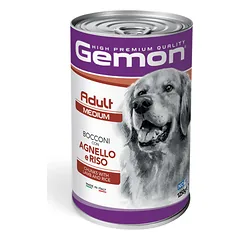
Gemon
1,94 €/kg
2,42 € / 1,3 kg
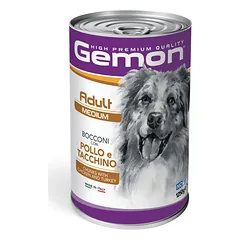
Gemon
1,94 €/kg
2,42 € / 1,3 kg
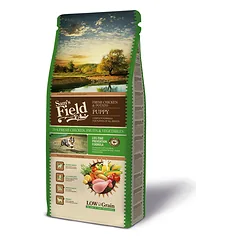
Sam's Field
2,11 €/kg
27,45 € / 13 kg
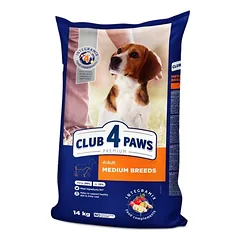
2,14 €/kg
30,00 € / 14 kg
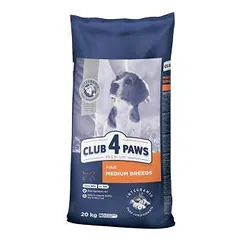
Club 4 Paws
2,15 €/kg
42,99 € / 20 kg