

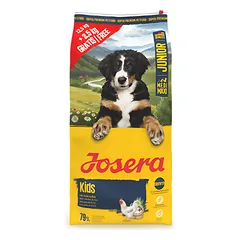
Josera
Josera Kids 12,5kg + 2,5kg = 15 kg
1,38 €/kg
37,89 € / 27,5 kg

Also known as: African Lion Dog
The Rhodesian Ridgeback originated in southern Africa, where nineteenth century European settlers' dogs crossed with dogs kept by the Khoikhoi people, who carried a distinctive ridge of reversed hair along the spine. That ridge, growing against the direction of the rest of the coat, became the breed's signature and was carefully preserved through selective breeding. The breed earned fame for hunting lions, not by killing them but by holding them at bay and baying until the hunter arrived. The short, sleek coat suits hot climates well and needs minimal grooming. An adult male can reach 40 kilograms of lean, fast muscle. Temperament is independent and reserved with strangers but deeply loyal to family. It needs firm, consistent training from an early age, since the breed tends to make its own decisions. Life expectancy runs 10 to 12 years.
Browse dog food sized right for this breed
Rhodesian Ridgeback: how old in human years?
Energy level
Trainability
Family friendly
Grooming need
Males 63–69 cm
Females 61–66 cm
Males 36.5–40.5 kg
Females 32–36.5 kg
Rhodesian Ridgeback's average temperament and family-life score for this breed is moderate.
Rhodesian Ridgeback's energy and exercise needs are moderate.
Rhodesian Ridgeback's guarding and alertness traits are moderate.
Rhodesian Ridgeback's grooming needs are low.
In southern Africa these dogs went out with hunters and could hold even a lion at bay, so courage is not in short supply. Today the Rhodesian Ridgeback is a calm, self-assured family dog that needs a lot of movement: long walks, runs or hikes, after which it turns into a surprisingly idle sofa resident at home. Without that workload it gets bored quickly, and a bored forty-kilo dog reaches the kitchen counter without even trying.
It is clever but independent: it understands perfectly well what you're asking, it just doesn't always agree straight away, so teach it consistently, calmly and early, while the puppy is still small. Roughness gets you nowhere; a ridgeback is more sensitive than it looks and simply shuts down. The hunting instinct is strong, and a cat or a deer can wipe out all your lessons in a second, so let it off the lead only somewhere safe and fenced.
With its family it is gentle and devoted, and patient with children, though a big young dog can knock a toddler over by accident. It is reserved and watchful with strangers but not given to barking for nothing, so when a ridgeback does bark, it's worth looking to see why. A flat works only if it spends plenty of time outdoors; it is happiest in a house with a yard and a tall fence.
A ridgeback's short, dense, glossy coat is one of the easiest jobs in the dog world. Once a week, go over it with a rubber brush or a damp mitt and there'll be little hair on the floor and plenty of shine. While you're at it, run a hand along the spine: you'll learn how healthy skin looks and feels, and you'll notice sooner if a lump, a small wound or a tuft of hair poking from the skin appears. A thin coat does little against the cold, so on a wet November evening a dog coat is not a fashion statement but a kindness.
The ears hang down, so lift them once a week and have a look: clean and odour-free inside is what you want. Check the eyes in daylight; they should be clear, with no redness or discharge. Trim the nails every few weeks, because overlong nails change a big dog's gait, and brush the teeth several times a week; a ridgeback that learned this as a puppy will later accept it as a ritual.
You'll know a Rhodesian Ridgeback by the stripe along its back where the hair grows the wrong way, and curiously, one of the conditions below concerns that same line down the spine. This is a strong, athletic dog that lives ten to twelve years, and the list is here to help you notice changes in good time, not to alarm you. When something raises a question, a vet decides.
This is general information, not veterinary advice. For your own dog's health, tests and treatment, see a vet.
This is a fault in how the hip and elbow joints develop: the parts of the joint don't fit together properly, so the joint wears over time. You might see a young dog limping on a front or hind leg, struggling to get up after a rest or avoiding stairs after a long run. A ridgeback is big and heavy, and its joints carry a fair load, so show any change in gait to a vet, and if you are getting a puppy, ask the breeder about the parents' health testing.
Here the immune system mistakenly attacks the thyroid, which in time starts making too little hormone. You might notice your dog becoming sluggish, putting on weight while eating the same as before, and its short, glossy coat thinning or turning coarse. A ridgeback is quite good at resting on the sofa anyway, so look not at one lazy afternoon but at a lasting change, and let a vet find the cause.
A dermoid sinus is a narrow channel, present from birth, that links the skin to deeper tissue; in ridgebacks it is found along the midline of the back, from the neck to the tail. Stroking a puppy, you might feel a tiny opening or a tuft of hair poking out of the skin, and sometimes the spot leaks or swells. Let a vet assess anything like that, and if you are getting a puppy, ask the breeder about the parents' health testing.
Deafness can be present from birth or develop later, in one ear or both. You might notice your dog not waking when you come in, not responding to its name, or startling when you approach from behind. A ridgeback likes to follow its own plans anyway, so an ignored command is easy to mistake for stubbornness; if you're not sure your dog can hear, see a vet.
This covers a range of eye troubles: eyelids that sit wrongly, clouding of the lens or diseases of the retina. You might notice redness, watering, squinting or a cloudy look. A ridgeback hunts with its eyes as well as its nose, so show any change in the eyes to a vet rather than waiting for it to pass.
This list is chosen by the breed's weight (41 kg) rather than the breed itself: shops label food by dog size, so every breed of the same size gets the same list. Prices are updated daily.
≈ 435 g of dry food a day, from €23,97 a month For a neutered, normally active 36,4 kg dog. Calculate for your dog
Josera
1,38 €/kg
37,89 € / 27,5 kg
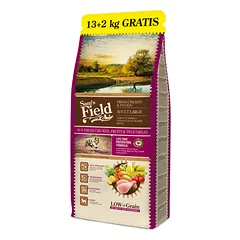
Sam's Field
1,80 €/kg
26,99 € / 15 kg

Country Dog
1,89 €/kg
28,29 € / 15 kg

Club 4 Paws
1,92 €/kg
26,94 € / 14 kg
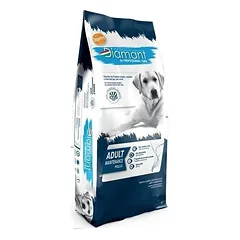
Diamant
1,93 €/kg
28,99 € / 15 kg
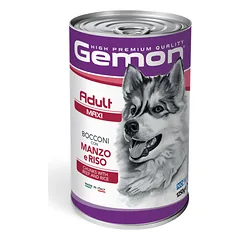
Gemon
1,94 €/kg
2,42 € / 1,3 kg

BIO FORM
2,00 €/kg
40,00 € / 20 kg

BIO FORM
2,00 €/kg
40,00 € / 20 kg