

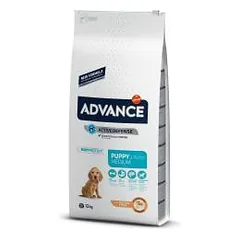
Advance
Advance Puppy Medium sausas maistas vidutinių veislių šuniukams, 12 kg
1,48 €/kg
17,76 € / 12 kg

Also known as: Norwegian elkhound sort
The Black Norwegian Elkhound is the rarer, darker counterpart to the better-known grey Elkhound, historically used in Norway to hunt moose and track game through deep snow. The coarse double coat with its dense undercoat lets the dog work outdoors in genuinely low temperatures. Unlike many scenthounds, an Elkhound doesn't chase down its quarry, it holds it at bay by barking until the hunter arrives, so vocal signaling is a working trait here, not a flaw. A male weighs up to 20 kilograms on a compact but sturdy frame. The coat blows out heavily once or twice a year. Life expectancy runs 12 to 15 years.
Browse dog food sized right for this breed
Norwegian Elkhound (Black): how old in human years?
Energy level
Trainability
Family friendly
Grooming need
Males 43–48 cm
Females 40–45 cm
Males 16–20 kg
Females 14–18 kg
Norwegian Elkhound (Black)'s average temperament and family-life score for this breed is moderate.
Norwegian Elkhound (Black)'s energy and exercise needs are moderate.
Norwegian Elkhound (Black)'s guarding and alertness traits are moderate.
Norwegian Elkhound (Black)'s grooming needs are low.
You may still be on your first coffee, but the black Norwegian Elkhound is already at the door, announcing the neighbour's cat, the bin lorry and a bird on the fence. This is a watchful dog with plenty to say, and a strong hunting instinct: in the woods its nose locks onto a trail and your recall becomes a mere suggestion. Keep it on a lead or in a fenced area.
It needs real exercise every day: a long walk, a forest hike or a run beside your bike on a cool morning. It is clever and quick to work out what you want, but it has opinions of its own, so short, varied sessions with treats work far better than drilling. With its family it is affectionate and loyal, reserved with visitors at first, and best supervised around small children.
A flat is not its ideal home, not least because of the voice; it is happiest with a garden and an owner who likes being outdoors in any weather. In the evening, well walked, it curls up on the rug with its tail wrapped around its nose.
Beneath the harsh, straight outer coat lies a soft, dense undercoat that works like a wool jumper in a Norwegian winter. For most of the year a brush once or twice a week is enough, but when the dog sheds, the undercoat comes away in clumps, and daily brushing is the only way to keep black tufts out of every corner of the house. As you brush, run your fingers over the skin too: it is how you'll find dry patches and new lumps.
A black coat hides dirt well and the harsh hair sheds mud easily, so baths can be rare. Once a week, check the eyes for discharge or redness, and look into those upright ears and wipe them gently, especially after a ramble through the undergrowth. Trim the nails when you hear them clicking on the floor.
A compact, sturdy hunter bred to track moose through snow and spruce for days on end, the black Norwegian Elkhound is a hardy dog at heart, with a life expectancy of twelve to fifteen years. A few inherited eye, joint and kidney conditions are known in the breed, and a healthy appetite means keeping an eye on the food bowl. Before you take a puppy home, ask the breeder about the parents' health testing, and leave the rest to your vet.
This is general information, not veterinary advice. For your own dog's health, tests and treatment, see a vet.
This is an inherited condition in which the retina at the back of the eye slowly wastes away, so the dog gradually loses its sight, first in dim light. You might notice hesitant steps on the evening walk, bumping into things, or a sudden reluctance to go out into a dark garden. An Elkhound makes up for a lot with its nose and ears, so changes can go unnoticed for a long time; before you take a puppy home, ask the breeder about the parents' health testing.
The hip joint develops loosely, so the ball does not sit snugly in its socket and the joint wears over time. You might notice your dog getting up slowly after a long forest hike, taking a few stiff first steps, or avoiding the stairs. The black Elkhound is stoic and tends to hide discomfort, so a change in the way it moves is worth showing to your vet.
Sebaceous cysts are small, round lumps under the skin filled with an oily secretion. In an Elkhound's dense coat you are more likely to feel one with your fingers while brushing than to see it. Any new lump is worth showing to your vet, who is the only one who can tell you what it is.
Obesity means carrying more fat than the body can comfortably manage, and it puts strain on the joints, heart and breathing. Under that thick coat you might find you can no longer feel the ribs, or that the waist has vanished when you look down from above. The black Elkhound loves its food and is a skilled beggar, so its weight is worth discussing with your vet at every check-up.
This is a kidney disorder in which the tiny tubes of the kidneys stop holding on to useful substances such as sugar, salts and protein, which are lost in the urine instead. You might notice your dog drinking and peeing far more than before, losing weight or becoming listless. In an Elkhound, changes like these are worth getting to a vet promptly.
This list is chosen by the breed's weight (20 kg) rather than the breed itself: shops label food by dog size, so every breed of the same size gets the same list. Prices are updated daily.
≈ 245 g of dry food a day, from €13,54 a month For a neutered, normally active 17 kg dog. Calculate for your dog
Advance
1,48 €/kg
17,76 € / 12 kg

Sam's Field
1,80 €/kg
26,99 € / 15 kg

Country Dog
1,89 €/kg
28,29 € / 15 kg
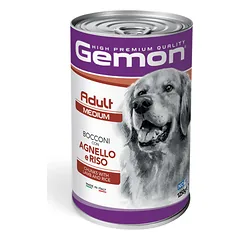
Gemon
1,94 €/kg
2,42 € / 1,3 kg
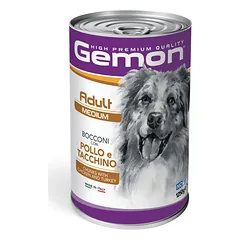
Gemon
1,94 €/kg
2,42 € / 1,3 kg

Sam's Field
2,11 €/kg
27,45 € / 13 kg

2,14 €/kg
30,00 € / 14 kg

Club 4 Paws
2,15 €/kg
42,99 € / 20 kg