

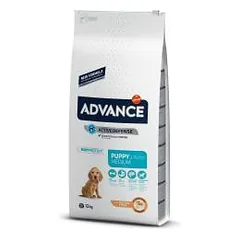
Advance
Advance Puppy Medium sausas maistas vidutinių veislių šuniukams, 12 kg
1,48 €/kg
17,76 € / 12 kg

The East Siberian Laika comes from the vast forested regions of Siberia, where local peoples used it to hunt large game, including bear, and to pull sleds, so the breed combines both hunting and draft work in one type. It's the largest of the four Russian Laikas, built for long routes across harsh, sparsely populated country. The medium-length double coat with its dense undercoat lets it work outdoors in seriously low temperatures. A male weighs up to 23 kilograms, sturdy without being bulky. Temperament runs independent and hardy, shaped by a history of making decisions far from human help. Life expectancy runs 10 to 14 years.
Browse dog food sized right for this breed
East Siberian Laika: how old in human years?
Energy level
Trainability
Family friendly
Grooming need
Males 55–64 cm
Females 51–60 cm
Males 18–23 kg
Females 17–22 kg
East Siberian Laika's average temperament and family-life score for this breed is moderate.
East Siberian Laika's energy and exercise needs are high.
East Siberian Laika's guarding and alertness traits are moderate.
East Siberian Laika's grooming needs are moderate.
A squirrel freezes at the top of a pine, and down below the Laika circles the trunk, barking loudly and rhythmically, never taking its eyes off the branches until the hunter arrives. The East Siberian Laika is a Russian hunting dog that finds game, holds it with its bark and so shows the hunter where it is. It does most of that work on its own, far from people, and the independence shows in everyday life too.
It has a great deal of energy and needs a great deal of exercise: long, varied walks, ideally in the woods, running, search and tracking work. Without that, it will invent its own pastimes, and you won't like them. It is clever and learns fast, but it listens when it sees the point, so training has to be consistent and interesting. Its prey drive and hunting instinct are very strong: off-lead time belongs in secure, fenced places, and cats and small pets are genuinely at risk.
With its family it is friendly and devoted, but not clingy; it is reserved with strangers and announces visitors loudly. It may not get on with other dogs, so introductions need thought. A flat does not suit it. It does best in a house with a garden, with an active owner or a hunter for whom the forest is a second home.
The East Siberian Laika wears a double coat: a medium-length, harsh outer coat over a dense, soft undercoat that let it sleep in the snow of the taiga. It is more than enough for a Baltic winter, and it sheds heavily, especially when the undercoat changes: then hair comes out of its flanks and tail in whole tufts. Most of the year a brush once or twice a week is enough; during the moult, go over it daily with a wide-toothed comb or an undercoat rake so the old hair doesn't mat.
It rarely needs a bath; a well-kept double coat sheds dirt on its own and hardly smells of dog. The ears are upright and well aired, but check them weekly anyway, and after hikes in the forest look between the toes and at the nails.
We don't have reliable health information specific to this breed, so we don't list conditions here. Keep up regular vet check-ups, and if you are getting a puppy, ask the breeder about the parents' health testing.
This is general information, not veterinary advice. For your own dog's health, tests and treatment, see a vet.
This list is chosen by the breed's weight (23 kg) rather than the breed itself: shops label food by dog size, so every breed of the same size gets the same list. Prices are updated daily.
≈ 280 g of dry food a day, from €15,29 a month For a neutered, normally active 20 kg dog. Calculate for your dog
Advance
1,48 €/kg
17,76 € / 12 kg

Sam's Field
1,80 €/kg
26,99 € / 15 kg

Country Dog
1,89 €/kg
28,29 € / 15 kg
Gemon
1,94 €/kg
2,42 € / 1,3 kg
Gemon
1,94 €/kg
2,42 € / 1,3 kg

Sam's Field
2,11 €/kg
27,45 € / 13 kg
2,14 €/kg
30,00 € / 14 kg
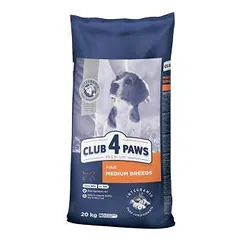
Club 4 Paws
2,15 €/kg
42,99 € / 20 kg