

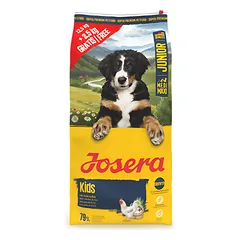
Josera
Josera Kids 12,5kg + 2,5kg = 15 kg
1,38 €/kg
37,89 € / 27,5 kg

The Hokkaido takes its name from Japan's northernmost island, where Ainu hunters used it to track bears and deer through cold forests. The double, medium-length coat gives real insulation against the cold, so the dog is comfortable working in snow. It's considered one of the older, purer Japanese Spitz-type breeds, changed relatively little by selective breeding over the centuries. A male reaches up to 30 kilograms, with a compact, hardy build suited to long treks over mountainous terrain. The breed is known for loyalty and sharp sensory alertness, traits carried straight over from its working hunting ancestors. Life expectancy runs 11 to 13 years.
Browse dog food sized right for this breed
Hokkaido: how old in human years?
Energy level
Trainability
Family friendly
Grooming need
Males 48–52 cm
Females 45–48 cm
Males 20–30 kg
Females 20–30 kg
Hokkaido's average temperament and family-life score for this breed is moderate.
Hokkaido's energy and exercise needs are high.
Hokkaido's guarding and alertness traits are moderate.
Hokkaido's grooming needs are moderate.
It will spot the hedgehog wandering into your garden first, and then it will tell the whole street. The Hokkaido is an old Japanese spitz-type dog from the northern island that gave it its name, bred to hunt big game in the mountains, and it is not short of courage, alertness or hunting instinct. Its prey drive is strong, so cats and small animals tend to look like a task rather than neighbours.
It needs daily exercise: long walks, hikes, search games and a chance to tear around somewhere safely fenced. It is intelligent but has opinions of its own, so training calls for patience, consistency and respect; a dog that understands why tends to work more willingly than one that is simply told. Don't put too much faith in off-lead recall, especially where there may be wildlife.
It is devoted and affectionate with its own family and wary and reserved with strangers, so early socialisation matters a great deal. With other dogs, especially of the same sex, it can be uncompromising. As a doorbell it is superb: nobody arrives unnoticed. It gets on with children who know how to respect a dog's space. A flat is not the ideal fit; it is happiest in a house with a fence and with an owner who appreciates a self-possessed, dignified dog and long walks in any weather.
The Hokkaido wears a double coat: a dense, soft undercoat beneath a harsher, straight outer coat. It is a northern dog's coat, made for snow and wind, and it does its job without much help from you, with one exception: shedding. Brush it once or twice a week, and when the undercoat starts coming out in tufts, get the comb and brush out every day, because for a while there will be hair everywhere: on the rug, on your clothes and possibly in your tea.
Baths are rarely needed; the thick coat keeps dirt near the surface, and once dry, most of it comes out with the brush. If you do bathe it, dry the coat right down to the skin, since a damp undercoat takes ages to dry. Check the ears and paws every week, and trim the nails if they don't wear down on their own. Hot summer days are hard work in a coat like that, so save the active stuff for cool mornings and evenings.
We don't have reliable health information specific to this breed, so we don't list conditions here. Keep up regular vet check-ups, and if you are getting a puppy, ask the breeder about the parents' health testing.
This is general information, not veterinary advice. For your own dog's health, tests and treatment, see a vet.
This list is chosen by the breed's weight (30 kg) rather than the breed itself: shops label food by dog size, so every breed of the same size gets the same list. Prices are updated daily.
≈ 330 g of dry food a day, from €18,08 a month For a neutered, normally active 25 kg dog. Calculate for your dog
Josera
1,38 €/kg
37,89 € / 27,5 kg
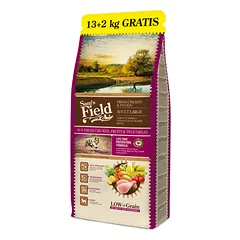
Sam's Field
1,80 €/kg
26,99 € / 15 kg

Country Dog
1,89 €/kg
28,29 € / 15 kg
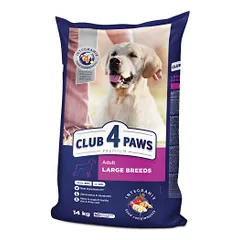
Club 4 Paws
1,92 €/kg
26,94 € / 14 kg
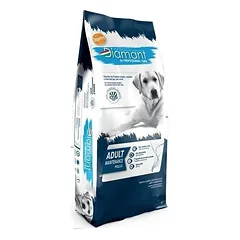
Diamant
1,93 €/kg
28,99 € / 15 kg
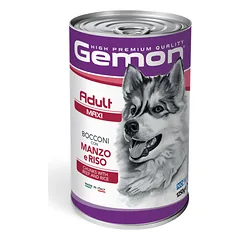
Gemon
1,94 €/kg
2,42 € / 1,3 kg

BIO FORM
2,00 €/kg
40,00 € / 20 kg
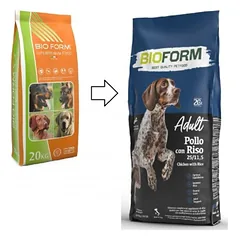
BIO FORM
2,00 €/kg
40,00 € / 20 kg