

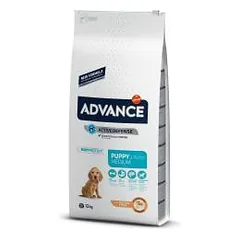
Advance
Advance Puppy Medium sausas maistas vidutinių veislių šuniukams, 12 kg
1,48 €/kg
17,76 € / 12 kg

Also known as: Kooiker, Kooikerhond, Dutch Decoy Dog, The Kooikerhondje
This small orange and white dog worked Dutch wetlands for centuries doing one specific job: trotting along the edge of a duck decoy pond, its bushy fox-like tail luring curious ducks into a trap where hunters could take them for food. The breed's name comes from the Dutch word for the person who tended that decoy pond, the kooiker. An adult weighs barely 11 kilograms, and the medium-length wavy coat with feathered ears gives it a look somewhere between a spaniel and a small setter. The breed nearly vanished by the mid 20th century, and it survived largely because one Dutch woman spent decades tracking down and breeding the remaining dogs. Dark tufts of hair at the ear tips, nicknamed earrings, are considered a hallmark of the breed. It tends to be alert and lively, sometimes wary of strangers, but fiercely attached to its own family. Life expectancy runs 12 to 14 years.
Browse dog food sized right for this breed
Nederlandse Kooikerhondje: how old in human years?
Energy level
Trainability
Family friendly
Grooming need
Males 38–41 cm
Females 35–38 cm
Males 10–11 kg
Females 9–10 kg
Nederlandse Kooikerhondje's average temperament and family-life score for this breed is moderate.
Nederlandse Kooikerhondje's energy and exercise needs are moderate.
Nederlandse Kooikerhondje's guarding and alertness traits are moderate.
Nederlandse Kooikerhondje's grooming needs are low.
A white-tipped tail waving among the reeds, and the Kooikerhondje's whole story is told. In the Netherlands these dogs worked at duck decoys: curious ducks would swim after a dog whose plumed tail flickered along the bank, and follow it into a netted channel. The job called for cunning, patience and a close bond with a person, and all of that comes home with you, along with a bright orange-red and white coat.
A Kooikerhondje is energetic and learns willingly: it enjoys tasks, scent games, tricks and dog sports, and short, varied sessions with plenty of praise work best. Every day it needs a good walk and something to occupy its mind, because a bored hunting dog will invent its own entertainment. The hunting instinct is very much alive, so birds and small animals are of great interest, and it can be reserved with strangers: introduce a puppy early to lots of people and situations.
With its family it is affectionate, cheerful and good with children, and it will tell you about visitors without making too much fuss. It can live in a flat if it gets enough exercise and attention every day. It will be happiest in a home where someone is glad to take it for walks by the water, and lets it curl up beside them on the sofa in the evening.
The Nederlandse Kooikerhondje wears a medium-length coat, straight or slightly wavy, with soft feathering on the ears, legs and tail. It looks luxurious but asks for little work: once or twice a week, brush and comb down to the skin, paying extra attention behind the ears, in the armpits and through the feathering, where hair tangles most easily. It sheds moderately, more during the moult, when it is worth brushing more often.
As you brush, look at the skin and feel for anything new under the coat. After a walk through meadows or reeds, check the feathering and between the toes for grass seeds and burrs, and after a swim dry the coat right down to the skin. Check the drop ears once a week: inside they should be clean and free of smell, and redness or a bad smell is one for the vet.
We don't have reliable health information specific to this breed, so we don't list conditions here. Keep up regular vet check-ups, and if you are getting a puppy, ask the breeder about the parents' health testing.
This is general information, not veterinary advice. For your own dog's health, tests and treatment, see a vet.
This list is chosen by the breed's weight (11 kg) rather than the breed itself: shops label food by dog size, so every breed of the same size gets the same list. Prices are updated daily.
≈ 165 g of dry food a day, from €9,10 a month For a neutered, normally active 10 kg dog. Calculate for your dog
Advance
1,48 €/kg
17,76 € / 12 kg
Sam's Field
1,80 €/kg
26,99 € / 15 kg

Country Dog
1,89 €/kg
28,29 € / 15 kg
Gemon
1,94 €/kg
2,42 € / 1,3 kg
Gemon
1,94 €/kg
2,42 € / 1,3 kg
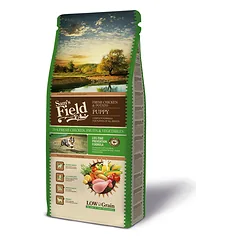
Sam's Field
2,11 €/kg
27,45 € / 13 kg
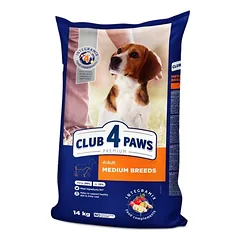
2,14 €/kg
30,00 € / 14 kg
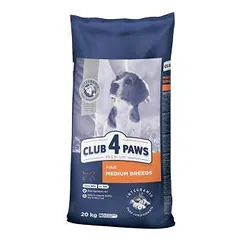
Club 4 Paws
2,15 €/kg
42,99 € / 20 kg