

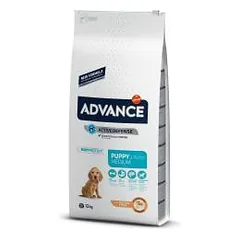
Advance
Advance Puppy Medium sausas maistas vidutinių veislių šuniukams, 12 kg
1,48 €/kg
17,76 € / 12 kg

The Spanish Water Dog did double duty across rural Spain, herding sheep in the mountains and helping fishermen on the water, which produced a versatile, high-energy all-rounder. An adult male weighs up to 22 kilograms, and the woolly, curly coat, left untrimmed, naturally cords itself into ropes, a trait shared by only a handful of breeds worldwide. The loose skin under that coat is a real adaptation for swimming, not just an aesthetic quirk. In Spain it's still used both for herding and as a water rescue dog. Clipping is usually done once a year rather than the regular grooming most curly breeds need. Energy is never in short supply, and without a job it tends to turn destructive. Life expectancy runs 12 to 14 years.
Browse dog food sized right for this breed
Spanish Water Dog: how old in human years?
Energy level
Trainability
Family friendly
Grooming need
Males 44–50 cm
Females 40–46 cm
Males 18–22 kg
Females 14–18 kg
Spanish Water Dog's average temperament and family-life score for this breed is moderate.
Spanish Water Dog's energy and exercise needs are high.
Spanish Water Dog's guarding and alertness traits are moderate.
Spanish Water Dog's grooming needs are low.
An April morning, a cold puddle at the side of the road, and your curly dog is already in it up to its belly, as delighted as if it had never seen water before. The Spanish Water Dog grew up in the hills and along the coasts of Andalusia, herding sheep and goats and helping fishermen in the water, and both jobs live on in it: it is forever moving, watching, gathering and carrying.
It has a great deal of energy, and without work it will spend it somewhere you'd rather it didn't. Every day it needs long walks, games with a ball or a tug toy, swimming, and ideally a job for its head too: obedience, tracking or agility. It learns quickly and willingly, though dull repetition soon puts it off. A flat is a tough fit unless you spend a lot of time outdoors.
With its family this dog is devoted and playful and gets on well with children, though the herding instinct sometimes tempts it to round up running kids into a neat bunch. With strangers it is cautious and will announce every arrival, so early socialisation is a necessity rather than a nicety. It doesn't like being left alone for long: this is a dog that wants to be where the action is, and better still if the action is near water.
A Spanish Water Dog doesn't need a brush, and it shouldn't get one. Its woolly, curly coat is not brushed out: brushed curls turn into a ball of fluff, while hair left to grow twists into cords on its own. So the coat is either clipped to an even length all over, roughly once or twice a year, or kept corded, with the cords separated by hand now and then so they don't felt together into a single mat. Shedding is very low, which many households will count as a real gift.
This dog loves water, so after every swim in a lake rinse the coat with clean water and let it dry right down to the skin: a dense coat that stays damp against the skin can start to smell and irritate. Check the ears after a swim and once a week; they should be dry, clean and odour-free. Curls around the face can fall over the eyes, so watch for watering or redness, and take a red or weepy eye to the vet.
This sturdy, medium-sized working dog from Spain herded flocks and worked in the water, so robustness is in its make-up, and it lives around twelve to fourteen years. There are a few inherited conditions worth knowing about before you bring a puppy home, since some are better discussed with the breeder than discovered later. If anything seems off, take your dog to a vet, who will decide what to do.
This is general information, not veterinary advice. For your own dog's health, tests and treatment, see a vet.
The ball and socket of the hip joint don't fit together as they should, so the joint wears faster and can become painful. You might notice your dog limping after a long play session, getting up stiffly, or hesitating to jump into the car. A Spanish Water Dog is a real athlete, so before buying a puppy, ask the breeder about the parents' health testing.
This is an inherited disease in which the retina at the back of the eye gradually wastes away and sight fades, starting in dim light. In the evening your dog may hesitate on the stairs, bump into things in a dark room, or be reluctant to go out after dark. It isn't painful, but it can't be reversed, so if you notice signs like these, see your vet, and when buying a puppy, ask the breeder about the parents' health testing.
The thyroid gland makes too little hormone, and the whole body seems to slow down. A dog that normally can't be kept out of the water may turn sluggish, gain weight without eating more, seek out warm spots, and show changes in its coat and skin. These changes creep in slowly and are easy to blame on age, so mention them to your vet, who will decide whether tests are needed.
This is an inborn, inherited lack of thyroid hormone that shows up in puppies, when the thyroid gland enlarges and a goitre can form in the neck. Such a puppy grows more slowly than its littermates, is listless, and may have a swelling you can feel in the throat. If a puppy is falling behind, see a vet without delay, and before buying, ask the breeder about the parents' health testing.
This list is chosen by the breed's weight (22 kg) rather than the breed itself: shops label food by dog size, so every breed of the same size gets the same list. Prices are updated daily.
≈ 260 g of dry food a day, from €14,13 a month For a neutered, normally active 18 kg dog. Calculate for your dog
Advance
1,48 €/kg
17,76 € / 12 kg
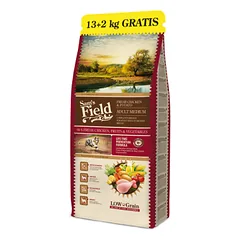
Sam's Field
1,80 €/kg
26,99 € / 15 kg

Country Dog
1,89 €/kg
28,29 € / 15 kg
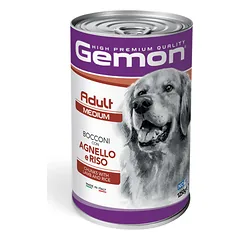
Gemon
1,94 €/kg
2,42 € / 1,3 kg
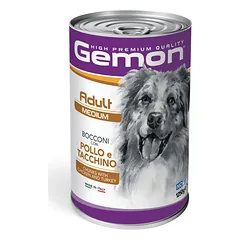
Gemon
1,94 €/kg
2,42 € / 1,3 kg
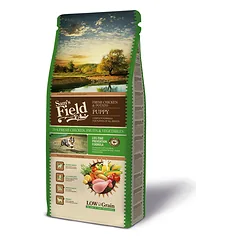
Sam's Field
2,11 €/kg
27,45 € / 13 kg
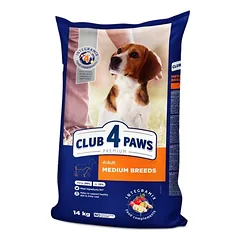
2,14 €/kg
30,00 € / 14 kg
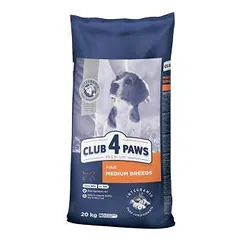
Club 4 Paws
2,15 €/kg
42,99 € / 20 kg