

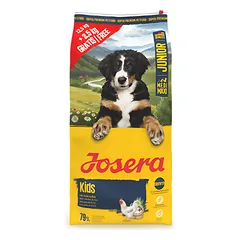
Josera
Josera Kids 12,5kg + 2,5kg = 15 kg
1,38 €/kg
37,89 € / 27,5 kg

Also known as: Kraševec, Krasky Ovcar
The Karst Shepherd comes from Slovenia's rocky, arid Karst plateau, which gave the breed its name, where it worked for centuries as a livestock guardian, deterring wolves and thieves rather than driving the herd. The breed is historically close to the Sarplaninac, both descending from the same old line of Balkan guardian dogs. The medium-length, dense double coat handles cold and damp well on exposed high ground. A male weighs up to 42 kilograms, sturdily built and powerful enough to face down a large predator. Temperament runs reserved and independent, shaped by generations of working without direct human supervision, so it tends to make its own calls. Life expectancy runs 10 to 12 years.
Browse dog food sized right for this breed
Karst Shepherd: how old in human years?
Energy level
Trainability
Family friendly
Grooming need
Males 54–63 cm
Females 50–58 cm
Males 25–42 kg
Females 25–35 kg
Karst Shepherd's average temperament and family-life score for this breed is low.
Karst Shepherd's energy and exercise needs are moderate.
Karst Shepherd's guarding and alertness traits are high.
Karst Shepherd's grooming needs are moderate.
At midnight something rustles beyond the fence, and out of the dark comes a deep, unhurried bark that says plainly: this place is guarded. The Karst Shepherd is a Slovenian mountain livestock guardian that lived for centuries with flocks and decided for itself what counted as a threat, and that watchfulness is the heart of the breed, not a side effect.
It needs exercise and space, but not a frantic pace: long walks and a yard of its own, well fenced, that it can patrol and look after suit it best. It is not easy to train, because it thinks for itself and doesn't follow commands blindly; it needs a calm, consistent, experienced owner and early, thorough socialisation. A flat does not suit it at all.
It is devoted to its own family, but this is not a dog that befriends every visitor: it meets strangers and unfamiliar dogs with suspicion and finds other dogs hard to get along with. With children it tends to be protective, but small children's games full of shrieks and running about can look like trouble to it, so adults need to supervise. It does best in the countryside or on a homestead, with people who need a real guardian and understand what that means.
The Karst Shepherd's coat is of medium length and dense, with a thick undercoat made for winters on mountain pastures. It keeps out wind and cold beautifully, but you pay for it in hair: this dog sheds heavily, and in spring and autumn the undercoat comes out on such a scale that a brushing session in the garden could stuff a cushion. Most of the year a thorough brush once or twice a week is enough; during the moult, do it daily, especially behind the ears, on the neck and on the hind legs, where the undercoat tangles most easily.
It doesn't need frequent baths, as the dense coat cleans itself reasonably well. Check the ears weekly and the nails every few weeks; if the dog spends most of its time on soft ground, they may not wear down. Get it used to brushing and handling from puppyhood, because a grown, powerful, independent dog is far easier to care for when it treats all this as routine.
We don't have reliable health information specific to this breed, so we don't list conditions here. Keep up regular vet check-ups, and if you are getting a puppy, ask the breeder about the parents' health testing.
This is general information, not veterinary advice. For your own dog's health, tests and treatment, see a vet.
This list is chosen by the breed's weight (42 kg) rather than the breed itself: shops label food by dog size, so every breed of the same size gets the same list. Prices are updated daily.
≈ 395 g of dry food a day, from €21,66 a month For a neutered, normally active 31,8 kg dog. Calculate for your dog
Josera
1,38 €/kg
37,89 € / 27,5 kg
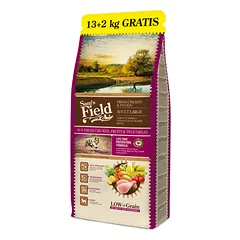
Sam's Field
1,80 €/kg
26,99 € / 15 kg

Country Dog
1,89 €/kg
28,29 € / 15 kg
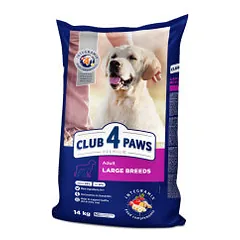
Club 4 Paws
1,92 €/kg
26,94 € / 14 kg
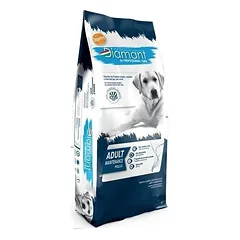
Diamant
1,93 €/kg
28,99 € / 15 kg
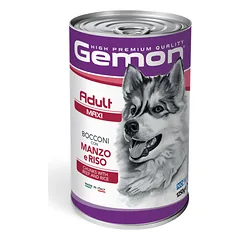
Gemon
1,94 €/kg
2,42 € / 1,3 kg
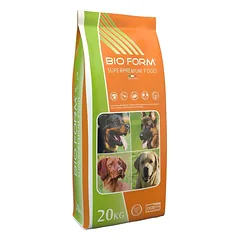
BIO FORM
2,00 €/kg
40,00 € / 20 kg
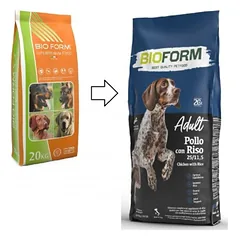
BIO FORM
2,00 €/kg
40,00 € / 20 kg