

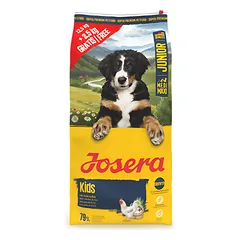
Josera
Josera Kids 12,5kg + 2,5kg = 15 kg
1,38 €/kg
37,89 € / 27,5 kg

The Irish Water Spaniel is one of the tallest spaniel-type breeds, and its dense, curly, oily, waterproof coat with the distinctive rat-tail pattern on the tail gives it an unmistakable silhouette. Males weigh around 30 kilograms, with a muscular build suited to long swims in cold Irish water. A tall, curly topknot on the head is another breed hallmark, texturally close to a Poodle's coat. It was bred to retrieve waterfowl in poor weather, and that work ethic still comes through in its temperament today. The coat needs regular brushing to keep the curls from matting. Temperament runs curious, sometimes mischievous, and it will take any excuse to play in water. Life expectancy runs 10 to 12 years.
Browse dog food sized right for this breed
Irish Water Spaniel: how old in human years?
Energy level
Trainability
Family friendly
Grooming need
Males 53–59 cm
Females 51–56 cm
Males 25–30 kg
Females 20–25 kg
Irish Water Spaniel's average temperament and family-life score for this breed is moderate.
Irish Water Spaniel's energy and exercise needs are moderate.
Irish Water Spaniel's guarding and alertness traits are moderate.
Irish Water Spaniel's grooming needs are low.
A topknot of curls on the head, and almost no hair at all on the tail: that thin, smooth rat tail gives the breed away from across a field. The Irish Water Spaniel was developed in Ireland to bring back waterfowl from cold lakes and bogs, and to this day any puddle looks like an invitation. If your favourite walk passes a pond, keep a towel in the car.
It has energy to spare, so it needs long walks, swimming and jobs that occupy its head: retrieving, scent games, dog sports. It is clever and learns fast, but it likes a joke and enjoys checking whether yesterday's rules still apply today, so short, cheerful sessions work far better than a heavy hand. A flat is cramped for it; a house with a garden and water nearby is the ideal setup.
It is devoted to its family and likes to be close, while strangers are watched from a distance first and announced with a bark. It gets on with other dogs and children when introductions start early and calmly. In the evening, dried off and worn out, it settles at your feet with the same mischievous look it wore that morning when it ran straight for the muddiest puddle.
An Irish Water Spaniel's coat is a mass of tight, dense curls, slightly oily so that water runs off it like off a duck's back. It sheds very little, but that doesn't mean little work: dead hair stays caught in the curls, and without regular combing they knot into mats. Every few days, work through the coat with your fingers and a wide-toothed comb, especially behind the ears and under the legs, and every few weeks trim the curls with scissors so your dog doesn't end up looking like a soggy rug. Go easy on the shampoo, because it strips the natural oils that keep the coat working in the water.
After every swim, lift those long, curl-covered ears and look inside: they trap moisture, so dry them off and check for redness or a bad smell. As you comb, look at the skin too, since the curls hide a tick or a grass seed very well. Wipe the corners of the eyes with a damp cloth, and trim the nails every few weeks if they don't wear down on their own.
A dog built to plunge into icy water after a downed duck is, when healthy, sturdy and hard-wearing, and it lives ten to twelve years. A few conditions are linked to the Irish Water Spaniel, touching the joints, thyroid, eyes and nerves, so it pays to know your dog well and notice when it moves, eats or behaves differently from before. If you are getting a puppy, ask the breeder about the parents' health testing.
This is general information, not veterinary advice. For your own dog's health, tests and treatment, see a vet.
The hip joint forms looser than it should, so over time it wears and starts to hurt. You might notice your spaniel struggling to climb out of the water onto a steep bank, getting up slowly after a rest, or no longer keen to jump into the car. Comfortable joints mean a great deal to a dog that lives to swim and run, so show changes like these to a vet.
The thyroid gland makes too little hormone, and the whole body seems to slow down. You might notice a once-tireless spaniel turning sluggish, putting on weight while eating the same, seeking out warm spots, and its curls thinning or losing their sheen. The changes creep in and are easy to put down to age, so if you notice them, take your dog to a vet.
In this inherited eye disease the cells of the retina slowly die off and sight fades, first in dim light and later in daylight too. You might notice your dog hesitating on the stairs after dark, or failing to find a thrown toy it used to snatch in a second. It isn't painful, and dogs adapt remarkably well by leaning on their nose, but changes in sight are worth talking over with a vet.
This is an inherited disorder of the peripheral nerves: the nerves that carry signals to the muscles work less and less well, so the legs weaken. You might notice your dog starting to wobble, its gait losing coordination, or it finding jumps harder and tiring sooner. Show a change like that to a vet, and if you are getting a puppy, ask the breeder about the parents' health testing.
This list is chosen by the breed's weight (30 kg) rather than the breed itself: shops label food by dog size, so every breed of the same size gets the same list. Prices are updated daily.
≈ 330 g of dry food a day, from €18,08 a month For a neutered, normally active 25 kg dog. Calculate for your dog
Josera
1,38 €/kg
37,89 € / 27,5 kg

Sam's Field
1,80 €/kg
26,99 € / 15 kg

Country Dog
1,89 €/kg
28,29 € / 15 kg

Club 4 Paws
1,92 €/kg
26,94 € / 14 kg
Diamant
1,93 €/kg
28,99 € / 15 kg
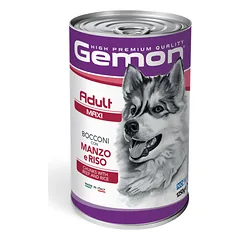
Gemon
1,94 €/kg
2,42 € / 1,3 kg

BIO FORM
2,00 €/kg
40,00 € / 20 kg

BIO FORM
2,00 €/kg
40,00 € / 20 kg