

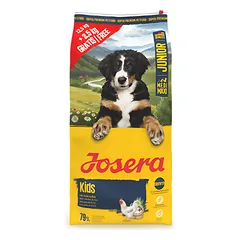
Josera
Josera Kids 12,5kg + 2,5kg = 15 kg
1,38 €/kg
37,89 € / 27,5 kg

Also known as: French Water Dog
The Barbet is an ancient French water dog, considered an ancestor of several other water breeds including the Poodle. The long, woolly, curly coat is fully waterproof and covers the entire body, including the face, so the eyes often sit hidden behind hair. Males can weigh up to 28 kilograms, with a sturdy build made for long stretches swimming in cold water. Unlike many breeds, this coat doesn't shed seasonally, but it needs regular trimming and brushing or it mats quickly. The breed was historically used to retrieve waterfowl and, in some regions, as a marsh dog. Temperament runs friendly and curious, and it takes to water naturally from a young age. Life expectancy runs 12 to 14 years.
Browse dog food sized right for this breed
Barbet: how old in human years?
Energy level
Trainability
Family friendly
Grooming need
Males 58–65 cm
Females 53–61 cm
Males 20–28 kg
Females 18–25 kg
Barbet's average temperament and family-life score for this breed is high.
Barbet's energy and exercise needs are moderate.
Barbet's guarding and alertness traits are low.
Barbet's grooming needs are low.
The first puddle of the morning walk, and your Barbet is already in it, delighted, muddy water dripping from its beard. In the marshes of France it retrieved waterfowl for hunters, and the love of water is built in. At home it turns into a gentle, cheerful family member who follows you from room to room.
It wants plenty of exercise: long walks, swimming, retrieving and games that make it think. It learns willingly and quickly and loves praise, while harshness only confuses it. Flat life is possible if it gets a proper outlet every day, but a garden or water nearby will make it happier.
It is patient and playful with children, gets on with other dogs, and greets strangers in a friendly way, perhaps a little reserved for the first minute. It will never be a guard dog, but it won't forget to announce the courier. It doesn't like being left alone for long, so it does best in a household where someone is around, with an owner who doesn't mind muddy paws.
A Barbet's coat is long, woolly and curly and barely sheds, but what it saves on shedding it spends on matting. Brush right down to the skin several times a week, especially behind the ears, in the armpits, on the chest and legs, where curls knot fastest. Many owners trim the coat shorter every few months to keep it manageable. After every swim, dry it thoroughly, since moisture held against the skin is an open invitation to trouble.
Check the ears weekly and after every swim: they hang down and are full of hair, so damp easily stays inside. Trim or tie up the fringe so the dog can see the world, and rinse the beard after meals, since it collects a sample of everything in the bowl. And don't forget the hair between the pads, where snowballs and mud collect.
Under all those curls is a sturdy, medium-sized working dog that can live twelve to fourteen years. A Barbet's health concerns centre on the joints, eyes, skin and ears, and the thick coat can hide some of them, so look closely. The conditions below are worth recognising, and a vet should decide what is wrong.
This is general information, not veterinary advice. For your own dog's health, tests and treatment, see a vet.
The hip joint forms loosely and wears over time, which can become painful. You might notice your dog getting up reluctantly, running with both hind legs together, or avoiding jumping into the car. Under a Barbet's fluffy trousers a change in gait is easy to miss, so watch how it moves, and if you are getting a puppy, ask the breeder about the parents' health testing.
This is an inherited disease in which the retina at the back of the eye slowly wastes away and the dog gradually loses its sight, starting in dim light. You might notice your dog hesitating before a dark room in the evening, or bumping into things it used to avoid. A Barbet's eyes hide behind a fringe, which makes changes harder to spot, so ask the breeder about the parents' health testing.
This is an inflammation of the ear canal, where bacteria or yeast take hold. The dog shakes its head, scratches at the ear, and there may be an unpleasant smell or dark discharge. A Barbet's ears hang down and are thickly furred, and this water dog will happily wade into every puddle, so moisture easily stays trapped inside; if you see these signs, see a vet.
An allergy is an overreaction of the immune system to something in the surroundings or in food. You might notice your dog licking its paws, scratching, rubbing its face on the carpet, or reddened skin. Red skin is easy to miss under a Barbet's dense coat, so part the hair and look as you brush, and talk to your vet about the cause.
Epilepsy is a condition in which bursts of disordered electrical activity in the brain cause seizures. During one, a dog may fall on its side, paddle its legs, drool or briefly lose consciousness, and afterwards seem confused. If your Barbet has a seizure, see a vet immediately.
This list is chosen by the breed's weight (28 kg) rather than the breed itself: shops label food by dog size, so every breed of the same size gets the same list. Prices are updated daily.
≈ 310 g of dry food a day, from €16,88 a month For a neutered, normally active 22,8 kg dog. Calculate for your dog
Josera
1,38 €/kg
37,89 € / 27,5 kg

Sam's Field
1,80 €/kg
26,99 € / 15 kg

Country Dog
1,89 €/kg
28,29 € / 15 kg

Club 4 Paws
1,92 €/kg
26,94 € / 14 kg

Diamant
1,93 €/kg
28,99 € / 15 kg
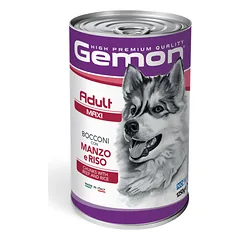
Gemon
1,94 €/kg
2,42 € / 1,3 kg

BIO FORM
2,00 €/kg
40,00 € / 20 kg

BIO FORM
2,00 €/kg
40,00 € / 20 kg