


VetExpert
Raw Paleo Dog Ultra Mini Puppy Beef 750 kg
0,02 €/kg
13,09 € / 750 kg

Also known as: Smooth fox terrier
This terrier was bred in 19th century England to accompany mounted hunters and, once a fox went to ground, go down into the den and bolt it back out. The short, dense coat needs almost no grooming compared to its wire haired cousin, one of the clearest differences between the two varieties. It weighs up to 8.2 kilograms, compact but leggy enough to move fast. Fox Terriers were among the first breeds officially registered by England's Kennel Club in the late 19th century, and the standard has changed remarkably little since. The breed is known for a lively, alert temperament and a tendency to bark loudly at anything out of the ordinary. At home it needs a fair amount of mental and physical stimulation or it will find its own entertainment. Life expectancy runs 12 to 15 years.
Browse dog food sized right for this breed
Fox Terrier (Smooth): how old in human years?
Energy level
Trainability
Family friendly
Grooming need
Males not specified
Females not specified
Males 7.3–8.2 kg
Females 6.8–7.7 kg
Fox Terrier (Smooth)'s average temperament and family-life score for this breed is moderate.
Fox Terrier (Smooth)'s energy and exercise needs are high.
Fox Terrier (Smooth)'s guarding and alertness traits are moderate.
Fox Terrier (Smooth)'s grooming needs are low.
Seven in the morning, you are still in your dressing gown, and your Fox Terrier is already at the door, trembling with impatience because something moved in the garden. These dogs were bred to bolt foxes from their earths, and that passion for the hunt burns as bright as ever: a cat, a squirrel or a hare can switch off every command you have in an instant. A lead in open country and a high fence around the garden are not strictness, just common sense.
It has energy enough for two dogs, so every day it needs long walks, a run, games and something to work its brain. It is quick and clever and learns gladly when sessions are short, lively and rewarded, but it answers boredom at once with schemes of its own. It is alert and likes to have its say, so in a flat without enough to do, the neighbours will hear every opinion.
At home a Fox Terrier is cheerful, devoted and full of fun, and likes to be at the centre of things. It gets on best with children old enough to cope with its whirlwind temperament, and it tends to pick arguments with other dogs, so friendships there are best built carefully and early. After a properly full day it finally settles in the evening, though one ear is still listening in case something stirs in the garden again.
A short, dense, flat coat is perhaps the simplest gift a Smooth Fox Terrier gives you. A weekly once-over with a rubber brush or grooming mitt clears out the dead hair and brings up the shine, and baths are only needed when your dog has rolled in something it shouldn't. It sheds little, but those short white hairs like to weave themselves into fabric, so the brush may occasionally serve the sofa too. As you brush, check the skin: through a short white coat you can easily spot redness, scratches, or a tick after a walk through the undergrowth.
Look at the eyes once a week: they should be clear and bright, with no redness or haze, and the corners can be wiped with a damp cloth. Lift the folded V-shaped ears and look inside; clean and odour-free means all is well. A dog that runs this much wears its nails down partly by itself, but if you hear them clicking on the floor, it is time for the clippers.
The Smooth Fox Terrier is a lean, muscular bundle of energy weighing around eight kilos, and you can look forward to twelve to fifteen busy years together. Four areas are worth knowing about: the hearing, the eyes, the knees and the hips. Some of these show up when the dog is young, so first-year vet check-ups and a good talk with the breeder are especially worthwhile.
This is general information, not veterinary advice. For your own dog's health, tests and treatment, see a vet.
Deafness can be present from birth and affect one ear or both. A puppy may sleep through noises, ignore its name when it cannot see you, or seem oddly stubborn; a dog deaf on one side may struggle to tell where a sound is coming from. Fox Terriers have opinions of their own anyway, so "can't hear" and "won't listen" are easy to mix up: if in doubt, talk to your vet, and when getting a puppy, ask the breeder about the parents' health testing.
The kneecap, a small bone at the front of the knee, can slip out of its groove and then pop back. You might see your Fox Terrier chasing a ball, suddenly running a few strides on three legs and then tearing off again at full speed. A skipping terrier looks perfectly cheerful, but a skip that keeps returning is worth showing to your vet.
The lens, the eye's clear focusing element, hangs on fine fibres that can weaken, letting it slip out of place. You may notice a suddenly red, watery, painful or cloudy eye, squinting, or a different shine to the eye; the inherited form appears in adult dogs. An eye like that should be seen by a vet the same day, and it is worth asking the breeder about the parents' health testing.
In this condition the blood supply to the head of the thighbone, the ball of the hip joint, is disrupted and the bone starts to break down. It affects young, still-growing small dogs: you may notice your dog starting to limp on one hind leg, favouring it, or licking at the hip. A Fox Terrier hides discomfort behind play, so any limp that lingers in a young dog is a reason to visit your vet.
This list is chosen by the breed's weight (8 kg) rather than the breed itself: shops label food by dog size, so every breed of the same size gets the same list. Prices are updated daily.
≈ 135 g of dry food a day, from €7,33 a month For a neutered, normally active 7,5 kg dog. Calculate for your dog
VetExpert
0,02 €/kg
13,09 € / 750 kg

1,70 €/kg
17,02 € / 10 kg
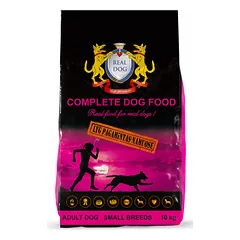
Real Dog
1,78 €/kg
17,79 € / 10 kg
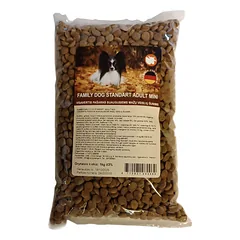
Family Dog
1,89 €/kg
1,89 € / 1 kg

Club 4 Paws
1,93 €/kg
26,99 € / 14 kg

Club 4 Paws
1,93 €/kg
26,99 € / 14 kg

Real Dog
1,94 €/kg
19,42 € / 10 kg

Real Dog
1,95 €/kg
19,49 € / 10 kg