

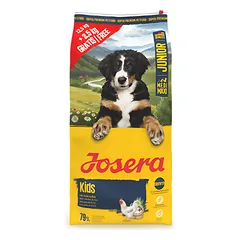
Josera
Josera Kids 12,5kg + 2,5kg = 15 kg
1,38 €/kg
37,89 € / 27,5 kg

Also known as: Flatcoat
The Flat-Coated Retriever emerged in late 19th-century England, shaped by the sportsman S. E. Shirley into an all-around dog able to retrieve game from both water and dry land. The dense, flat, medium-length coat with feathering gives it a sleek, glossy look. Males can weigh up to 34 kilograms, with a lean, athletic build that tends to work faster than some other retrievers. Temperament stays puppyish for years past physical maturity, earning it the nickname the eternal teenager among retrievers. Life expectancy runs shorter than most other retriever breeds, often linked to an elevated cancer risk. It's gentle and patient with children. Life expectancy runs 8 to 10 years.
Browse dog food sized right for this breed
Flat-Coated Retriever: how old in human years?
Energy level
Trainability
Family friendly
Grooming need
Males 59–61 cm
Females 56–59 cm
Males 25–34 kg
Females 25–32 kg
Flat-Coated Retriever's average temperament and family-life score for this breed is high.
Flat-Coated Retriever's energy and exercise needs are high.
Flat-Coated Retriever's guarding and alertness traits are low.
Flat-Coated Retriever's grooming needs are moderate.
Ask anyone who lives with a Flat-Coated Retriever and you will hear the same thing: this dog grows up slowly, and some never quite finish. The tail goes round like a propeller, the whole back end follows, and at five he still greets the courier as if they had been apart for months. Bred in Britain to bring back game from land and water, he has stamina to burn, and a day without a proper run sends him looking for work around the house.
The ideal day starts with a long walk, with time off the lead where it is safe, a game of fetch or a swim, and ends with another real outing in the evening; a quick lap of the block won't even warm him up. He learns readily and loves working with you, but his attention wanders the moment something more interesting flies past, so short, cheerful sessions with plenty of play work far better than long drills. A flat with no garden is a tight fit for this much enthusiasm.
He is a thoroughly sociable soul: kind with children, easygoing with other dogs and genuinely delighted by visitors, so don't expect a guard. He barks little, but he does not like being left on the edge of family life, and the happiest flat-coats are the ones who get taken along: in the car, to the lake, into the kitchen while dinner is cooking.
That glossy black or liver coat lies flat and close, with longer feathering on the ears, chest, the backs of the legs and the tail, and it all looks very manageable until you find out where the feathering has been on the walk. Brush thoroughly down to the skin twice a week, checking behind the ears, the armpits and the trousers, where burrs and small mats collect after a run through long grass. This dog sheds steadily, so a good brush pays for itself many times over: every hair in it is a hair that never reaches your sofa.
To a flat-coat, a puddle, a ditch or a lake is simply part of the route, so towel him down afterwards and let the coat dry properly before he settles into his bed. Look inside the drop ears once a week: they should be clean, pale and odourless, and head shaking is a reason to call the vet. Keep the nails short and trim the feathering between the pads with scissors now and then, so muddy paws carry less of the garden indoors.
Flat-Coated Retrievers live roughly eight to ten years, which is shorter than many owners expect from a dog that still behaves like a teenager at seven. That makes regular check-ups worth more, not less: a new lump, a cloudy eye or an oddly restless evening is better shown to the vet sooner rather than later. None of what follows is a forecast for your dog, just the things worth knowing by name.
This is general information, not veterinary advice. For your own dog's health, tests and treatment, see a vet.
Hip dysplasia means the ball and socket of the hip don't fit together snugly, so the joint wears unevenly as the dog grows and ages. You might notice a flat-coat who is slow to get up after a long nap, sits lopsided, or swaps his long, flowing gallop for a shorter, bunny-hopping stride. For a breed that would happily run all day, keeping a young dog lean and letting the vet judge any stiffness early both matter; before getting a puppy, ask the breeder about the parents' health testing.
Cancer is the broad name for cells that grow out of control, forming lumps on or under the skin or growing quietly inside the body. Things worth noticing are a new swelling, a lump that changes, a limp with no obvious cause, weight loss, or a dog who has lost his usual sparkle. A flat-coat's cheerfulness can hide a lot, so run your hands over the whole dog when you brush him and let the vet decide what any new lump is.
Glaucoma is raised pressure inside the eye, which damages the optic nerve and can cost a dog his sight. An eye that looks red, cloudy or bluish, seems bigger than the other, or that your dog keeps squinting or pawing at needs a vet the same day, because the condition is painful and moves fast. Before getting a puppy, ask the breeder about the parents' health testing, eyes included.
Bloat is when the stomach fills with gas and can twist on itself, cutting off its own blood supply; it can kill a dog within hours. Watch for a dog who paces, tries to vomit but brings nothing up, drools, and has a tight, swollen belly. The flat-coat is a deep-chested dog, exactly the build this threatens, so if you see these signs, get to a vet immediately, whatever the hour.
This list is chosen by the breed's weight (34 kg) rather than the breed itself: shops label food by dog size, so every breed of the same size gets the same list. Prices are updated daily.
≈ 370 g of dry food a day, from €20,21 a month For a neutered, normally active 29 kg dog. Calculate for your dog
Josera
1,38 €/kg
37,89 € / 27,5 kg
Sam's Field
1,80 €/kg
26,99 € / 15 kg

Country Dog
1,89 €/kg
28,29 € / 15 kg
Club 4 Paws
1,92 €/kg
26,94 € / 14 kg
Diamant
1,93 €/kg
28,99 € / 15 kg
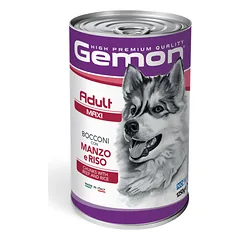
Gemon
1,94 €/kg
2,42 € / 1,3 kg
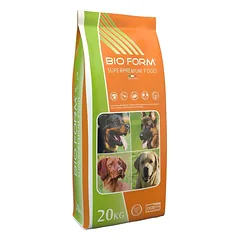
BIO FORM
2,00 €/kg
40,00 € / 20 kg
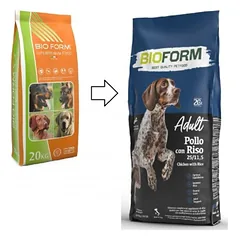
BIO FORM
2,00 €/kg
40,00 € / 20 kg