


Real Dog
Real Dog sausas maistas suaugusiems, didelių-milžiniškų veislių, šunims su vištiena ir ryžiais 20kg
2,11 €/kg
42,15 € / 20 kg

Also known as: VEO, East European Shepherd Dog, Eastern European Shepherd, Vostochno Evropeiskaya Ovcharka
The East European Shepherd was bred in the Soviet Union between the 1930s and the 1950s from imported German Shepherds, because the army and the border guards needed a dog that could cope with northern frost as well as steppe wind. The result is bigger and taller than its ancestor: a male stands 66 to 76 centimetres and can weigh up to 60 kilograms. It is easy to tell from a German Shepherd by its outline, with a straighter back that slopes far less towards the tail and a long, free stride. The best-known colour is black with tan, the so-called saddle, but solid black dogs and sable (zonal) grey or reddish grey ones also occur. The medium-length, harsh coat over a dense undercoat lets it live outdoors through hard winters, though it sheds heavily in spring and autumn. The FCI does not recognise the breed; the Russian Kynological Federation (RKF) does, and across Lithuania and the other former Soviet countries it is still widely known, often simply as the VEO. It is calm and self-assured, devoted to its own family and reserved and watchful with strangers, which makes it a dependable guard. It needs consistent training, a job to do and space, not a cramped flat. Life expectancy runs 10 to 12 years.
Browse dog food sized right for this breed
East European Shepherd: how old in human years?
Energy level
Trainability
Family friendly
Grooming need
Males 66–76 cm
Females 62–72 cm
Males 35–60 kg
Females 30–50 kg
East European Shepherd's average temperament and family-life score for this breed is high.
East European Shepherd's energy and exercise needs are moderate.
East European Shepherd's guarding and alertness traits are high.
East European Shepherd's grooming needs are moderate.
The East European Shepherd was built for service, and it shows every day: it wants to know what is happening on its patch and likes to settle where it can see the gate. It needs at least two proper walks a day, and better still a job: tracking, search games or a training club. Long, steady work suits it better than short sprints after a ball. It is happiest in a house with a large, securely fenced garden; in a cramped flat without daily exercise a dog this size soon gets bored.
It enjoys learning and learns fast, but matures slowly, and even a two-year-old can still behave like a teenager. It needs a calm, consistent, confident owner more than a strict one, and socialisation from the first months is a must: the more people, sounds and places it meets while young, the better it will later tell a real threat from a neighbour carrying out the rubbish.
With its own family it is devoted and patient with the children it knows, but it never warms to strangers: it watches first, then lets them come closer, and only once it sees that you are relaxed. It will let you know about every passer-by at the fence, loudly but not without reason. It gets on better with other dogs if they have been part of its life from puppyhood, and it is likely to treat a strange dog in its own yard as an intruder. This is a dog for someone who wants a reliable guard and companion, and who has the time to raise it and the space for it to be itself.
An East European Shepherd's coat is cut out for life outdoors: medium-length, harsh guard hairs lying close on top, and underneath a dense undercoat that holds in warmth through snow and cold autumn rain. For most of the year a thorough brush once or twice a week is enough, but in spring and autumn the undercoat starts coming out in whole tufts, and then the brush and an undercoat rake become a daily job until it is all out. The coat needs no clipping or shaving, and a bath only when your dog has genuinely got filthy: clean, harsh hair shakes off most of the mud by itself.
Brushing is a good moment to check the whole dog. Part the coat on the back, neck and belly and make sure the skin is clean, with no redness or flakes. The upright ears get plenty of air but collect dust in the yard, so look inside once a week and wipe the outer part with a damp cloth; the eyes should be clear, with no discharge in the corners. Trim the nails when you hear them clicking on the floor, and in winter, after walks on salted streets, rinse and dry the paws. All of this is far easier with a big dog that learned as a puppy to stand still and offer its feet.
How to do it:
By age:
We don't have reliable health information specific to this breed, so we don't list conditions here. Keep up regular vet check-ups, and if you are getting a puppy, ask the breeder about the parents' health testing.
This is general information, not veterinary advice. For your own dog's health, tests and treatment, see a vet.
Kennels breeding the East European Shepherd and their litters. Check the breeder before you buy a puppy.
All kennels (12) How to check a breeder
Do you breed the East European Shepherd and are you registered with VMVT? Take over your kennel's profile or create one, and publish your litters for free.
I am a breederThis list is chosen by the breed's weight (60 kg) rather than the breed itself: shops label food by dog size, so every breed of the same size gets the same list. Prices are updated daily.
≈ 505 g of dry food a day, from €27,62 a month For a neutered, normally active 43,8 kg dog. Calculate for your dog
Real Dog
2,11 €/kg
42,15 € / 20 kg
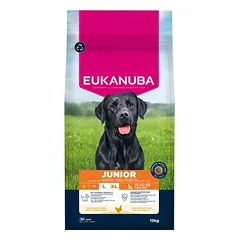
Eukanuba
2,20 €/kg
65,99 € / 30 kg
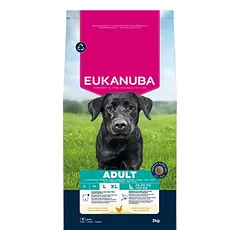
Eukanuba
2,33 €/kg
69,99 € / 30 kg
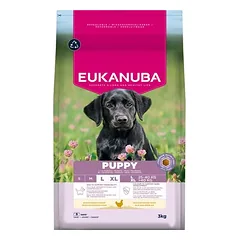
Eukanuba
2,37 €/kg
71,19 € / 30 kg
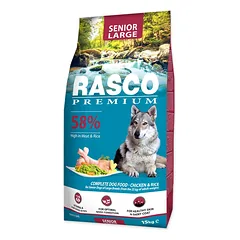
Rasco
2,46 €/kg
36,95 € / 15 kg

Brit Premium
2,47 €/kg
36,99 € / 15 kg
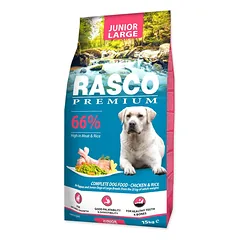
Rasco
2,49 €/kg
37,41 € / 15 kg
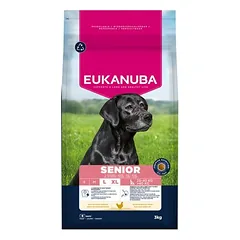
Eukanuba
2,55 €/kg
76,39 € / 30 kg