

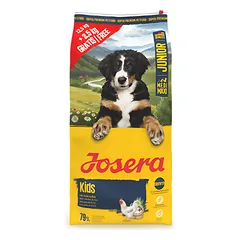
Josera
Josera Kids 12,5kg + 2,5kg = 15 kg
1,38 €/kg
37,89 € / 27,5 kg

Also known as: Hollandse Herder, Longhaired dutch shepherd
The Dutch Shepherd was developed on Netherlands farms as an all-purpose working dog, herding livestock, guarding crops from birds and even pulling a small cart in the same day's work. The breed comes in three coat varieties, short, long and rough, all accepted in the standard, a practical rather than cosmetic choice for a farm dog. Weighing up to 35 kilograms, it is agile, tireless and needs consistent mental and physical work. Today the breed increasingly serves in police and search work, since it combines intelligence with an ability to switch quickly between tasks. Left understimulated at home, it can turn destructive. Life expectancy runs 12 to 14 years.
Browse dog food sized right for this breed
Dutch Shepherd Dog: how old in human years?
Energy level
Trainability
Family friendly
Grooming need
Males 57–62 cm
Females 55–60 cm
Males 25–35 kg
Females 25–35 kg
Dutch Shepherd Dog's average temperament and family-life score for this breed is high.
Dutch Shepherd Dog's energy and exercise needs are moderate.
Dutch Shepherd Dog's guarding and alertness traits are high.
Dutch Shepherd Dog's grooming needs are low.
At six in the morning a Dutch Shepherd is already sitting by the bed, looking at you as if the working day had started and you were late. For this dog, activity is not entertainment, it is breathing: long walks, running, tracking, obedience or protection sports. By evening it should be tired in both head and legs, or it will spend the night checking every noise outside the window. A flat does not suit it at all, unless you yourself live more outdoors than in.
It learns quickly and gladly, because working with a person is its greatest reward. That is exactly why it needs a clear, calm leader: a clever, quick dog soon works out when the rules apply and when they don't. It is devoted to its family, takes guarding seriously and will announce every visitor loudly. It is reserved with strangers, and small running animals interest it more than you would like, so early socialising and a reliable recall are not optional. If you have the time and the will to work, you get a partner ready for anything.
The Dutch Shepherd comes in three coat varieties, and your work depends on which one you have. The short-haired dog has a dense, close-lying coat with an undercoat: a weekly pass with a rubber brush is enough, with more brushing in the spring and autumn moult, when the undercoat comes out in tufts. The long-haired coat is longer and straight, with feathering on the ears, legs and tail, and needs brushing a few times a week so it does not tangle. The rough-haired coat is harsh and dense; it should not be brushed constantly, and the dead hair is plucked out by hand now and then. Whichever coat it is, the gold or silver brindle looks its best clean, but baths can be rare.
While you brush, check the skin, especially after forest or field walks, for ticks, scratches or redness. The upright ears are well aired, but look inside once a week. The eyes should be clear, without discharge. Brush the teeth regularly; chews help but do not replace the toothbrush. Trim the nails when they start clicking: an active dog wears some down on its own, but not all of them, and not evenly.
How to do it:
By age:
The Dutch Shepherd Dog was bred for work rather than the show ring, and it shows: it is tough, hardy and tends not to ask for much health attention. Still, a few areas are worth knowing in advance: the joints, the eyes, the stomach, the spinal cord and blood clotting. You can spot many changes yourself if you know what to look for, and regular vet check-ups fill in the rest.
This is general information, not veterinary advice. For your own dog's health, tests and treatment, see a vet.
This is a fault in how the elbow or hip joint forms as the puppy grows: the parts do not fit or move smoothly, and the joint wears over time. You might notice your dog limping after a hard training session, getting up stiffly in the morning, or refusing jumps it used to clear for fun. For a working shepherd, sound joints are the foundation of everything else, so ask the breeder about the parents' health testing.
PRA is an inherited disease in which the retina slowly wastes away and sight fades, first in dim light and later by day as well. The dog grows more careful in the evenings, avoids dark places, or misses a thrown toy it used to catch in the air. A Dutch Shepherd adapts well and leans on its nose, so the change can go unnoticed for a long time; if you are getting a puppy, ask the breeder about the parents' health testing.
Bloat is when the stomach fills with gas and can twist on itself, cutting off its own blood supply, and it is one of the true emergencies in a dog's life. The dog becomes restless, paces, tries to vomit but brings nothing up, drools heavily, and the belly looks swollen and tight. Deep-chested, active dogs are known to be at risk, so if you see this, a vet is needed immediately: minutes count.
Degenerative myelopathy is a slowly progressing, painless disease of the spinal cord that gradually weakens the hind legs in later life. The first sign can be a sound: the hind paws start scuffing their nails on the pavement, and the dog wobbles a little on turns. Whether a change in gait comes from this or something else is for a vet to decide, and if you are getting a puppy, ask the breeder about the parents' health testing.
Von Willebrand disease is an inherited clotting disorder: a protein that helps blood stop a bleed is in short supply, so even a small wound bleeds longer. You might notice a cut paw pad that keeps bleeding, bleeding gums, or bruises with no clear cause. An active working dog is bound to pick up the odd scrape, so make sure the vet knows about it before any procedure.
This list is chosen by the breed's weight (35 kg) rather than the breed itself: shops label food by dog size, so every breed of the same size gets the same list. Prices are updated daily.
≈ 380 g of dry food a day, from €20,73 a month For a neutered, normally active 30 kg dog. Calculate for your dog
Josera
1,38 €/kg
37,89 € / 27,5 kg
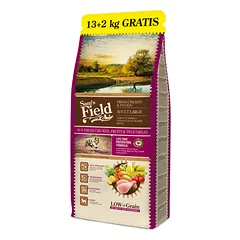
Sam's Field
1,80 €/kg
26,99 € / 15 kg

Country Dog
1,89 €/kg
28,29 € / 15 kg
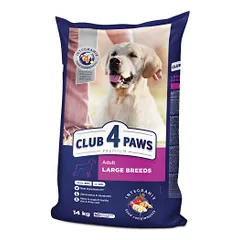
Club 4 Paws
1,92 €/kg
26,94 € / 14 kg
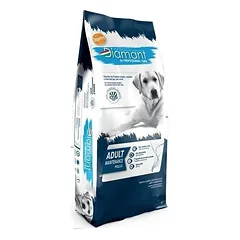
Diamant
1,93 €/kg
28,99 € / 15 kg
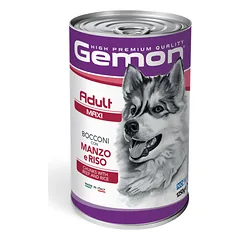
Gemon
1,94 €/kg
2,42 € / 1,3 kg

BIO FORM
2,00 €/kg
40,00 € / 20 kg

BIO FORM
2,00 €/kg
40,00 € / 20 kg