

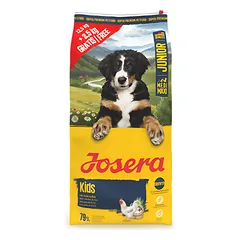
Josera
Josera Kids 12,5kg + 2,5kg = 15 kg
1,38 €/kg
37,89 € / 27,5 kg

Also known as: St. Germain Pointer
The Braque Saint-Germain emerged in mid-19th-century France, crossing English Pointers with French pointing breeds in the royal forest of Saint-Germain near Paris, which gave the breed its name. The short, fine, dense coat with characteristic orange patches on white gives it an elegant, athletic look. Males weigh around 25 kilograms, with a lean, fast build closer to the English Pointer than to the heavier continental braque types. The breed never became especially common and remains rare even in France. Temperament runs gentle, even sensitive, so training tends to work better with a soft hand than a firm one. Life expectancy runs 12 to 13 years.
Browse dog food sized right for this breed
Braque Saint-Germain: how old in human years?
Energy level
Trainability
Family friendly
Grooming need
Males 56–62 cm
Females 54–58 cm
Males 20–25 kg
Females not specified
Braque Saint-Germain's average temperament and family-life score for this breed is moderate.
Braque Saint-Germain's energy and exercise needs are moderate.
Braque Saint-Germain's guarding and alertness traits are low.
Braque Saint-Germain's grooming needs are low.
Let a Braque Saint-Germain loose in a meadow for the first time and it doesn't run so much as search: wide loops, nose in the wind, and not a single bush left unchecked. It is a French pointing dog, bred to find and point game birds, and that work gives it more joy than any toy. Its prey drive and hunting instinct are strong, so start practising recall from the first weeks, and introduce cats and small animals with care.
It needs a lot of exercise every day: long walks, off-lead running somewhere safe, search and retrieve games. It learns willingly but is sensitive, so a harsh word hurts it more than it teaches; praise, treats and patience work far better. Long hours alone in a flat are not its idea of a life.
Indoors it is gentle and affectionate, happy to settle beside you on the sofa if you allow it, good with children and usually with other dogs. It is not aggressive with strangers, perhaps a little reserved, but it won't make a guard. An active family or a hunter suits it best, with a garden and weekends out in nature.
The Braque Saint-Germain's coat is short, fine and dense, and its white ground with orange patches shows exactly which puddle your dog visited today. Luckily, dirt comes off such a coat easily: a damp towel usually does it, and once a week a rubber mitt or a soft brush will keep it tidy. It sheds moderately, more at the turn of the seasons. Bath it rarely, so the skin doesn't dry out.
A short, fine coat offers little protection from thorns, branches and cold, so after outings check the skin, paws and pads for scratches and ticks, and on a cool, rainy day make sure it has a warm place to rest. Lift the hanging ears and look inside every week; redness, discharge or a bad smell is a reason to see a vet. Trim the nails if they don't wear down on their own.
We don't have reliable health information specific to this breed, so we don't list conditions here. Keep up regular vet check-ups, and if you are getting a puppy, ask the breeder about the parents' health testing.
This is general information, not veterinary advice. For your own dog's health, tests and treatment, see a vet.
This list is chosen by the breed's weight (25 kg) rather than the breed itself: shops label food by dog size, so every breed of the same size gets the same list. Prices are updated daily.
≈ 305 g of dry food a day, from €16,70 a month For a neutered, normally active 22,5 kg dog. Calculate for your dog
Josera
1,38 €/kg
37,89 € / 27,5 kg

Sam's Field
1,80 €/kg
26,99 € / 15 kg

Country Dog
1,89 €/kg
28,29 € / 15 kg

Club 4 Paws
1,92 €/kg
26,94 € / 14 kg

Diamant
1,93 €/kg
28,99 € / 15 kg
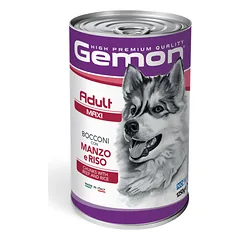
Gemon
1,94 €/kg
2,42 € / 1,3 kg

BIO FORM
2,00 €/kg
40,00 € / 20 kg

BIO FORM
2,00 €/kg
40,00 € / 20 kg