

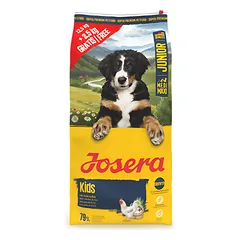
Josera
Josera Kids 12,5kg + 2,5kg = 15 kg
1,38 €/kg
37,89 € / 27,5 kg

Also known as: Burgos Retriever, Burgalese Pointer, Burgos Pointing Dog
The Perdiguero de Burgos is one of Spain's oldest pointing breeds, with ancestors that worked the plains of Castile long before modern pointers and setters existed as distinct types. The short, dense coat holds up well against thorny scrub and the harsh sun typical of that part of Spain. Males can reach 30 kilograms, and the build is compact but sturdy enough for a full day's hunting on foot. The breed rarely turns up outside Spain, it was never exported widely the way some other continental pointers were. Temperament is steady and biddable, which makes it straightforward to train for fieldwork. Grooming needs are minimal, just regular brushing. Life expectancy runs 11 to 13 years.
Browse dog food sized right for this breed
Perdiguero de Burgos: how old in human years?
Energy level
Trainability
Family friendly
Grooming need
Males 62–67 cm
Females 60–65 cm
Males 27–30 kg
Females not specified
Perdiguero de Burgos's average temperament and family-life score for this breed is moderate.
Perdiguero de Burgos's energy and exercise needs are moderate.
Perdiguero de Burgos's guarding and alertness traits are low.
Perdiguero de Burgos's grooming needs are low.
On the Spanish plateau he crosses the fields at a calm, economical pace, head low, and then stops dead: set, focused, his tail barely quivering. The Perdiguero de Burgos is an old Spanish gundog, big and solid, who works thoughtfully and without hurry, and he brings that calm diligence home with him.
By pointing-dog standards he is the steadier sort, but that doesn't make him a sofa dog: every day he needs a long walk and a chance to run free somewhere safe, ideally with some work for his nose too. He learns well enough when training is patient and consistent; harshness won't help. His prey drive and hunting instinct are strong, so start recall training early and introduce cats carefully.
With his family he is gentle, affectionate and patient with children, he usually gets along with other dogs, and he is reserved with strangers. He won't wear you out with barking and will tell you someone has arrived, but he is no real guard. A flat is too small for him; he does best in a house with a garden, with a family or a hunter whose days are unhurried but whose daily outings to the fields are sacred.
The Perdiguero de Burgos has a short, dense, smooth coat, so it needs no comb and no groomer, but do keep a brush handy. It sheds moderately: brushing once or twice a week with a rubber brush or mitt means fewer hairs on the sofa and your clothes, and during the spring and autumn moult it's worth doing more often. Baths are rarely needed; a damp towel takes care of the mud after a walk.
This is a big-headed dog with hanging lips and long ears, so a cloth after meals and drinks sometimes comes in handy, and the lip folds and ears deserve a weekly look. Redness, discharge or a bad smell in the ears is a reason to see a vet. After outings in the fields check the paws and coat for ticks, and trim the nails if they don't wear down on their own.
We don't have reliable health information specific to this breed, so we don't list conditions here. Keep up regular vet check-ups, and if you are getting a puppy, ask the breeder about the parents' health testing.
This is general information, not veterinary advice. For your own dog's health, tests and treatment, see a vet.
This list is chosen by the breed's weight (30 kg) rather than the breed itself: shops label food by dog size, so every breed of the same size gets the same list. Prices are updated daily.
≈ 365 g of dry food a day, from €19,95 a month For a neutered, normally active 28,5 kg dog. Calculate for your dog
Josera
1,38 €/kg
37,89 € / 27,5 kg

Sam's Field
1,80 €/kg
26,99 € / 15 kg

Country Dog
1,89 €/kg
28,29 € / 15 kg

Club 4 Paws
1,92 €/kg
26,94 € / 14 kg
Diamant
1,93 €/kg
28,99 € / 15 kg
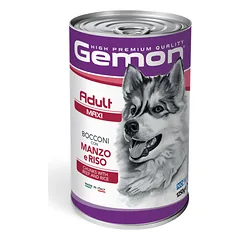
Gemon
1,94 €/kg
2,42 € / 1,3 kg

BIO FORM
2,00 €/kg
40,00 € / 20 kg

BIO FORM
2,00 €/kg
40,00 € / 20 kg