


Josera
Josera Kids 12,5kg + 2,5kg = 15 kg
1,38 €/kg
37,89 € / 27,5 kg

Also known as: Braque italien, Italian Pointer, Italian Pointing Dog
The Bracco Italiano is considered one of Europe's oldest pointing breeds, its ancestors appearing in Renaissance Italian art as hunting companions to the nobility. A male can weigh up to 40 kilograms, with a large yet elegant frame, and the short, dense, glossy coat needs minimal grooming. The breed was traditionally used to hunt birds in open country, freezing on point rather than chasing the game down. Its characteristic ground-covering gait, sometimes called the wolf trot, lets it cover large areas while conserving energy. It is known for a gentle, people-oriented temperament, which makes it a solid family dog as long as it gets enough real exercise. Life expectancy runs 10 to 12 years.
Browse dog food sized right for this breed
Bracco Italiano: how old in human years?
Energy level
Trainability
Family friendly
Grooming need
Males 58–67 cm
Females 55–62 cm
Males 25–40 kg
Females 25–34 kg
Bracco Italiano's average temperament and family-life score for this breed is moderate.
Bracco Italiano's energy and exercise needs are high.
Bracco Italiano's guarding and alertness traits are low.
Bracco Italiano's grooming needs are low.
The face gets you first: long ears, mournful eyes and the expression of an elderly gentleman who has seen everything life has to offer. Then you see him outdoors, in that long, flowing trot with his nose held high, and realise the gentleman is one of Italy's oldest gundogs, bred to search, point and retrieve all day. A Bracco Italiano needs plenty of exercise: long walks, off-lead running somewhere safe, scent games and, if you can manage it, real work for that nose.
At home he is gentle, affectionate and wants to be near his people, good with children and, properly introduced, with other dogs. He learns well but at his own pace: harshness hurts him more than it convinces him, while praise, patience and short, interesting sessions work remarkably well. His strong hunting instinct means a bird or a hare can wipe your command from his mind in an instant, so a reliable recall will take a long time to build.
He is reserved with strangers but not unfriendly; he'll announce a visitor, but he is no guard. A flat and quick trips round the block are too small a life for him; he's happiest in a house with a garden and an owner who likes a morning in the fields or woods, and who doesn't mind, come evening, when forty kilos of elderly gentleman tries to settle on the sofa beside them.
The Bracco Italiano's coat is short, dense and glossy, so it barely needs a brush: once a week, go over it with a rubber brush or grooming mitt and the shine looks after itself. It sheds moderately. What needs more care isn't the coat but what's under it: loose skin with folds on the neck and face, which collect mud and damp after a walk. Wipe them afterwards and check that the skin is dry, not red and doesn't smell odd.
The ears are the breed's calling card and your weekly job. Long, heavy and hanging, they air poorly, so lift each one once a week and look inside; redness, dark discharge or a smell means it's time for the vet. The eyelids droop a little, so wipe the corners with a damp cloth, especially after a run through tall grass. And since a Bracco drools, particularly after a drink, a towel by the water bowl will save your floor a good deal of work.
The Bracco Italiano is a robust working dog that lives ten to twelve years, though its list is longer than some breeds': joints, eyes, kidneys, skin and ears, with a deep chest adding the risk of a twisted stomach. That doesn't mean your dog will work through the whole list; it means you know what to watch. Ask the breeder about the parents' health testing before you take a puppy home, and let a vet judge any changes you notice.
This is general information, not veterinary advice. For your own dog's health, tests and treatment, see a vet.
The kidneys filter the blood and clear waste, and when they start working less well, the body struggles to keep its balance. You might notice your dog drinking and peeing more than before, eating less eagerly, or losing weight. A Bracco Italiano can drink a fair amount after a day in the field for no worrying reason at all, so what matters is a change from its usual rhythm, and that is worth raising with a vet.
The hip joint develops imperfectly, the ball doesn't sit firmly in its socket, and the joint wears over time. You might notice your dog getting up more slowly after a long walk, hesitating to jump into the car, or its trot turning uneven. The long, flowing trot is the Bracco Italiano's signature, so any change in it is a good reason to see a vet.
The bones of the elbow joint don't fit together quite right as they grow, so the joint works unevenly and gradually wears. It first shows as a front-leg limp, especially after rest or a long day out. Keep a close eye on a growing Bracco Italiano puppy, and show any limp to a vet rather than waiting for it to pass.
This is inflammation of the outer ear canal, where infection settles in the warm, damp space. Your dog shakes its head, scratches at the ear, and the ear may look red and smell unpleasant. A Bracco Italiano's ears are long, heavy and pendulous and close over the canal like a lid, so checking them regularly isn't fussiness, it's a habit.
The stomach fills with gas, swells and can twist on itself, pinching off its blood supply. The dog becomes restless, tries to vomit without bringing anything up, drools, and its belly looks tight and swollen. The Bracco Italiano is a deep-chested dog, so know these signs: this is an emergency, and it needs a vet immediately.
In this inherited disease the retina slowly wastes away and sight fades, first in dim light. A dog that races confidently across a field by day may stop at the stairs or catch its feet on things after dark. Because it is inherited, ask the breeder about the parents' health testing before you take a Bracco Italiano puppy home.
An allergy is the immune system overreacting to something in the environment or in food, and in dogs it shows up mainly through the skin. You may see your dog scratching, licking its paws, and redness on the belly, in the armpits or in the folds by the lips. The Bracco Italiano has loose skin with folds on the neck and face, so look into them, and talk to a vet about any itch that doesn't settle.
This list is chosen by the breed's weight (40 kg) rather than the breed itself: shops label food by dog size, so every breed of the same size gets the same list. Prices are updated daily.
≈ 385 g of dry food a day, from €21,24 a month For a neutered, normally active 31 kg dog. Calculate for your dog
Josera
1,38 €/kg
37,89 € / 27,5 kg

Sam's Field
1,80 €/kg
26,99 € / 15 kg

Country Dog
1,89 €/kg
28,29 € / 15 kg
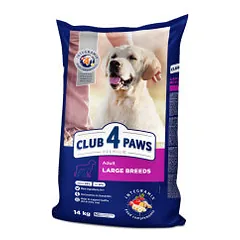
Club 4 Paws
1,92 €/kg
26,94 € / 14 kg

Diamant
1,93 €/kg
28,99 € / 15 kg

Gemon
1,94 €/kg
2,42 € / 1,3 kg

BIO FORM
2,00 €/kg
40,00 € / 20 kg

BIO FORM
2,00 €/kg
40,00 € / 20 kg