


VetExpert
Raw Paleo Dog Ultra Mini Puppy Beef 750 kg
0,02 €/kg
13,09 € / 750 kg

Also known as: Bichon Bolognese
The Bolognese takes its name from the city of Bologna in Italy, and it was already a favored gift among European noble families during the Renaissance, including the Medici. The white, cotton-like, non-shedding coat naturally forms loose flocks rather than being brushed to a silky sheen, as with some other Bichon breeds. Adult weight is only about 4 kilograms, on a compact, square-built frame. Despite its decorative look, the breed is known for forming an intense bond with one person and can struggle badly with being left alone for long stretches. Coat care calls for regular but gentle brushing to keep it from matting. Life expectancy runs 12 to 14 years.
Browse dog food sized right for this breed
Bolognese: how old in human years?
Energy level
Trainability
Family friendly
Grooming need
Males 27–30 cm
Females 25–28 cm
Males 2.5–4 kg
Females 2.5–4 kg
Bolognese's average temperament and family-life score for this breed is high.
Bolognese's energy and exercise needs are low.
Bolognese's guarding and alertness traits are low.
Bolognese's grooming needs are low.
Pick up a Bolognese and you notice how little it weighs: it is like holding a cloud with a heartbeat. This Italian dog has been a companion for centuries, and that is what it does best: being wherever you are. In the kitchen it sits at your feet, in the study on the chair beside you, and when you leave it waits at the door. It finds long hours alone hard, so this is a dog for a home where somebody is around a lot.
It doesn't need big hikes: a few short walks a day and games indoors are enough, which makes it a natural for flat life. It is clever and keen to learn, especially when lessons are gentle and pay in treats. It doesn't bark much, but it won't forget to tell you about the doorbell.
With strangers it can be reserved at first, taking a look from behind your leg, but it soon thaws. It gets on with children and other dogs, though little ones need to understand that a dog this light is not a toy to be carried about and dropped. In the evening it finds the warmest spot on the sofa, and that spot will almost certainly be next to you.
A Bolognese's coat is white, long and as fluffy as cotton wool, falling in loose flocks. It hardly sheds: the loose hair stays in the coat, and if you don't comb it out it twists into tight mats within days, especially behind the ears, in the armpits and between the legs. So comb right down to the skin, section by section, a few times a week, and tease a mat apart with your fingers while it is still small. Many owners keep the coat clipped shorter: it changes nothing about the dog and cuts the combing a great deal.
Skin under a mat gets no air and can become irritated, so look at the skin as you comb. The white hair around the eyes stains easily from tears, so wipe the corners with a damp cloth daily and keep the hair from falling into the eyes. Drop ears full of hair hold moisture, so check them weekly and dry them after a bath; take a red ear or a bad smell to the vet.
Twelve to fourteen years at your side, a good share of them in your lap: the Bolognese is a small, light dog, and the conditions linked to it involve the knees, the hip and the teeth. None of them is mysterious; it is enough to know how your dog moves and to lift its lip now and then. When in doubt, talk to a vet, and if you are getting a puppy, ask the breeder about the parents' health testing.
This is general information, not veterinary advice. For your own dog's health, tests and treatment, see a vet.
The kneecap slides out of its groove, and the dog runs a few steps with a hind leg held up, then puts it down as if nothing happened. For a Bolognese that spends its day hopping on and off the sofa, sound knees matter. Mention that skip to your vet, who can judge how much the kneecap moves.
This is a hip disease of small dogs: the top of the thighbone loses its blood supply, slowly breaks down, and the joint becomes painful. The signs appear young, when a puppy starts to limp on one hind leg or spare it, and the leg may grow thinner. Under all that fluff a leg looks exactly as it always does, so watch how your dog walks rather than how it looks, and take a limp that lingers to a vet.
Plaque builds up on the teeth and hardens into tartar, while the gums redden and start to recede. In a Bolognese's small mouth the teeth sit close together, so the first things you notice are bad breath, a red line along the gums, or a dog that chews on one side only or drops its food. Lift the lip once a week and have a look, and show any change to a vet.
This list is chosen by the breed's weight (4 kg) rather than the breed itself: shops label food by dog size, so every breed of the same size gets the same list. Prices are updated daily.
≈ 72 g of dry food a day, from €3,96 a month For a neutered, normally active 3,3 kg dog. Calculate for your dog
VetExpert
0,02 €/kg
13,09 € / 750 kg

1,70 €/kg
17,02 € / 10 kg
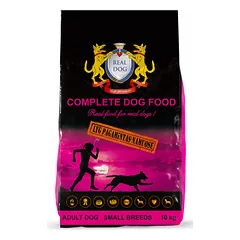
Real Dog
1,78 €/kg
17,79 € / 10 kg
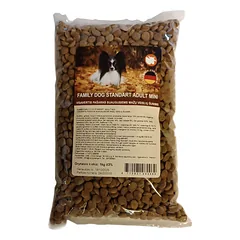
Family Dog
1,89 €/kg
1,89 € / 1 kg

Club 4 Paws
1,93 €/kg
26,99 € / 14 kg

Club 4 Paws
1,93 €/kg
26,99 € / 14 kg

Real Dog
1,94 €/kg
19,42 € / 10 kg
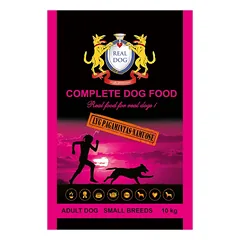
Real Dog
1,95 €/kg
19,49 € / 10 kg