

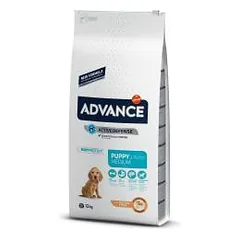
Advance
Advance Puppy Medium sausas maistas vidutinių veislių šuniukams, 12 kg
1,48 €/kg
17,76 € / 12 kg

Also known as: Avuvi, Barroo
Originating in the rainforests of the Congo Basin, this breed is famous for barely barking at all, producing instead a distinctive yodel like sound due to an unusual larynx shape. The short, fine coat and lean, athletic body, weighing up to 11 kilograms, suits Africa's heat far better than cold winter months. Local hunters used Basenjis to chase small game through dense forest, often fitting them with bells so they could be tracked by sound. The breed is considered one of the oldest and genetically closest to the wolf, with similar dogs depicted in ancient Egyptian art. Basenjis also groom themselves much like cats, licking their coat clean, an unusual trait among dogs. Its temperament is independent and curious, often compared to a cat's. Life expectancy runs 12 to 16 years.
Browse dog food sized right for this breed
Basenji: how old in human years?
Energy level
Trainability
Family friendly
Grooming need
Males 40–43 cm
Females 38–41 cm
Males 9.5–11 kg
Females 8.9–9.5 kg
Basenji's average temperament and family-life score for this breed is moderate.
Basenji's energy and exercise needs are high.
Basenji's guarding and alertness traits are low.
Basenji's grooming needs are low.
The doorbell rings, and instead of a bark you hear a strange, sing-song yodel: that is how a Basenji tells you someone has arrived. This ancient hunting dog from the Congo hardly barks at all, but you couldn't call it quiet: it has a whole repertoire of growls, whines and songs. And it has enough energy for two dogs.
Every day it needs long, active walks and a chance to run in a safely fenced space, because its hunting instinct is very strong: a cat or a bird flickering past carries it off in an instant, and at that moment your recall simply doesn't exist. A bored Basenji finds its own entertainment: it chews, it dismantles, it climbs the fence. It learns quickly, but not out of a wish to please you; short, fun sessions with treats work, repetition and harshness don't.
It is attached to its people but independent, like a cat that decides for itself when it wants a fuss. It gets on well with children who respect its space and is reserved with strangers and other dogs at first. A flat works only if it gets a real workout every day; if you want a dog that doesn't shed, doesn't smell and doesn't bark, but will never let you be bored, a Basenji may be exactly yours.
A Basenji looks after itself almost like a cat: it licks itself clean, keeps itself tidy and has hardly any doggy smell. Its short, fine, smooth coat needs no more than a weekly once-over with a rubber mitt or soft brush: a few dead hairs come away and the coat takes on a shine. It sheds very little and hardly ever needs a bath, unless it has found something it simply had to roll in. Feel the skin as the mitt moves: such a thin coat hides little, so you will find a scratch, a tick or a red patch quickly.
The pricked ears air themselves well; glance inside once a week, and clean and odour-free means all is well. Wipe the corners of the eyes with a damp cloth when needed, and show a vet any eye that is red, cloudy or watering. Check the nails every few weeks: a Basenji doesn't like having its feet handled, so get it used to it from puppyhood, with treats.
Light, clean-limbed and athletic, a Basenji can live twelve to sixteen years, so you will have plenty of time together. A few inherited conditions are linked to the breed, and two of them, in the kidneys and the eyes, don't show straight away, so it is worth knowing their signs. If you notice anything unusual, show your dog to a vet, and if you are getting a puppy, find out how healthy its parents were.
This is general information, not veterinary advice. For your own dog's health, tests and treatment, see a vet.
The thyroid gland makes too little hormone and the whole body starts running slower. You might notice your dog putting on weight without eating more, seeking out warmth, or its short, glossy coat dulling or thinning. A Basenji is energetic by nature, so if your little firecracker starts napping for hours and is reluctant to go out, tell your vet.
This is an inherited kidney disorder: the kidneys can no longer return to the blood the substances they should, such as sugar, and these are lost in the urine. You might notice your dog drinking far more, asking to go out more, and losing weight while eating the same as before. These signs may only appear in an adult dog, so if you notice more drinking, see a vet, and if you are getting a puppy, ask the breeder about the parents' health testing.
The retina, the light-sensitive layer at the back of the eye, slowly wastes away and the dog gradually loses its sight, first in dim light. You might notice your Basenji hesitating on the stairs in the evening, bumping into things in a dark room, or reluctant to go into the garden after dusk. Dogs adapt remarkably well, so changes can go unnoticed for a long time; if in doubt, ask a vet to check the eyes, and if you are getting a puppy, ask the breeder about the parents' health testing.
The ball and socket of the hip joint don't form as they should, so the joint is loose and wears over time. You might notice your dog reluctant to jump onto the sofa, stiff getting up after a sleep, or running with both hind legs together like a rabbit. For a Basenji, who loves leaps and sharp turns, sound joints matter a great deal, so show signs like these to a vet.
This list is chosen by the breed's weight (11 kg) rather than the breed itself: shops label food by dog size, so every breed of the same size gets the same list. Prices are updated daily.
≈ 160 g of dry food a day, from €8,89 a month For a neutered, normally active 9,7 kg dog. Calculate for your dog
Advance
1,48 €/kg
17,76 € / 12 kg
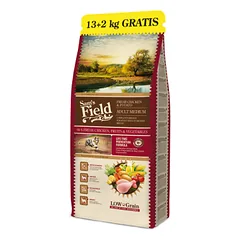
Sam's Field
1,80 €/kg
26,99 € / 15 kg

Country Dog
1,89 €/kg
28,29 € / 15 kg
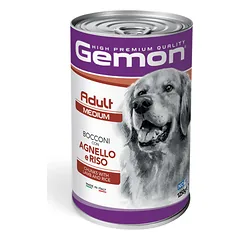
Gemon
1,94 €/kg
2,42 € / 1,3 kg
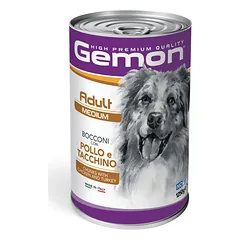
Gemon
1,94 €/kg
2,42 € / 1,3 kg
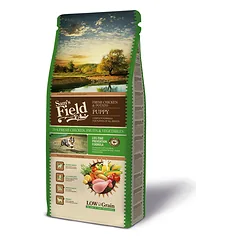
Sam's Field
2,11 €/kg
27,45 € / 13 kg
2,14 €/kg
30,00 € / 14 kg

Club 4 Paws
2,15 €/kg
42,99 € / 20 kg