


Advance
Advance Puppy Medium sausas maistas vidutinių veislių šuniukams, 12 kg
1,48 €/kg
17,76 € / 12 kg

The Mittelspitz sits between the smaller and larger German Spitz varieties, weighing around 11 kilograms while keeping the same dense coat and alert character common to the breed. It descends from the old Torfspitz, used to guard homes and farms across Central Europe long before modern breeds took shape. The coat needs regular brushing, especially during seasonal shedding when most of the undercoat comes out. Vocal alertness runs deep in this breed's history, it tends to announce any new sound or visitor loudly. Temperament is lively and curious, and it adapts well to both city and countryside living. It bonds closely with its family while staying wary of strangers. Life expectancy runs 14 to 16 years.
Browse dog food sized right for this breed
German Spitz (Mittelspitz): how old in human years?
Energy level
Trainability
Family friendly
Grooming need
Males 30–38 cm
Females 30–38 cm
Males 7–11 kg
Females 7–11 kg
German Spitz (Mittelspitz)'s average temperament and family-life score for this breed is moderate.
German Spitz (Mittelspitz)'s energy and exercise needs are moderate.
German Spitz (Mittelspitz)'s guarding and alertness traits are high.
German Spitz (Mittelspitz)'s grooming needs are moderate.
The courier has barely turned into your street, and the Mittelspitz has long since told the whole house about it. For centuries the breed guarded German farms and vineyards with its voice rather than its teeth, and that love of watching and barking is part of it: you can manage it, but not erase it. If your neighbours are sensitive to noise, teach a polite "thank you, that's enough" from puppyhood.
Physically it is undemanding: daily walks, games in the garden and a few puzzles will keep it entirely content. It is clever and quickly works out what you want, though it sometimes weighs up whether it's worth it; short, cheerful lessons with treats work best. Its prey drive is mild, so it can share a home peacefully with a cat, and flat life suits it fine.
In the family the Mittelspitz is a devoted member of the household: it follows you from room to room, gets on well with children and likes to be included in everything. It is reserved with strangers at first, but not unfriendly. If you like a dog that always knows what's going on and you don't mind a little hair on the rug, it will be a wonderful companion for many years.
The Mittelspitz wears two coats: long, harsh outer hairs that stand away from the body and a dense, soft undercoat that gives it that powder-puff outline. Two or three times a week, brush it in layers, right down to the skin, paying special attention behind the ears, on the trousers and in the armpits, where mats form. Once or twice a year the undercoat comes out, and for a few weeks there will be hair everywhere; a daily brush during that time is the only way to win. Don't clip a spitz short: the double coat protects it from both cold and heat, and once shaved it can grow back unevenly.
Skin trouble is easy to miss in a coat this thick, so look at the skin as you brush: redness, damp patches or ticks should be caught early. The small, pricked ears air well, but have a look inside once a week anyway. Wipe the corners of the eyes with a damp cloth when needed; a red, cloudy or watering eye is a reason to see a vet.
Fourteen to sixteen years at your side, much of it probably spent loudly commenting on every passer-by: the Mittelspitz is a long-lived, compact dog. A few airway, knee and eye problems are known in the breed, and it's worth recognising their signs. Ask the breeder about the parents' health testing before you take a puppy home, and let a vet judge anything that worries you.
This is general information, not veterinary advice. For your own dog's health, tests and treatment, see a vet.
The walls of the windpipe soften, and it partly flattens as the dog breathes, like a pinched straw. You'll hear a dry, honking cough like a goose, especially with excitement, after a long bout of barking or when the lead tugs on the neck. In a Mittelspitz that loves to greet visitors at full volume, a cough like this is worth showing to a vet, and if your dog is struggling to breathe or its gums turn blue, it needs a vet immediately.
The kneecap slips out of its groove, and for a moment the leg won't bend as it should. Your dog may suddenly lift a hind leg mid-run, skip a few steps on three legs, then carry on as if nothing happened. Under all that fluff a Mittelspitz's legs aren't always easy to watch, so look closely at how it takes the stairs, and show a repeated skip to a vet.
In this inherited disease the retina slowly wastes away and sight fades, first in dim light. A dog that races confidently round the garden by day may start hesitating at the stairs in the evening, bumping into things or not wanting to go out into the dark. Because it is inherited, ask the breeder about the parents' health testing before you take a Mittelspitz puppy home.
This list is chosen by the breed's weight (11 kg) rather than the breed itself: shops label food by dog size, so every breed of the same size gets the same list. Prices are updated daily.
≈ 155 g of dry food a day, from €8,40 a month For a neutered, normally active 9 kg dog. Calculate for your dog
Advance
1,48 €/kg
17,76 € / 12 kg

Sam's Field
1,80 €/kg
26,99 € / 15 kg

Country Dog
1,89 €/kg
28,29 € / 15 kg
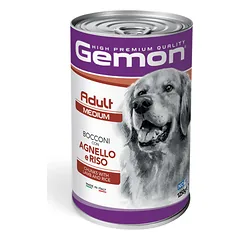
Gemon
1,94 €/kg
2,42 € / 1,3 kg
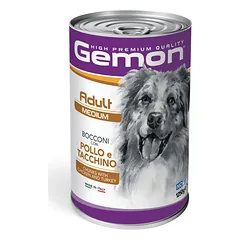
Gemon
1,94 €/kg
2,42 € / 1,3 kg

Sam's Field
2,11 €/kg
27,45 € / 13 kg

2,14 €/kg
30,00 € / 14 kg

Club 4 Paws
2,15 €/kg
42,99 € / 20 kg