

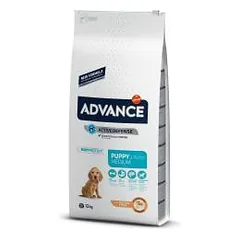
Advance
Advance Puppy Medium sausas maistas vidutinių veislių šuniukams, 12 kg
1,48 €/kg
17,76 € / 12 kg

Also known as: Cocker Spaniel, American cocker
The American Cocker Spaniel descends from English Cocker Spaniels brought to the United States in the nineteenth century, where selective breeding over a few decades produced a smaller, more compact type with a fuller coat than its European relative. In 1946 the breed was formally split off from the English Cocker as its own American breed. At around 13 kilograms, it is one of the smallest gundog breeds, though most individuals today have never seen a day of field hunting. The long, silky coat with heavy feathering on the legs needs intensive, frequent grooming, often including professional trimming. Long, pendulous ears are a known risk factor for ear infections and need regular checking. Temperament is friendly and sensitive, quick to bond with its family. It ranked among the most popular breeds in the US for a long stretch of the mid twentieth century. Life expectancy runs 12 to 15 years.
Browse dog food sized right for this breed
American Cocker Spaniel: how old in human years?
Energy level
Trainability
Family friendly
Grooming need
Males 38–38 cm
Females 35.5–35.5 cm
Males 11–13 kg
Females 11–13 kg
American Cocker Spaniel's average temperament and family-life score for this breed is moderate.
American Cocker Spaniel's energy and exercise needs are moderate.
American Cocker Spaniel's guarding and alertness traits are low.
American Cocker Spaniel's grooming needs are moderate.
An American Cocker's tail starts going before you've even unlocked the door, and that is more or less its whole personality in one gesture. Descended from flushing dogs that pushed birds out of the undergrowth for the hunter, today it is first and foremost a family dog: devoted, gentle and keen to be part of whatever you're doing. Two good walks a day with time to sniff, a game of fetch or a hunt for a hidden treat will keep it content, and the rest of the time it is happy to share the sofa with you.
It wants to learn and learns quickly, especially when the praise is warm and the treats are close at hand; a harsh tone deflates it more than it teaches anything. It gets on well with children who know how to be gentle, and stays polite with other dogs and visitors, though it will want a thorough sniff first.
Don't expect a guard: it will greet the courier with its tail rather than a menacing bark, though it will let you know the doorbell rang. A flat suits it fine as long as it gets out every day and isn't left alone for long, because a cocker makes its plans with you, not without you.
An American Cocker's coat is a proper project: long and silky, with generous feathering on the legs, belly and ears, and left alone it quickly knots into mats, especially in the armpits and behind the ears. Brush it several times a week, ideally a few minutes every day, and book regular visits to a groomer; plenty of owners choose a shorter, more practical trim that still looks every inch a cocker. Part the hair right down to the skin as you go, because redness or flakes hide easily under a coat like this, and dry the coat well after a muddy walk.
Check the ears every week and after every swim: lift the heavy flap, look and sniff, and a clean, pink, odour-free ear is good news. Those long ear tips love dipping into the water bowl and bringing back crumbs, so give them a wipe after meals. Big, round eyes are the cocker's calling card, so wipe the corners daily with a damp cloth, and show a vet any redness, cloudiness or heavy tearing.
Long, low-hanging ears and a flowing silky coat are the American Cocker Spaniel's pride, and they are also where much of your attention will go. This cheerful dog lives twelve to fifteen years, and the four things below are not a list of threats but hints about where to look while you're stroking it. If something seems different from usual, let a vet take a look.
This is general information, not veterinary advice. For your own dog's health, tests and treatment, see a vet.
An ear infection is inflammation of the ear canal, where bacteria or yeast settle into a warm, damp, poorly aired ear. You might notice head shaking, pawing at the ear, redness inside or an unpleasant smell. A cocker's heavy, hairy ears close over the canal like a lid, so checking them should become a habit, and any change is worth showing a vet.
A skin infection is inflammation caused by bacteria or yeast: the skin turns red, itches and starts to smell odd. You might feel scabs or a greasy, flaky patch, or see your dog scratching or licking the same spot again and again. Under a cocker's thick coat, especially in the armpits, on the belly and around the lips, skin easily stays damp and unseen, so part the hair as you brush and show any changes to a vet.
Hip dysplasia is a fault in how the hip joint develops: the ball of the thigh bone sits loosely in its socket, and the joint wears over time. You might see your dog getting up slowly after a walk, hesitating before jumping into the car or onto the sofa, or swaying its hindquarters as it runs. A cocker is a small dog, so these signs are easy to put down to laziness, but a change in gait is worth a vet's attention.
Von Willebrand disease is an inherited clotting disorder: the blood lacks a protein that helps bleeding stop. You might notice that a small scratch or a nail clipped too short bleeds longer than it should, or that the gums or nose bleed. A vet should know about this tendency before any planned procedure, and if you are getting a puppy, ask the breeder about the parents' health testing.
This list is chosen by the breed's weight (13 kg) rather than the breed itself: shops label food by dog size, so every breed of the same size gets the same list. Prices are updated daily.
≈ 190 g of dry food a day, from €10,42 a month For a neutered, normally active 12 kg dog. Calculate for your dog
Advance
1,48 €/kg
17,76 € / 12 kg
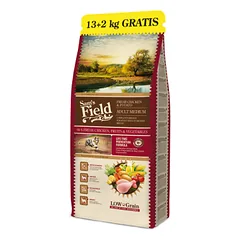
Sam's Field
1,80 €/kg
26,99 € / 15 kg

Country Dog
1,89 €/kg
28,29 € / 15 kg
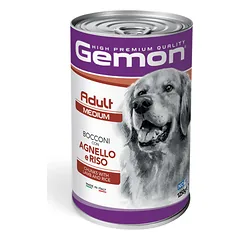
Gemon
1,94 €/kg
2,42 € / 1,3 kg
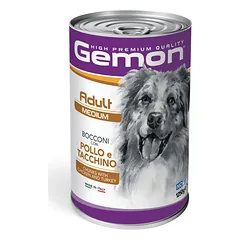
Gemon
1,94 €/kg
2,42 € / 1,3 kg
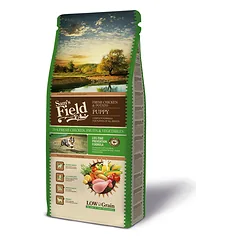
Sam's Field
2,11 €/kg
27,45 € / 13 kg
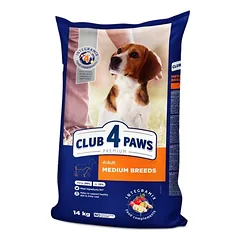
2,14 €/kg
30,00 € / 14 kg
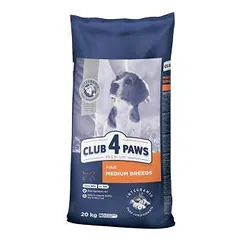
Club 4 Paws
2,15 €/kg
42,99 € / 20 kg