


American Cocker Spaniel vs Labrador Retriever
Compare two breeds
Pick two breeds to see them compared side by side.

American Cocker Spaniel
The American Cocker Spaniel descends from English Cocker Spaniels brought to the United States in the nineteenth century, where selective breeding over a few decades produced a smaller, more compact type with a fuller coat than its European relative. In 1946 the breed was formally split off from the English Cocker as its own American breed. At around 13 kilograms, it is one of the smallest gundog breeds, though most individuals today have never seen a day of field hunting. The long, silky coat with heavy feathering on the legs needs intensive, frequent grooming, often including professional trimming. Long, pendulous ears are a known risk factor for ear infections and need regular checking. Temperament is friendly and sensitive, quick to bond with its family. It ranked among the most popular breeds in the US for a long stretch of the mid twentieth century. Life expectancy runs 12 to 15 years.
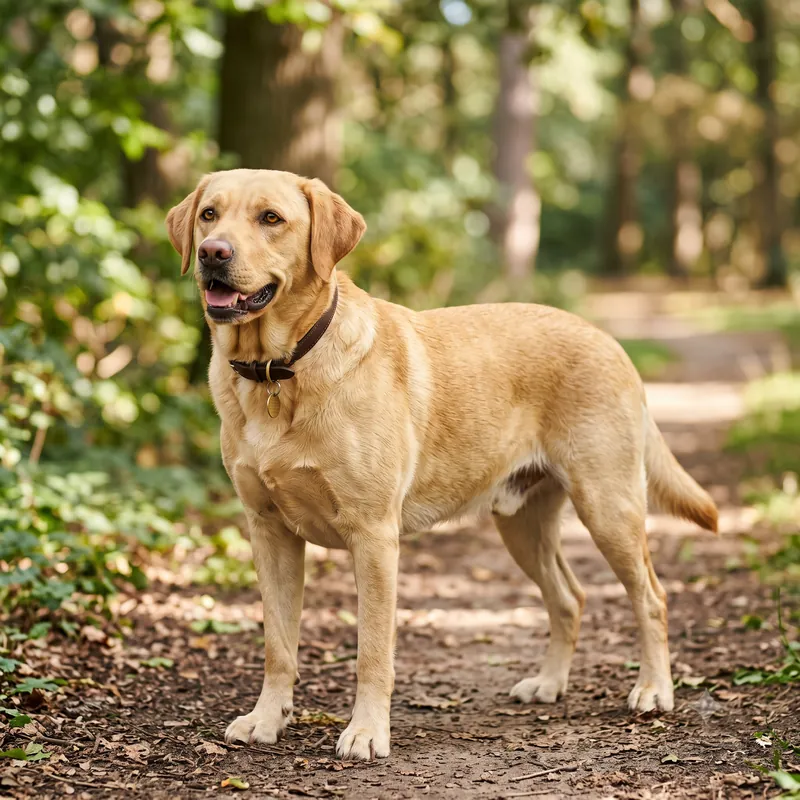
Labrador Retriever
The breed's ancestors worked the icy waters off Newfoundland, hauling fishing nets and retrieving anything that fell overboard, before English sportsmen refined the type into the Labrador Retriever we know today. That original job explains almost everything about the dog: the short, dense coat sheds water rather than soaking it up, and an adult male can reach 36 kilograms of dense muscle built for swimming, not sprinting. Labradors were bred to carry things in their mouths without damaging them, so a soft-mouthed retrieve instinct shows up even in dogs that never see a bird, usually aimed at a shoe or a sock instead. Food motivation runs unusually high in this breed, which makes it easy to train and just as easy to overfeed. The coat blows out twice a year in dense clumps, on top of a steady year-round shed. Labradors were the UK's registered top breed for three decades running, so most vets and trainers have seen dozens of them. They tend to stay puppyish in temperament well past physical maturity, which is part of the appeal and part of why a young one can be a handful indoors. Average lifespan sits at 10 to 14 years.
At a glance
| American Cocker Spaniel | Labrador Retriever | |
|---|---|---|
| Height (male) | 38.0–38.0 cm | 56.0–57.0 cm |
| Weight (male) | 11.0–13.0 kg | 29.0–36.0 kg |
| Life expectancy | 12–15 yrs | 10–14 yrs |
| Coat | long, silky, flat or slightly wavy coat with heavy feathering | short, dense, water-resistant double coat |
Temperament & Family Life
| American Cocker Spaniel | Labrador Retriever | |
|---|---|---|
| Family friendly | ||
| Good with children | ||
| Good with other dogs | ||
| Friendly with strangers | ||
| Intelligence | ||
| Trainability |
Exercise, Energy & Space
| American Cocker Spaniel | Labrador Retriever | |
|---|---|---|
| Energy level | ||
| Exercise need | ||
| Apartment friendly | ||
| Prey drive | ||
| Hunting instinct |
Guarding & Alertness
| American Cocker Spaniel | Labrador Retriever | |
|---|---|---|
| Guarding instinct | ||
| Watchfulness | ||
| Barking level |
Grooming & Care
| American Cocker Spaniel | Labrador Retriever | |
|---|---|---|
| Shedding | ||
| Drooling | ||
| Grooming need |
Temperament and care scores (1-5) are a general guide based on the breed standard — every individual dog is different.