

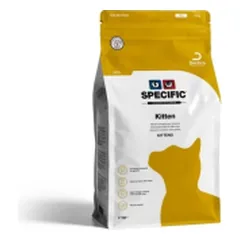
Specific
Specific FPD Kitten sausas maistas augantiems kačiukams, 400 kg
0,01 €/kg
5,59 € / 400 kg

Also known as: Rumpy, Stubbin, Manks cat, Tasman Manx, Kayt cuttagh
The Manx comes from the Isle of Man, and its trademark is the absence of a tail or a very short one, which arose as a natural mutation. Individuals range from completely tailless to ones with a full-length tail. The body is round and sturdy, the hind legs are longer than the front ones, and the coat is short, double and dense, so it is worth brushing more often while it is being shed. Adults typically weigh around 3 to 5.5 kilograms. Manx cats are usually friendly, intelligent and capable hunters, and they bond with their families. Life expectancy is typically around 9 to 13 years.
Energy level
Playfulness
Family friendly
Grooming need
Males 4–5.5 kg
Females 3–4.5 kg
Manx: average score for sociability and trainability is high.
Manx: average score for activity and living space is high.
Manx: average score for personality and communication is moderate.
Manx: grooming and shedding demands are moderate.
The 1–5 trait scores are editorial estimates, not measurements. Every cat is an individual, so treat them as a general guide.
A Manx crosses a room in bounds rather than steps: those strong back legs launch it onto the top of the wardrobe before you have seen it crouch. Give it height, a sturdy cat tree and a shelf by the window, and a scratching post heavy enough not to topple when it pushes off. The hunting drive is strong; a feather wand or a bottle cap skidding into a corner will hold its attention for a long time, and some will carry a toy back to you.
With its own family it is gentle and patient, it gets on well with children and accepts a friendly dog. Visitors are greeted politely rather than warmly, after an inspection from a safe distance. It hardly uses its voice, and a soft trill stands in for a meow.
A Manx copes with time alone if it has something to do, but it likes best to be wherever you are. Flat life suits it fine; birds are better watched through a window or from a safely netted balcony.
The Manx coat is short but double: a thick, soft undercoat beneath glossy guard hairs, which is part of why the cat looks even rounder than it is. Run a brush or a rubber mitt over it once a week, and every few days in spring and autumn while the undercoat changes, or the hair ends up all over the sofa.
As you brush, look at the skin for flakes, scabs or redness. Check that the eyes are clear and not watering, and that the ears are clean inside with no smell. Glance at the fur under the rump as well: if it keeps getting soiled, mention it to a vet.
Where other cats carry a tail, a Manx has a round rump, and the gene that shortens the tail also shapes the end of the spine. That is why the conditions linked to the breed involve the back, the bowel, the joints and the eyes. A Manx lives nine to thirteen years; ask the breeder about the parents' health testing before you take a kitten, and regular vet check-ups will help you notice changes in time.
This is general information, not veterinary advice. For your own cat's health, tests and treatment, see a vet.
A set of problems with the end of the spine and the spinal cord, tied to the same gene that leaves a Manx without a tail. Signs show in kittenhood: an unsteady, hopping walk, weak back legs, trouble holding urine or stool, or soiled fur under the rump. Show such a kitten to a vet, and before you buy, ask the breeder about the parents' health testing.
Inflamed joints that ache and stiffen. A Manx has back legs longer than its front ones and loves a powerful leap, so the first thing you may notice is a long pause before it jumps onto the windowsill, or a slower climb up the stairs. Show that change to a vet.
The large bowel stretches and loses the strength to push stool out, so it builds up. In a Manx this can be linked to the nerves at the end of the spine. Keep an eye on the litter tray: small, hard stools, long gaps between them or a lot of straining with little to show are reasons to call the vet.
The cornea, the clear window at the front of the eye, slowly turns cloudy. You may see a bluish or milky haze in one or both eyes, or a cat squinting. In a Manx it can be inherited, so ask the breeder about the parents' health testing, and let a vet examine the eye.
This list is the same on every cat breed page. Shops do not label cat food by breed, so it simply shows the cheapest cat food we track per kilogram. Check the label for your cat's age and health needs. Prices are updated daily.
≈ 65 g of dry food a day, from €3,74 a month For a neutered, normally active 4,3 kg cat. Calculate for your cat
Specific
0,01 €/kg
5,59 € / 400 kg
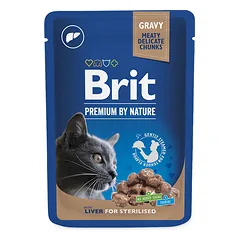
Brit Premium
0,33 €/kg
0,80 € / 2,4 kg
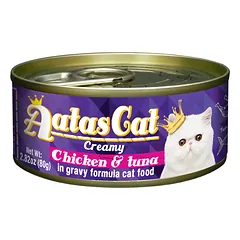
0,55 €/kg
1,05 € / 1,9 kg
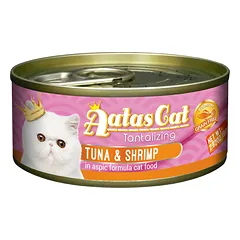
0,55 €/kg
1,05 € / 1,9 kg

Tigerino
0,87 €/kg
20,89 € / 24 kg

Gourmet
0,94 €/kg
0,96 € / 1,0 kg

Fitmin for Life
1,00 €/kg
0,80 € / 0,8 kg
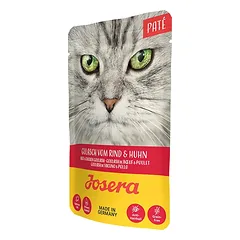
Josera
1,10 €/kg
1,49 € / 1,4 kg