

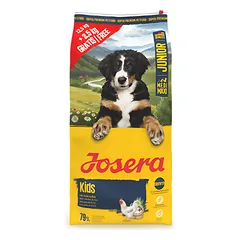
Josera
Josera Kids 12,5kg + 2,5kg = 15 kg
1,38 €/kg
37,89 € / 27,5 kg

Also known as: Russian Setter, Korthals Griffon, Griffon Korthals
The Wirehaired Pointing Griffon was developed in the late 19th century by the Dutchman Eduard Korthals, who wanted an all-around gundog that could handle cold weather and work both land and water. The harsh, wiry coat with its dense undercoat gives the breed its shaggy, slightly unkempt look, topped off with a pronounced beard and eyebrows. Males weigh around 27 kilograms, with a sturdy but not especially fast build, this is a breed made for stamina rather than sprinting. The breed's name still carries its creator's surname in many languages, an unusual thing for a dog breed. Temperament runs calm and patient, making it a reasonable choice for a first-time hunter. It's gentle with family and gets along well with children. Life expectancy runs 12 to 14 years.
Browse dog food sized right for this breed
Wirehaired Pointing Griffon: how old in human years?
Energy level
Trainability
Family friendly
Grooming need
Males 55–60 cm
Females 50–55 cm
Males 23–27 kg
Females 20–25 kg
Wirehaired Pointing Griffon's average temperament and family-life score for this breed is high.
Wirehaired Pointing Griffon's energy and exercise needs are high.
Wirehaired Pointing Griffon's guarding and alertness traits are low.
Wirehaired Pointing Griffon's grooming needs are low.
A lakeshore, a November morning, icy water, and your Wirehaired Pointing Griffon is already swimming out for the second duck, as happy as it ever gets. This versatile gundog, which carries Eduard Korthals's name, was bred to search, point and retrieve on land and from water, and it still needs all of that. It wants plenty of exercise every day: long walks with off-lead running somewhere safe, swimming, scent games or real hunting.
It learns eagerly and fast, likes to work with you rather than far away from you, and reads perfectly when you're pleased with it. This is a dog that keeps asking "what are we doing next?", so boredom is a bigger danger to it than bad weather. Its hunting instinct is strong, so cats, hares and birds will test it, and the recall is worth training patiently and early.
At home it is gentle and devoted and doesn't enjoy being left alone for long hours. It is wonderful with children, good with other dogs, and polite to strangers; it will let you know they've arrived, but it is no guard. A flat is too cramped for it; it is happiest in a house near fields or woods, with a family for whom muddy paws in the hallway are not a problem but proof of a good day.
A Wirehaired Pointing Griffon's coat is its work clothing: a harsh, wiry outer coat over a dense undercoat that shrugs off brambles, cold water and wind. It needs no clipping; a weekly brush and comb is enough, plus a few sessions a year of plucking out the dead, loose hair with your fingers so the coat stays harsh and water-resistant. It sheds little, and baths should be rare, since shampoo softens a harsh coat.
The face and skin need the most attention. The beard drips after drinking and sometimes carries dinner around afterwards, so give it a wipe. Ticks, grass awns and burrs hide easily in a dense coat, so after every trip into the fields or woods feel your dog over with your fingers from ears to tail, not forgetting between the toes. Dry the hanging ears after a swim in the lake and look inside them weekly, and check the eyes under those brows after every run through grass; redness, a bad smell or weeping are reasons to see the vet.
The beard, the eyebrows and the slightly tousled look hide a working dog built for long days in fields and marshes, and the Wirehaired Pointing Griffon lives twelve to fourteen years. Hip and eye conditions are known in the breed, and its deep chest means the signs of a twisted stomach are worth knowing. Ask the breeder about the parents' health testing before you take a puppy, and settle everything else together with your vet.
This is general information, not veterinary advice. For your own dog's health, tests and treatment, see a vet.
The hip joint develops imperfectly, the ball of the thigh bone sits loosely in its socket, and the joint wears over time. You might notice your dog slower to get up after a day's hunting or a long run, limping, or reluctant to jump into the boot of the car. A Griffon works with tremendous enthusiasm and can hide discomfort, so show any change in its gait to a vet.
In this inherited disease the retina slowly wastes away and sight fades, first in dim light. A dog that pushes boldly through the reeds by day may start hesitating at the stairs or bumping into furniture in the evening. Because it is inherited, ask the breeder about the parents' health testing before you take a Wirehaired Pointing Griffon puppy home.
The lens of the eye starts to cloud over, and less and less light gets through. You may notice a bluish-white haze in the centre of the eye, or that your dog no longer finds a thrown dummy quite so surely. Under a Griffon's thick brows the eyes aren't always easy to see, so part the hair and look at them regularly, and let a vet judge any change.
The stomach fills with gas, swells and can twist on itself, cutting off its blood supply. The dog becomes restless, retches without bringing anything up, drools, and its belly looks swollen and tight. The deep-chested Wirehaired Pointing Griffon is one of the dogs at risk, and this is an emergency: if you see these signs, get to a vet immediately.
This list is chosen by the breed's weight (27 kg) rather than the breed itself: shops label food by dog size, so every breed of the same size gets the same list. Prices are updated daily.
≈ 320 g of dry food a day, from €17,43 a month For a neutered, normally active 23,8 kg dog. Calculate for your dog
Josera
1,38 €/kg
37,89 € / 27,5 kg

Sam's Field
1,80 €/kg
26,99 € / 15 kg

Country Dog
1,89 €/kg
28,29 € / 15 kg
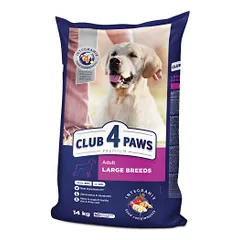
Club 4 Paws
1,92 €/kg
26,94 € / 14 kg
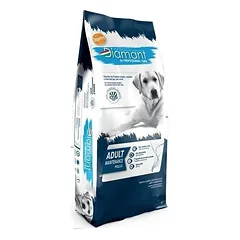
Diamant
1,93 €/kg
28,99 € / 15 kg
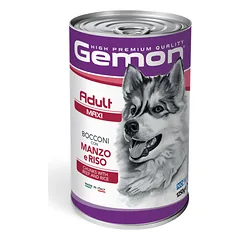
Gemon
1,94 €/kg
2,42 € / 1,3 kg

BIO FORM
2,00 €/kg
40,00 € / 20 kg

BIO FORM
2,00 €/kg
40,00 € / 20 kg