

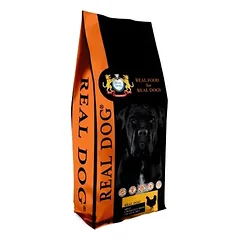
Real Dog
Real Dog sausas maistas suaugusiems, didelių-milžiniškų veislių, šunims su vištiena ir ryžiais 20kg
2,11 €/kg
42,15 € / 20 kg

Also known as: Yuzhak, Russian Owtchar, Ukrainian Ovcharka, South Russian Ovtcharka
The South Russian Shepherd developed on the steppes between modern Ukraine and Crimea, where it guarded sheep across open ground in the 19th century and had to fend off wolves on its own without much help from a handler. A male can weigh up to 50 kilograms, and the long, coarse, thick coat, which covers even the eyes, does more than block cold: it makes it harder for an attacker to get a grip on the dog's head during a fight. The coat demands serious upkeep or it mats quickly. The breed kept a strong guarding instinct and an inborn wariness of strangers, so early socialization matters a great deal. Soviet authorities later used it to guard industrial sites as well as livestock. It stays close to its own family but will never be casually friendly with outsiders. Life expectancy runs 10 to 11 years.
Browse dog food sized right for this breed
South Russian Shepherd Dog: how old in human years?
Energy level
Trainability
Family friendly
Grooming need
Males not specified
Females not specified
Males 40–50 kg
Females 35–45 kg
South Russian Shepherd Dog's average temperament and family-life score for this breed is low.
South Russian Shepherd Dog's energy and exercise needs are low.
South Russian Shepherd Dog's guarding and alertness traits are high.
South Russian Shepherd Dog's grooming needs are moderate.
This breed grew up in Crimea and on the steppes of southern Ukraine, guarding flocks against wolves and thieves, and that job is in its blood. The South Russian Shepherd Dog is a guardian, not a herder: it lies quietly, watches everything and decides for itself who is welcome on its ground. It needs moderate exercise, long walks and a roomy, well-fenced yard; a flat is no place for it.
With its own people it is devoted and gentle, but it distrusts strangers, and that is not a flaw but the core of the breed. That makes socialisation non-negotiable: from puppyhood, show it people, sounds, other dogs and places so it learns to tell a threat from a neighbour. Train it calmly, firmly and very consistently; it is clever, but it treats obedience as a matter for negotiation, and harshness only hardens its stubbornness.
It can be short-tempered with children and other dogs, so don't leave it alone with small children or unfamiliar dogs. This is a dog for an experienced owner with time, patience and a solid fence, and it repays them with unshakeable loyalty and the calm certainty that nobody is walking through the yard at night.
From a distance a South Russian Shepherd Dog looks like a large white rug that is, for some reason, watching you from the middle of the yard, and that look takes work. The long, coarse, very dense coat with its thick undercoat keeps out steppe wind and cold, but left alone it soon turns to felt. At least twice a week, comb it in layers right down to the skin, starting at the legs and working upward; when the coat changes, the comb becomes a daily habit and you'll fill bags with undercoat. All that hair is far easier to deal with if the dog learned as a puppy to lie on its side and let you get on with it.
The coat falls over the eyes, so once a week part it and check that the eyes are clear and free of discharge; the hair in front of them can be trimmed or tied up. Check the ears weekly, and dry the beard after meals and drinks so it doesn't mat or start to smell. Trim the nails every few weeks, keep the hair between the pads short, and feel free to hand a big dog's trimming or bathing to a groomer who works with large breeds.
We don't have reliable health information specific to this breed, so we don't list conditions here. Keep up regular vet check-ups, and if you are getting a puppy, ask the breeder about the parents' health testing.
This is general information, not veterinary advice. For your own dog's health, tests and treatment, see a vet.
This list is chosen by the breed's weight (50 kg) rather than the breed itself: shops label food by dog size, so every breed of the same size gets the same list. Prices are updated daily.
≈ 490 g of dry food a day, from €26,91 a month For a neutered, normally active 42,5 kg dog. Calculate for your dog
Real Dog
2,11 €/kg
42,15 € / 20 kg

Sam's Field
2,56 €/kg
33,26 € / 13 kg
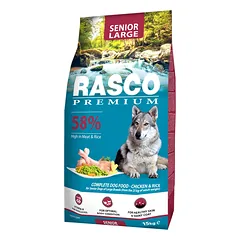
Rasco
2,67 €/kg
39,99 € / 15 kg
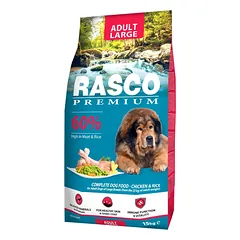
Rasco
2,67 €/kg
39,99 € / 15 kg
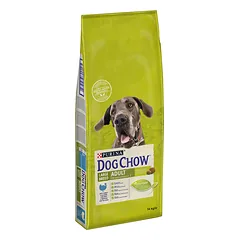
Purina
2,71 €/kg
37,96 € / 14 kg
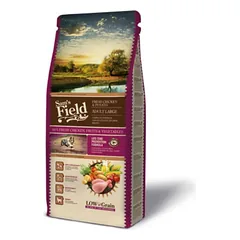
Sam's Field
2,77 €/kg
35,99 € / 13 kg
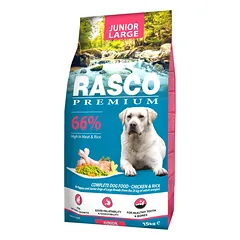
Rasco
2,80 €/kg
41,99 € / 15 kg
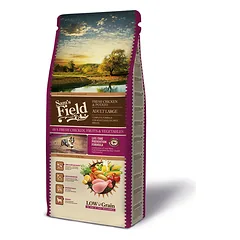
Sam's Field
2,85 €/kg
37,04 € / 13 kg