

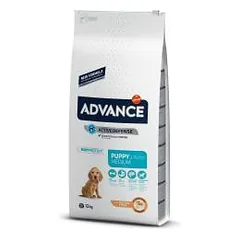
Advance
Advance Puppy Medium sausas maistas vidutinių veislių šuniukams, 12 kg
1,48 €/kg
17,76 € / 12 kg

The Russo-European Laika comes from the forests of northern Russia and the Finnish border, where local hunters used it to track bear, elk and fur game, and the name Laika derives from the word for barking, describing exactly how this type of dog works. Unlike a scenthound, a Laika doesn't chase quarry to exhaustion, it locates it by scent and holds it in place with loud barking until the hunter arrives. The straight, medium-length double coat handles a northern climate's cold well. A male weighs up to 23 kilograms, compact but tireless. The breed was only formally standardized in the mid-20th century, unifying several regional dog populations into one type. Life expectancy runs 10 to 12 years.
Browse dog food sized right for this breed
Russo-European Laika: how old in human years?
Energy level
Trainability
Family friendly
Grooming need
Males 52–58 cm
Females 50–56 cm
Males 18–23 kg
Females 17–22 kg
Russo-European Laika's average temperament and family-life score for this breed is moderate.
Russo-European Laika's energy and exercise needs are high.
Russo-European Laika's guarding and alertness traits are moderate.
Russo-European Laika's grooming needs are moderate.
A squirrel has barely rustled at the top of a pine, and the laika is already standing beneath the tree, eyes fixed upward, barking loud and without a pause. That is exactly what it was bred for: to find game in the trees and tell the hunter with its voice where it is. The hunting drive runs so deep that, off the lead in an unfenced place, it can simply vanish into the forest, and no amount of calling will bring it back while the trail is hot.
Its energy seems close to bottomless. It needs not a stroll but real exercise every day: long hikes, running, nose work, canicross or hunting. A flat won't do; a house with a yard and a high, solid fence is far better. It is clever and quick to grasp what you want, but it listens when it sees the point, so keep training short, varied and rewarding.
With its own people the laika is loyal and likes to be close, but it is reserved with strangers and in no hurry to make friends. It doesn't always get on with other dogs, especially of the same sex, and cats and small pets can look like prey, so make introductions carefully. It is happiest with an owner who loves the woods and doesn't mind rain; for that person it will be a tireless, cheerful companion.
The Russo-European Laika wears a straight, medium-length coat over a dense undercoat, built for the cold and damp of northern forests. Once a week, comb right down to the skin, especially around the ruff, the breeches and the curled tail, where the undercoat gathers first. It sheds a fair amount, and during the coat change the undercoat comes out in tufts; comb daily then, and there will be far less of a "second dog" on your floor.
The rest is simple. Baths are rarely needed, since a clean, combed coat sheds dirt on its own and dried mud simply brushes out. After every forest outing, check the skin, the upright ears and between the toes for ticks and burrs, and trim the nails when they start clicking on the floor.
We don't have reliable health information specific to this breed, so we don't list conditions here. Keep up regular vet check-ups, and if you are getting a puppy, ask the breeder about the parents' health testing.
This is general information, not veterinary advice. For your own dog's health, tests and treatment, see a vet.
This list is chosen by the breed's weight (23 kg) rather than the breed itself: shops label food by dog size, so every breed of the same size gets the same list. Prices are updated daily.
≈ 280 g of dry food a day, from €15,29 a month For a neutered, normally active 20 kg dog. Calculate for your dog
Advance
1,48 €/kg
17,76 € / 12 kg

Sam's Field
1,80 €/kg
26,99 € / 15 kg

Country Dog
1,89 €/kg
28,29 € / 15 kg
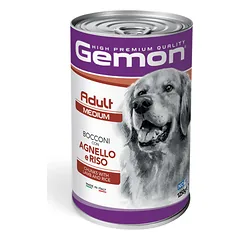
Gemon
1,94 €/kg
2,42 € / 1,3 kg
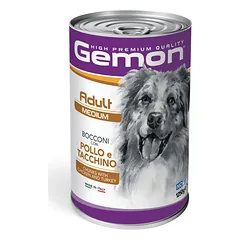
Gemon
1,94 €/kg
2,42 € / 1,3 kg

Sam's Field
2,11 €/kg
27,45 € / 13 kg
2,14 €/kg
30,00 € / 14 kg

Club 4 Paws
2,15 €/kg
42,99 € / 20 kg